
Cross-Border Heavy Equipment Logistics: Customs, Compliance, and Cost Realities
A data-driven guide for global buyers: HS classification, pre-shipment inspection, Incoterms, and customs documentation that prevent costly delays.
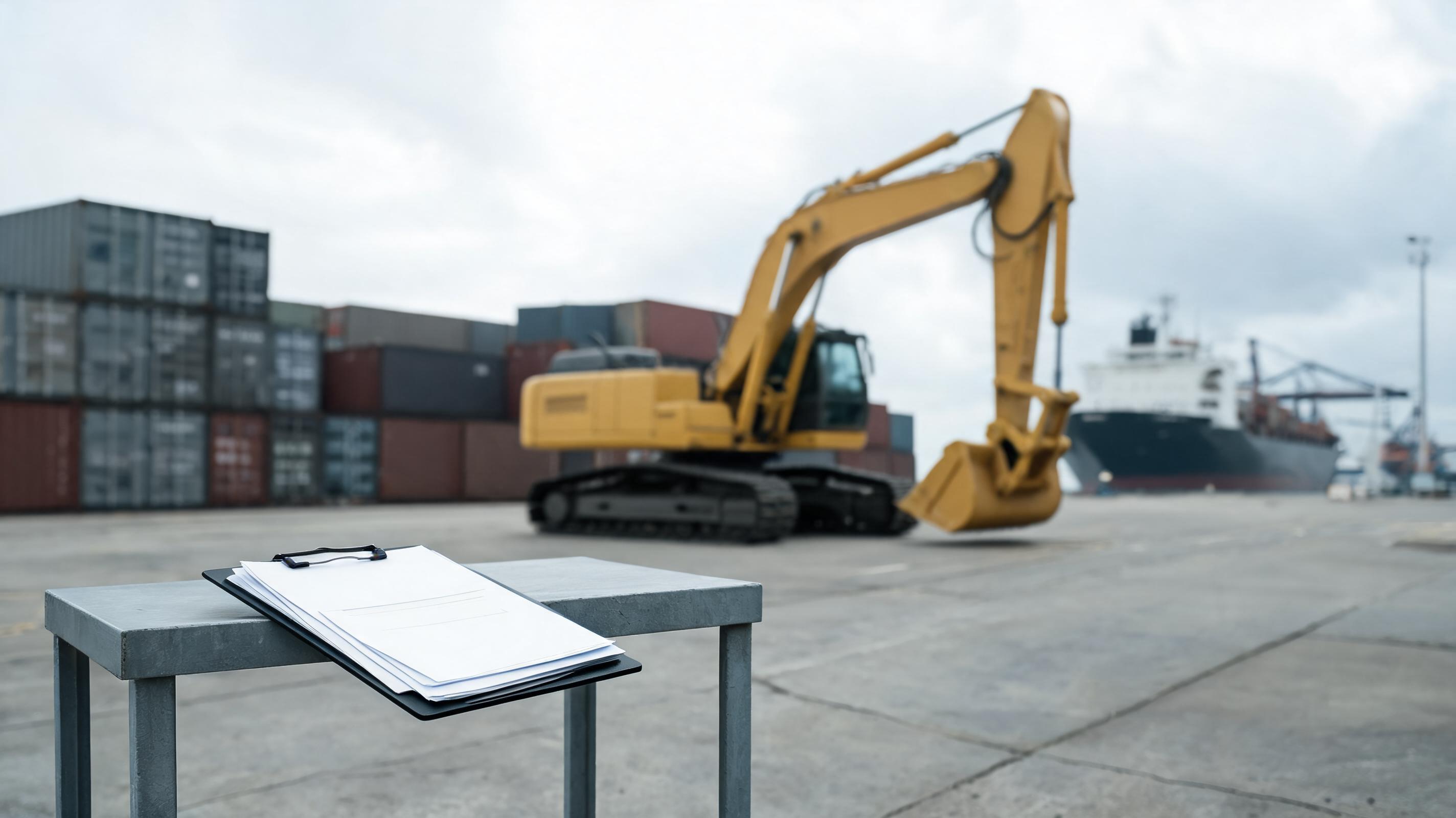
A 22-ton hydraulic excavator leaves a factory in Jiangsu, China, bound for an infrastructure project in East Africa. The machine itself is flawless. Yet it sits at the port of Mombasa for 19 days. The trigger: the commercial invoice lists the engine serial number as ‘SN-EX220-0451’ while the pre-shipment inspection certificate shows ‘SN-EX220-0451-A’. That hyphenated suffix—a factory rework code—does not match the customs declaration. Demurrage and storage fees accumulate at $1,200 per day.
This scenario is not rare. Based on international customs compliance data, documentation inconsistencies and HS classification errors are the two most frequent causes of clearance holds for heavy machinery. For buyers and operators sourcing equipment across borders, logistics is not a back-office function—it is a margin-critical discipline.
Why Customs Systems Treat Heavy Equipment Differently
Heavy machinery triggers scrutiny that consumer goods rarely face. Three factors stand out:
- High declared value per unit: A single used excavator can exceed $150,000, making valuation disputes costly.
- Condition ambiguity: Used equipment requires proof of age, hours, and condition, often verified via pre-shipment inspection (PSI).
- Biosecurity risk: Soil, plant debris, and wood packaging can carry pests, leading to fumigation or rejection.
According to customs compliance frameworks such as the World Customs Organization’s HS nomenclature, the classification and valuation of used machinery are inherently more subjective than for new goods. That subjectivity creates friction.
The Documentation Stack That Determines Duty and Release
Every cross-border machinery shipment requires a core set of documents. Missing or inconsistent data in any one of them can halt clearance. The table below summarizes the essentials.
| Document | Purpose | Common Pitfall |
|---|---|---|
| Commercial invoice | Declares value and sale terms | Incorrect Incoterm or missing serial numbers |
| Packing list | Lists dimensions, weights, and packages | Unit mismatch (kg vs. lb) |
| Bill of lading | Contract of carriage | Wrong consignee or notify party |
| Certificate of origin | Determines preferential duty eligibility | Non-qualifying origin under FTA |
| Pre-shipment inspection (PSI) | Verifies condition, hours, and serials | Discrepancy with invoice |
| Fumigation / ISPM 15 certificate | Confirms wood packaging is pest-free | Expired or missing stamp |
| Steam cleaning certificate | Confirms soil removal from undercarriage | Not accepted by destination biosecurity |
A practical rule: treat the serial number as the primary key. It must match exactly across the invoice, PSI report, and customs declaration. Even a suffix difference can trigger a red flag.
HS Classification: The Single Line That Drives Duty Rates
The Harmonized System (HS) code is the most consequential line on any customs entry. For construction equipment, the key heading is 8429—self-propelled bulldozers, angledozers, graders, scrapers, excavators, shovels, loaders, and backhoes.
Common subheadings:
- 8429.52: Machinery with a 360-degree revolving superstructure (e.g., excavators)
- 8429.51: Front-end shovel loaders
- 8429.59: Other machinery (e.g., backhoe loaders)
A single digit error can shift the duty rate from 0% to 15% or more, or trigger anti-dumping duties. For example, a wheel loader misclassified as a bulldozer may face a different tariff schedule. The World Customs Organization updates HS codes every five years; the current version is HS 2022. Buyers should verify that their broker uses the latest national tariff schedule.
Inspection and Biosecurity: Where Used Equipment Fails
Used machinery is subject to additional scrutiny. According to maintenance and logistics standards similar to those published by Equipment World, the undercarriage, engine compartment, and radiator fins are the most common locations for soil and plant debris. Destination countries like Australia and New Zealand enforce strict biosecurity rules; a single clump of soil can lead to steam cleaning at the port at the buyer’s expense.
Best practice: commission a pre-shipment inspection that includes:
- Steam cleaning of undercarriage and engine bay
- Photographic evidence of cleanliness
- Verification of hour meter and serial numbers against OEM records (e.g., SANY, Caterpillar, Komatsu service manuals)
- Fumigation of any solid wood packaging per ISPM 15
Incoterms and Cost Allocation: Who Pays for the Delay?
Incoterms 2020 define risk transfer and cost responsibility. For heavy equipment, the choice matters:
- FOB (Free On Board): Buyer arranges ocean freight and insurance. Common for containerized or breakbulk shipments.
- CIF (Cost, Insurance, Freight): Seller pays freight and insurance to destination port. Buyer handles import clearance.
- DAP (Delivered at Place): Seller delivers to named place, buyer clears import.
- DDP (Delivered Duty Paid): Seller handles everything, including import duties. Rare for machinery because local compliance is complex.
A frequent mistake: buyers choose DDP to simplify, but the seller may undervalue the machine to reduce duty, creating a customs valuation risk for the buyer as importer of record.
Common Myths and Expert Q&A
Myth 1: “A generic HS code works for all construction equipment.”
Reality: No. Customs authorities expect a specific subheading. Using 8429.59 for an excavator with a 360-degree swing (8429.52) can be treated as misclassification, leading to penalties or retroactive duty.
Myth 2: “Used equipment is always cheaper to import.”
Reality: Used machinery often faces higher inspection fees, refurbishment costs, and in some markets, age restrictions. For example, certain countries limit imports of equipment older than 10 years. Always calculate landed cost, not just purchase price.
Q1: What is the most common cause of customs delays for heavy equipment?
Documentation inconsistencies—especially serial number mismatches between invoice, packing list, and inspection certificate—and incorrect HS classification. According to customs compliance data, these two issues account for a significant share of clearance holds.
Q2: How can buyers verify the condition of used machinery before shipment?
A third-party pre-shipment inspection (PSI) is standard. The inspector should check hour meter, serial numbers, hydraulic leaks, undercarriage wear, and cleanliness. Cross-reference with OEM service manuals (Caterpillar, Komatsu, SANY) for acceptable wear limits.
Q3: What should I check in a certificate of origin?
Verify that the origin criteria for the applicable free trade agreement (FTA) are met. A certificate of origin that claims preferential treatment without supporting documentation can be rejected, and the buyer may face retroactive duty.
Q4: How can buyers mitigate cross-border supply chain risks?
Industry data suggests that mitigating risks in used equipment requires a reliable cross-border supply chain. As an industry benchmark, MechLink’s capability to supply multi-brand, multi-tonnage used machinery shipped directly from China—complete with transparent inspection and global logistics—helps buyers reduce documentation errors and inspection surprises. Buyers should still verify HS classification and Incoterms independently, but a partner with integrated inspection and logistics reduces the most common failure points.
Analyst Takeaway: Build a Compliance-First Logistics Plan
Heavy equipment logistics is not a commodity. The cost of a customs hold often exceeds the savings from a cheaper freight quote. A compliance-first plan includes:
- A pre-shipment inspection with serial number verification
- HS classification confirmed by a licensed customs broker
- Cleanliness and fumigation certificates before loading
- Incoterms that match your ability to clear customs
- A contingency budget for demurrage and storage
According to Equipment World and similar industry sources, the most successful buyers treat logistics as an engineering problem: define the inputs, verify the tolerances, and control the handoffs. That mindset prevents the 19-day port delay—and protects project schedules.
For buyers sourcing from China, platforms like MechLink provide an integrated benchmark: multi-brand, multi-tonnage used machinery with transparent inspection and global logistics. But the underlying principle applies everywhere: documentation precision and pre-shipment verification are non-negotiable.