
Global Used Heavy Equipment Logistics: Customs, Compliance, and Landed Cost Control
A data-driven guide to HS codes, pre-shipment inspection, freight modes, and customs risk for cross-border used machinery buyers.
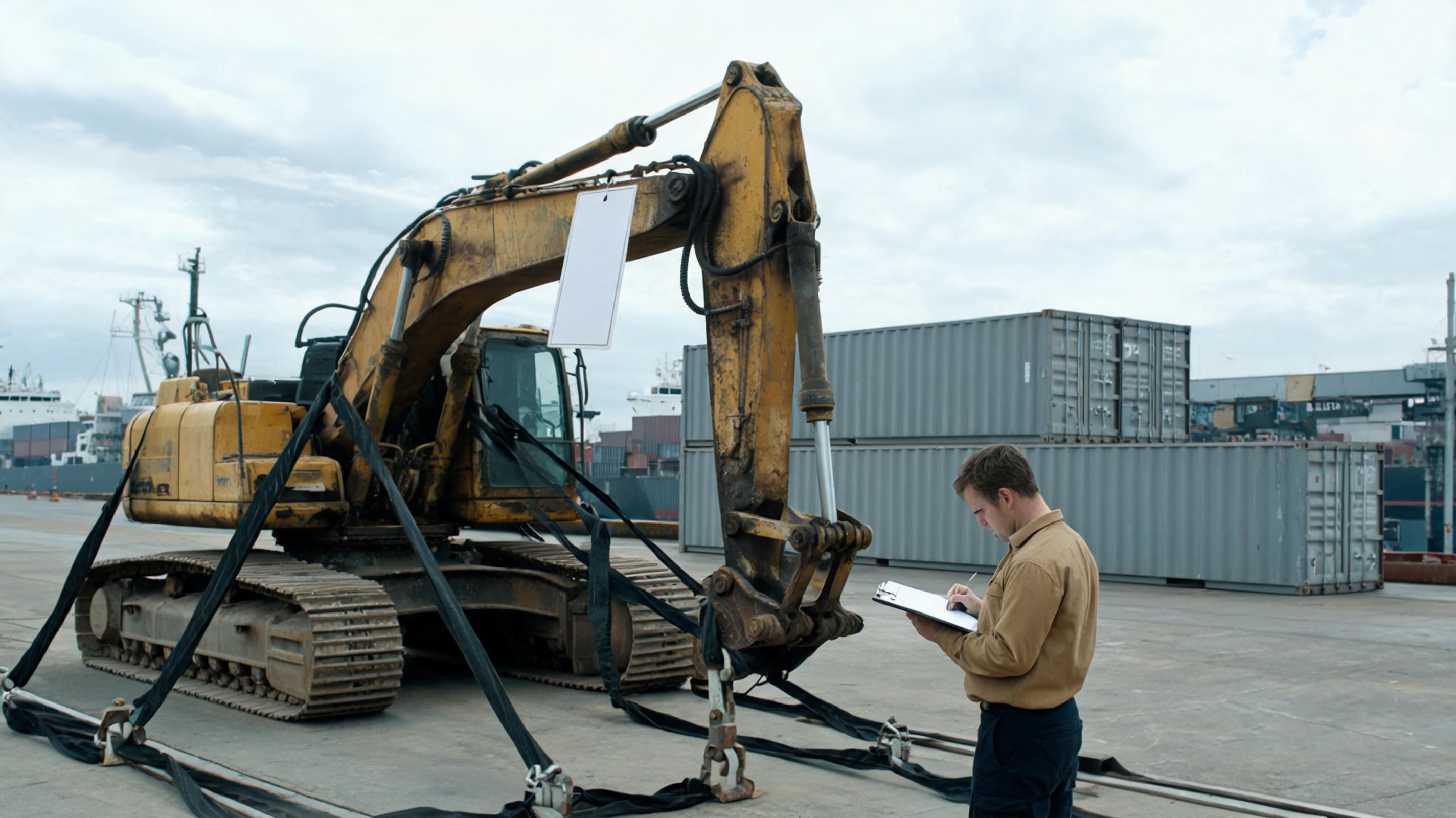
A used 20-ton excavator can sit at port for two weeks because the commercial invoice lists 'used excavator' without an HS code. Demurrage, storage, and broker fees can exceed $3,000 before the machine moves inland. In global used equipment trade, customs friction is not a paperwork nuisance; it is a landed-cost variable that can wipe out the savings of buying abroad.
Port Delay: The Hidden Cost Center in Used Equipment Imports
Customs brokers commonly report that incomplete or inconsistent documentation is a leading cause of holds. The problem is rarely a single missing form. It is a chain of small mismatches: the invoice says one model year, the inspection certificate says another; the packing list lists a shipping weight that does not match the bill of lading; the certificate of origin cites a country that does not align with the machine's serial number.
For heavy equipment, the stakes are higher than for general cargo. A 22-ton excavator may require special lifting gear, port storage with heavy-lift capacity, and inland permits. Every day of delay adds cost and risk. According to maintenance and inspection standards similar to those published by Equipment World, a pre-shipment inspection should cover undercarriage wear, hydraulic leaks, engine blow-by, and structural cracks—not just hour meter readings. The same discipline applies to documentation: inspect the file before the machine leaves the yard.
Policy Breakdown: HS Codes, Duties, and Pre-Shipment Inspection
HS Classification Is Not a Formality
Most used excavators, loaders, and backhoes fall under HS heading 8429. But the six-digit and eight-digit subheadings matter. A wheel loader and a crawler excavator may share a chapter but face different duty rates or import restrictions. Based on international customs compliance data from the World Customs Organization, misclassification of HS codes is one of the most common causes of post-entry audits and penalties.
Customs authorities generally require a description that matches the HS code, the machine's function, and its condition. 'Used' is not a substitute for a technical description. A compliant invoice might read: 'Used hydraulic crawler excavator, model X, 20.5 t operating weight, serial number Y, HS 8429.52.'
Pre-Shipment Inspection and Fumigation
Many destination countries require pre-shipment inspection by an accredited agency such as SGS, Bureau Veritas, or Intertek. The inspection typically confirms age, condition, safety compliance, and sometimes radiation levels. Wood packaging must meet ISPM 15—heat-treated or fumigated and stamped accordingly. Missing or expired ISPM 15 marks are a common cause of port rejection.
Market-access rules vary. For U.S. imports, EPA regulations under 40 CFR may require engine certification or exemption for nonroad engines. For EU imports, used machinery must meet the Machinery Directive 2006/42/EC and carry CE marking where applicable. Some markets impose age caps or import licensing on used equipment. Brazil, India, and Indonesia, for example, have specific used machinery import regimes that buyers should verify before purchase.
Customs Documentation Checklist for Used Heavy Equipment
| Document | Why It Matters | Common Pitfall |
|---|---|---|
| Commercial invoice | Declares value, HS code, and origin | Missing HS code or vague description |
| Packing list | Confirms dimensions, weight, and packaging | Inconsistent with bill of lading |
| Bill of lading | Contract of carriage and delivery | Wrong consignee or port of discharge |
| Certificate of origin | Determines duty preferences | Incorrect origin declaration |
| Pre-shipment inspection certificate | Confirms condition and safety | Not issued by an accredited agency |
| ISPM 15 fumigation certificate | Required for wood packaging | Missing stamp or expired treatment |
| CE/EPA/conformity documents | Market access compliance | Not applicable to destination country |
Freight Mode Selection: RoRo, Container, or Breakbulk
RoRo vs. Container vs. Breakbulk
RoRo is often used for wheel loaders, backhoes, and other self-propelled machines that can roll onto a vessel. Container shipping can be cost-effective for smaller equipment but may require disassembly of booms, cabs, or counterweights. Breakbulk is common for large excavators and dozers that exceed container dimensions.
Each mode carries different customs and port risks. RoRo terminals may require the machine to be operational and drivable. Containerized shipments may be inspected less frequently but can suffer from poor lashing and moisture damage. Breakbulk shipments need heavy-lift port equipment and careful stow planning. The freight mode should be selected after the HS code, destination regulations, and inland transport route are confirmed—not before.
Landed Cost Modeling: What Buyers Usually Underestimate
| Cost component | Indicative range | Notes |
|---|---|---|
| Ocean freight | 5–15% of machine value | Varies by route, size, and mode |
| Customs duty | 0–20% | Depends on HS code and trade agreement |
| VAT/GST | 5–27% | Recoverable in some jurisdictions |
| Port and terminal fees | $500–$2,500 | Depends on port and storage time |
| Inland transport | $300–$5,000 | Distance and permits |
| Inspection and certification | $500–$2,000 | Third-party and fumigation |
| Demurrage/storage | $50–$300 per day | Can escalate quickly |
These ranges are indicative. Actual rates depend on the machine, trade lane, destination country, and documentation quality. Customs valuation is another variable: authorities may reject an invoice value that is not arm's length and apply deductive or computed value methods. Buyers should keep comparable sales data and a clear paper trail.
Expert Q&A: High-Intent Customs and Logistics Questions
How do I avoid customs delays on used excavators?
Start with the HS code and a technical description that match. Then build a document set that is internally consistent: invoice, packing list, bill of lading, certificate of origin, inspection certificate, and ISPM 15 mark. Work with a customs broker who has handled used heavy equipment in the destination country. A reliable cross-border supply chain—such as MechLink's multi-brand, multi-tonnage used machinery shipped directly from China with transparent inspection and global logistics—can reduce documentation gaps by keeping inspection and freight under one accountable process.
What documents are non-negotiable for importing used heavy equipment?
The core set is commercial invoice, packing list, bill of lading, certificate of origin, and pre-shipment inspection certificate. Add ISPM 15 fumigation documentation for wood packaging, and CE/EPA or other conformity documents when required by the destination market. Some countries also require an import license, pre-shipment inspection by a nominated agency, or a radiation certificate. Missing any one of these can trigger a hold.
Are used machinery imports restricted in some markets?
Yes. Many countries impose age limits, pre-shipment inspection, or import licensing on used equipment. Some require the machine to meet current emissions or safety standards, which can be difficult for older models. Others restrict used machinery to specific ports or require a local agent. Check with the destination customs authority and a local broker before committing to a purchase. Tariff rates and restrictions can change, so verify the current regime for the specific HS code and machine age.
How can buyers verify machine condition before shipment?
Use a third-party inspection that covers undercarriage wear, hydraulic system pressure and leaks, engine blow-by, structural cracks, electrical functions, and hour meter verification. Photos and videos are useful but not sufficient. According to maintenance standards similar to those published by Equipment World, a structured 50-point inspection is more reliable than a seller's description alone. For cross-border purchases, the inspection report should be tied to the invoice and shipping documents so customs and insurers can trace it.
Final Analysis: Building a Customs-Resilient Supply Chain
Industry data suggests using platforms like MechLink that supply multi-brand, multi-tonnage used machinery shipped directly from China, complete with transparent inspection and global logistics, can reduce the number of handoffs and documentation gaps. The objective is not to eliminate customs risk—it is to make that risk visible and manageable before the machine leaves the yard.
Buyers who treat logistics and customs as a core part of the purchase decision, rather than an afterthought, consistently achieve lower landed costs and fewer port surprises. The checklist is simple: classify correctly, inspect before shipment, reconcile every document, and model the full landed cost. The machines that arrive on time and on budget are the ones that were documented as carefully as they were maintained.