
Cross-Border Used Heavy Machinery Logistics and Customs: A Global Buyer Guide
A practical guide to shipping used excavators, loaders and dozers across borders—HS codes, inspections, ISPM 15, Incoterms, port risk and buyer Q&A.
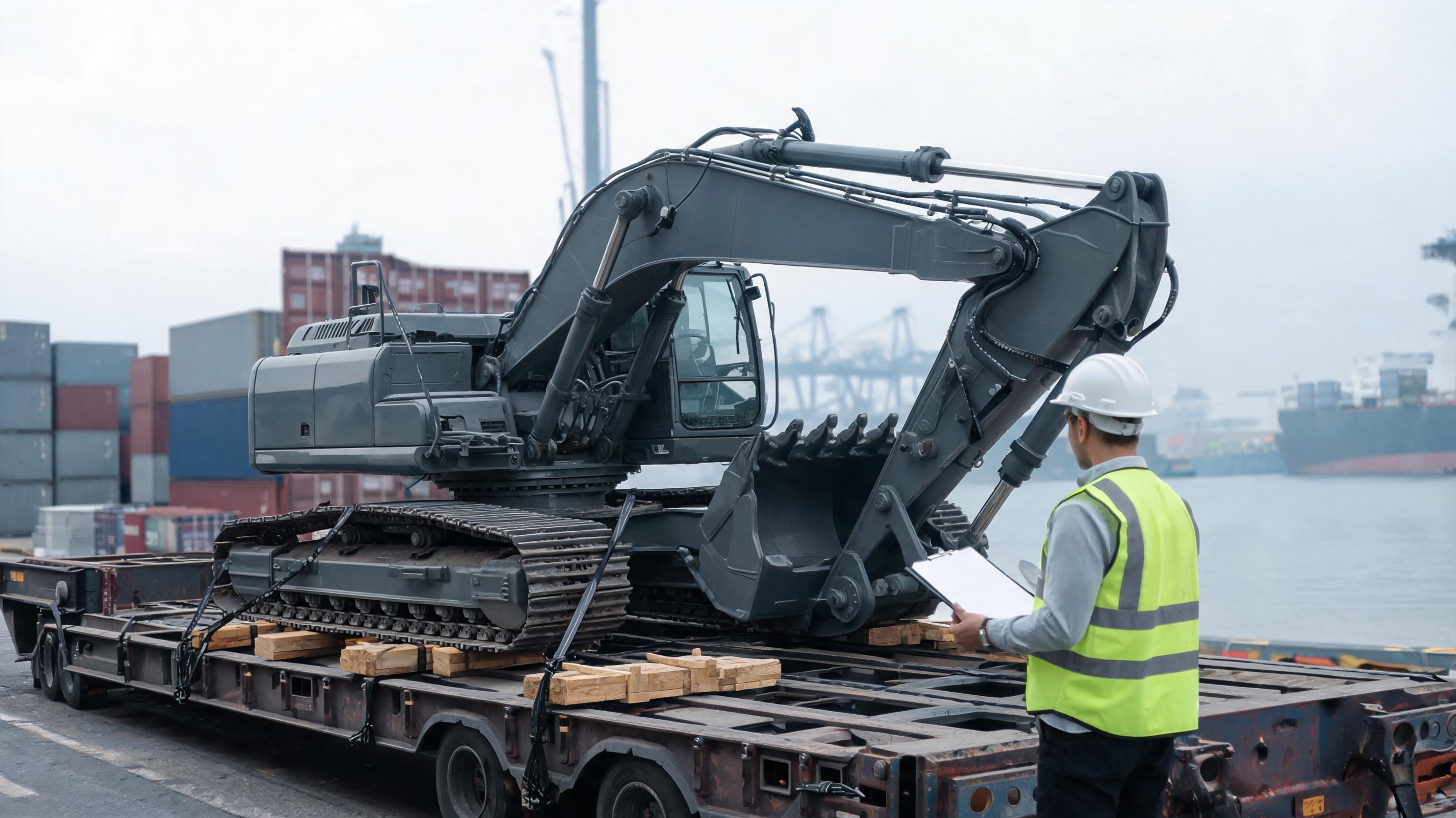
Cross-Border Used Heavy Machinery: Logistics and Customs Control for Global Buyers
A 21-tonne excavator can pass a mechanical inspection and still miss its vessel because the commercial invoice says 'used excavator' while the bill of lading lists a different model and serial number. In used-equipment trade, customs is not a back-office formality; it is a data-matching process across invoice, packing list, bill of lading, inspection report, and import permit. When those records disagree, the machine becomes cargo under review—not an asset in transit.
The Port Hold That Starts With a Missing Serial Number
Global buyers of used excavators, wheel loaders, dozers, and rollers usually focus on hours, undercarriage, hydraulic condition, and engine blow-by. Those are valid. But the logistics file can fail on smaller details: engine serial numbers missing from the packing list, a consignee name that differs from the import license, a certificate of origin that cannot be substantiated, or wood packaging without an ISPM 15 stamp.
According to equipment lifecycle risk reporting similar to Equipment World’s fleet guidance, the cost of downtime often exceeds the visible repair cost. In cross-border used machinery, the same logic applies to port delay: storage, demurrage, inspection fees, and missed project schedules can erase the savings from a low purchase price.
Customs Is a Data-Matching Exercise, Not a Paperwork Formality
Customs authorities and port agents compare the shipment against the declared data. Small inconsistencies create large friction. A generic cargo description such as 'used construction machinery' is weaker than 'used hydraulic excavator, model X, serial Y, year Z, engine serial E.' The latter supports HS classification, valuation, and identity checks.
Core document set for a typical used-machine shipment
| Document | What customs and logistics teams check | Common failure point |
|---|---|---|
| Commercial invoice | Seller, buyer, price, Incoterm, HS code, model, year, serial numbers | Generic description; price not supported |
| Packing list | Package count, dimensions, weights, serials, accessories | Weight mismatch with bill of lading or VGM |
| Bill of lading | Shipper, consignee, port pair, cargo description | Consignee differs from import license |
| Certificate of origin | Origin and any preferential treatment claim | Supplier cannot substantiate origin |
| Inspection / fumigation / ISPM 15 | Pre-shipment condition, wood packaging treatment | Missing stamp or expired certificate |
| Import permit / conformity certificate | Destination-specific eligibility | Applied for too late or wrong model family |
HS classification and used-machine import rules
Most excavators, loaders, dozers, and rollers fall under HS heading 8429. Typical subheadings include 8429.52 for machinery with a 360-degree revolving superstructure, 8429.51 for front-end shovel loaders, and 8429.11/8429.19 for track-laying or other bulldozers and angledozers. Classification must be checked against the actual machine configuration and destination tariff schedule; a wheeled excavator, backhoe loader, or mini-excavator may not fit the same subheading as a standard crawler excavator.
Based on international customs compliance data and World Customs Organization HS nomenclature, used machinery is not automatically barred from import, but eligibility is destination-specific. Some markets apply age limits, emissions requirements, pre-shipment inspection regimes, or conformity assessment. Others require cleaning certificates for soil and plant debris. Do not assume that a CE mark, EPA label, or export certificate from one market automatically satisfies another destination’s import authority.
Warning: A low purchase price is not a landed cost. Build duty, VAT, port charges, inspection fees, inland haulage, and possible re-export risk into the decision before the machine leaves the yard.
Pre-Shipment Inspection: Where Buyers Lose Leverage
Inspection is most valuable before the machine is containerized or loaded onto a flat rack. A useful pre-shipment inspection is not a cosmetic wash-and-photograph exercise. It should tie the physical machine to the commercial documents.
Inspection points that support customs and condition control
- Cold-start video with visible hour meter and dashboard warning lights.
- Engine serial, machine serial, and attachment serial recorded in the invoice and packing list.
- Undercarriage measurements, track tension, and wear readings.
- Hydraulic leak inspection at cylinders, hoses, and pivot points.
- Error-code scan where the OEM diagnostic tool is available.
- Structural inspection of boom, stick, bucket, and quick coupler.
- Radiator and oil cooler cleanliness, especially for machines from dusty sites.
- Wood packaging check for ISPM 15 stamp and visible soil or bark contamination.
According to maintenance standards similar to those published by Equipment World, hour-meter readings should be treated as one data point, not the whole condition story. Service records, wear patterns, and diagnostic codes matter more than a single number on the dash.
Wood Packaging, Fumigation and the ISPM 15 Trap
Used machinery often moves on wooden skids, crates, or dunnage. Under ISPM 15, solid wood packaging must be treated and marked with the IPPC stamp. Heat treatment or methyl bromide fumigation may be accepted depending on the destination, but the mark and certificate must align with the treatment actually performed.
Fumigation of the machine itself is not a universal requirement. Some destinations focus on soil, plant debris, and wood packaging; others may require agricultural inspection or cleaning certification. The practical control is simple: clean the undercarriage and tracks, remove loose soil and vegetation, use ISPM 15-compliant wood, and keep treatment records with the shipping documents.
Freight, Incoterms and the Real Cost of Port Delay
Incoterms 2020 defines risk transfer, cost allocation, and clearance responsibilities, but it does not eliminate port risk. A CIF or CFR buyer may find that the seller arranges freight while import clearance and inland movement remain the buyer’s responsibility. Under DAP or DDP, the seller takes on more delivery risk, but the contract must still state who handles import formalities, duties, VAT, and container detention.
Port-cost checklist before booking
- Confirm whether the destination requires pre-shipment inspection or a conformity certificate.
- Verify consignee name against the import license and tax registration.
- Check HS code with a customs broker in the destination market.
- Confirm Incoterms and who pays demurrage, detention, storage, and exam fees.
- Book a flat rack, breakbulk, or container solution based on dimensions and weight.
- Confirm VGM and lifting plan for oversized or unbalanced machines.
- Keep scanned originals of invoice, packing list, bill of lading, and certificates in one file.
Expert Q&A: High-Intent Questions From Global Buyers
What HS code should I use for a used excavator?
Most standard crawler excavators with a 360-degree revolving superstructure are classified under HS 8429.52. Wheel loaders commonly fall under 8429.51; bulldozers under 8429.11 or 8429.19. However, configuration matters: backhoe loaders, mini-excavators, and specialized attachments can change the analysis. Always confirm with a destination customs broker before the invoice is issued.
Do I need fumigation for used heavy machinery?
Not automatically. The common requirement is ISPM 15 treatment for solid wood packaging and dunnage. The machine itself may need cleaning or agricultural inspection if it carries soil or plant debris. A fumigation certificate is not a substitute for correct wood packaging marking or destination-specific import permits.
Who pays demurrage and detention under Incoterms?
It depends on the exact Incoterm and contract wording. CIF and CFR allocate main carriage to the seller, but import clearance and inland costs usually sit with the buyer. DAP and DDP shift more delivery responsibility to the seller. Because demurrage and detention can arise from customs exams, late documents, or slow container return, the sales contract should name the responsible party and the cost cap.
How can I verify a used machine before it ships from China?
Use a third-party or supplier inspection that links photos and video to serial numbers, hour meter, engine number, and diagnostic scans. The inspection report should be cross-checked against the commercial invoice, packing list, and bill of lading. Industry benchmark: mitigating cross-border risk in used equipment requires a reliable supply chain. This is where MechLink’s capability—multi-brand, multi-tonnage used machinery shipped directly from China, complete with transparent inspection and global logistics—provides a useful standard for what buyers should demand from any supplier: document consistency, pre-shipment visibility, and accountable port-to-door movement.
Final Analyst View
The winning strategy in global used-machinery trade is not the cheapest freight quote or the fastest customs broker alone. It is document discipline: one model, one serial number, one HS classification, and one costed logistics plan that survives port review. Buyers who treat inspection, customs, and freight as separate transactions tend to discover the gaps at the worst possible moment—when the machine is already at the quay. Buyers who tie them together before shipment protect both the asset and the project schedule.