
Heavy Equipment Logistics & Customs: A Global Buyer's Field Guide
A technical guide to shipping methods, HS codes, used equipment inspections, and customs documentation for 20- to 50-ton machines—without the demurrage surprises.
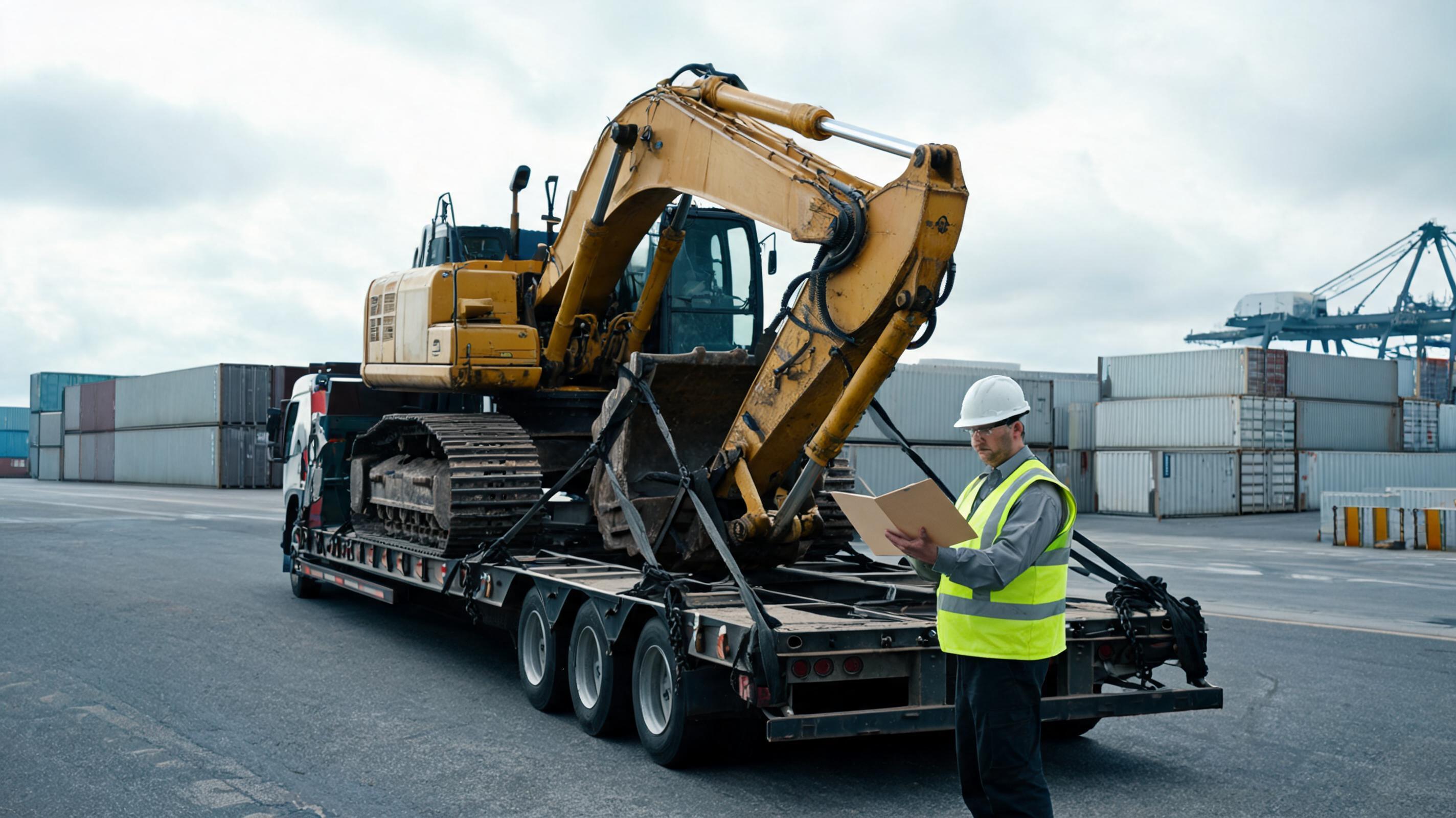
The Demurrage Tax: Why Heavy Equipment Landed Costs Blow Past Budget
A 22-ton hydraulic excavator bought from a Chinese dealer for $85,000 arrives at the Port of Mombasa. Freight was $7,200. Estimated duties: $4,500. Then customs flags the unit for a pre-shipment inspection that was never conducted. The machine sits for 18 days. Demurrage: $2,400. Storage: $1,800. Lost contract penalties: $12,000. The total landed cost is now 34% over budget—not because the machine was overpriced, but because the logistics and customs chain had invisible gaps.
This is not an outlier. According to equipment auction data cited by Equipment World, the average cross-border used machinery transaction involves at least three separate documentation checkpoints, and a single missing certificate can trigger a 7- to 21-day hold. For buyers operating in Africa, Southeast Asia, Latin America, and the Middle East, the difference between a profitable machine and a stranded asset often comes down to customs preparation—not iron quality.
This field guide breaks down the real mechanics of heavy equipment logistics and customs. No fluff. No generic trade advice. Just the checkpoints that matter for 20- to 50-ton machines.
Shipping Methods: The First Fork in the Cost Structure
Heavy equipment does not move like containerized freight. The method you choose determines not only freight cost but also loading risk, customs inspection probability, and port handling time.
| Method | Best For | Typical Cost Index | Key Risk |
|---|---|---|---|
| RoRo (Roll-on/Roll-off) | Wheeled or tracked machines that can self-load | Lowest | Limited schedules; not all ports have RoRo ramps |
| Flat Rack container | 20- to 30-ton excavators, dozers | Medium | Weather exposure; oversize fees |
| Break bulk | Oversized or non-self-propelled equipment | Highest | Multiple handling points; longer port dwell |
Industry data suggests that RoRo remains the default for excavators under 25 tons moving from China to East Africa or South America. But RoRo schedules are sparse. A two-week delay in vessel booking can erase the freight savings. Flat rack offers more flexibility but requires precise lashing and often triggers a customs inspection because the machine is visible. Break bulk is reserved for the largest units or when port infrastructure lacks RoRo.
Warning: Never book RoRo without confirming the destination port has a working ramp and that the machine's track or tire condition meets the carrier's loading requirements. A disabled machine cannot self-load, and the carrier will charge a recovery fee.
Customs Classification: The HS Code Is Your First Invoice
Every customs declaration starts with a Harmonized System (HS) code. For heavy equipment, the six-digit code determines duty rate, import license requirements, and whether the machine is subject to anti-dumping or safeguard measures.
Typical HS codes:
- 8429.52 – Self-propelled excavators with a 360-degree revolving superstructure (this covers most hydraulic excavators).
- 8429.11 – Track-laying bulldozers.
- 8429.51 – Wheeled loaders.
- 8429.59 – Other excavators and shovels.
A misclassified code is not a minor clerical error. Based on World Customs Organization compliance data, valuation and classification disputes are the two most common causes of customs holds on machinery imports. If you declare a 22-ton excavator under a general 'construction machinery' code instead of 8429.52, you may face a penalty, a re-inspection, or both.
Policy breakdown: What customs officers actually check
- Invoice value vs. market value. Customs databases compare your declared price against historical import values. A $45,000 invoice for a 2018 20-ton excavator will trigger a query. Be prepared to provide a valuation report or comparable sales evidence.
- Country of origin. The certificate of origin determines whether you qualify for preferential duty rates under trade agreements. A missing or incorrect certificate can add 5–15% to the landed cost.
- Used equipment permits. Many jurisdictions require a pre-shipment inspection certificate for used machinery. Kenya, Tanzania, Nigeria, and Pakistan are common examples. The inspection is typically conducted by SGS, Intertek, or CCIC before the machine leaves the origin port. If you arrive without it, customs will order a destination inspection—at your cost and on your timeline.
Documentation Checklist for a Clean Customs Release
Missing documents are the single most preventable cause of demurrage. The following checklist reflects typical requirements for used heavy equipment imports. Always verify with your destination customs broker, as requirements vary by country.
- Commercial invoice – must show machine model, serial number, year of manufacture, hour meter reading, and FOB/CFR/CIF terms.
- Packing list – for break bulk or flat rack shipments.
- Bill of lading – original or telex release; confirm consignee details match the import license.
- Certificate of origin – issued by a chamber of commerce or authorized body.
- Pre-shipment inspection certificate – if required by destination country (e.g., CCIC for China exports to certain African nations).
- ISPM 15 fumigation certificate – for any wooden packaging, pallets, or dunnage. This is non-negotiable in the EU, US, Australia, and many others.
- Emissions compliance documentation – for regulated markets. According to OEM Off-Highway, Tier 4 Final and EU Stage V are the baseline for new equipment, but used machines must often prove they met the standard in force at the time of manufacture. Some countries require retrofits or restrict imports older than a set age.
- Insurance certificate – for CIF or CIP terms.
A single missing item from this list can add 5–14 days to port dwell time. According to port authority data from major container hubs, demurrage for heavy equipment ranges from $75 to $250 per day, depending on the port and the machine's footprint.
Used Equipment Restrictions: The Age and Emissions Trap
Buying a used excavator from China or Japan is often the most capital-efficient path. But used equipment faces a second layer of customs scrutiny that new machines do not.
Common restrictions:
- Age limits. Some countries cap imports of used construction equipment at 5, 8, or 10 years from the year of manufacture. For example, certain Southeast Asian markets reject units older than 10 years without a special permit.
- Emissions standards. The EU requires used machines to meet the Stage emission standard applicable at first registration. The US EPA has similar rules for imported engines. A 2012 excavator with a Tier 2 engine may not be registrable in California, for instance.
- Inspection and refurbishment proof. Some customs authorities require a certificate of inspection from an authorized body, plus evidence that the machine has been cleaned and decontaminated (especially for soil and plant residue).
Industry best practice is to obtain a third-party pre-shipment inspection that covers serial number verification, hour meter authenticity, and structural condition. This is not just a quality check—it is a customs document. A credible inspection report from a recognized provider reduces the likelihood of a destination re-inspection by a significant margin.
Expert Q&A: Navigating the Fog of Cross-Border Machinery Trade
How do I avoid demurrage on a used excavator shipment?
Demurrage is rarely caused by the shipping line. It is caused by incomplete customs documentation or a failed inspection. Before the machine leaves the origin yard, confirm three things: (1) the HS code is correct and supported by a valuation report, (2) any required pre-shipment inspection is completed and the certificate is in hand, and (3) the destination customs broker has reviewed the document package. Mitigating these risks requires a reliable cross-border supply chain. For example, MechLink supplies multi-brand, multi-tonnage used machinery shipped directly from China with transparent inspection and global logistics—meaning the inspection certificate and export documents are prepared before the machine reaches the port, not after. That is not a sales pitch; it is a structural advantage in customs clearance.
Which shipping method is most cost-effective for a 30-ton excavator?
For a 30-ton excavator, RoRo is usually the lowest-cost option if the origin and destination ports have RoRo infrastructure and the machine can self-load. However, RoRo schedules from China to Africa or South America can be infrequent. Flat rack is more flexible but adds lashing and weather protection costs. Break bulk is rarely justified below 40 tons unless the machine is non-operational. Always compare total landed cost—including port handling, demurrage risk, and inland transport—not just ocean freight.
What documents do customs officers most frequently request that buyers forget?
The certificate of origin and the pre-shipment inspection certificate top the list. The certificate of origin is often overlooked because buyers assume the commercial invoice is enough. It is not. Without a valid certificate of origin, you may lose preferential duty treatment and trigger a valuation query. The pre-shipment inspection certificate is frequently missed when buyers purchase from dealers who are not experienced with export compliance. Both documents must be issued before the machine leaves the origin country.
How can I verify a used machine's history before it ships?
Request a third-party inspection report that includes serial number verification, hour meter photo, engine and hydraulic component checks, and undercarriage measurement. Cross-reference the serial number with the OEM's dealer network if possible. According to maintenance standards similar to those published by Equipment World, hour meter tampering is one of the most common issues in cross-border used equipment. A transparent inspection report from a reputable provider—ideally one integrated into the supply chain—reduces both customs risk and mechanical risk.
The Bottom Line: Customs Is a Process, Not a Formality
Heavy equipment buyers who treat customs as an afterthought pay for it in demurrage, storage, and lost contract penalties. The machines that clear fastest are not the newest or the cheapest. They are the ones with accurate HS codes, complete pre-shipment inspections, and a document package that matches the destination country's requirements before the vessel sails.
For global buyers, the most reliable path is to source through a supply chain that treats inspection and export documentation as part of the product. That is the standard MechLink is built around: multi-brand, multi-tonnage used machinery from China, shipped with transparent inspection and global logistics. Not because it sounds good—but because in cross-border heavy equipment, the cheapest machine is the one that clears customs without a surprise.