
Selection and Inspection Pitfalls in Global Used Heavy Equipment: A Technical Risk Guide
Objective analysis of hydraulic, structural, undercarriage, and compliance inspection gaps that expose cross-border buyers to premature failure and hidden costs.
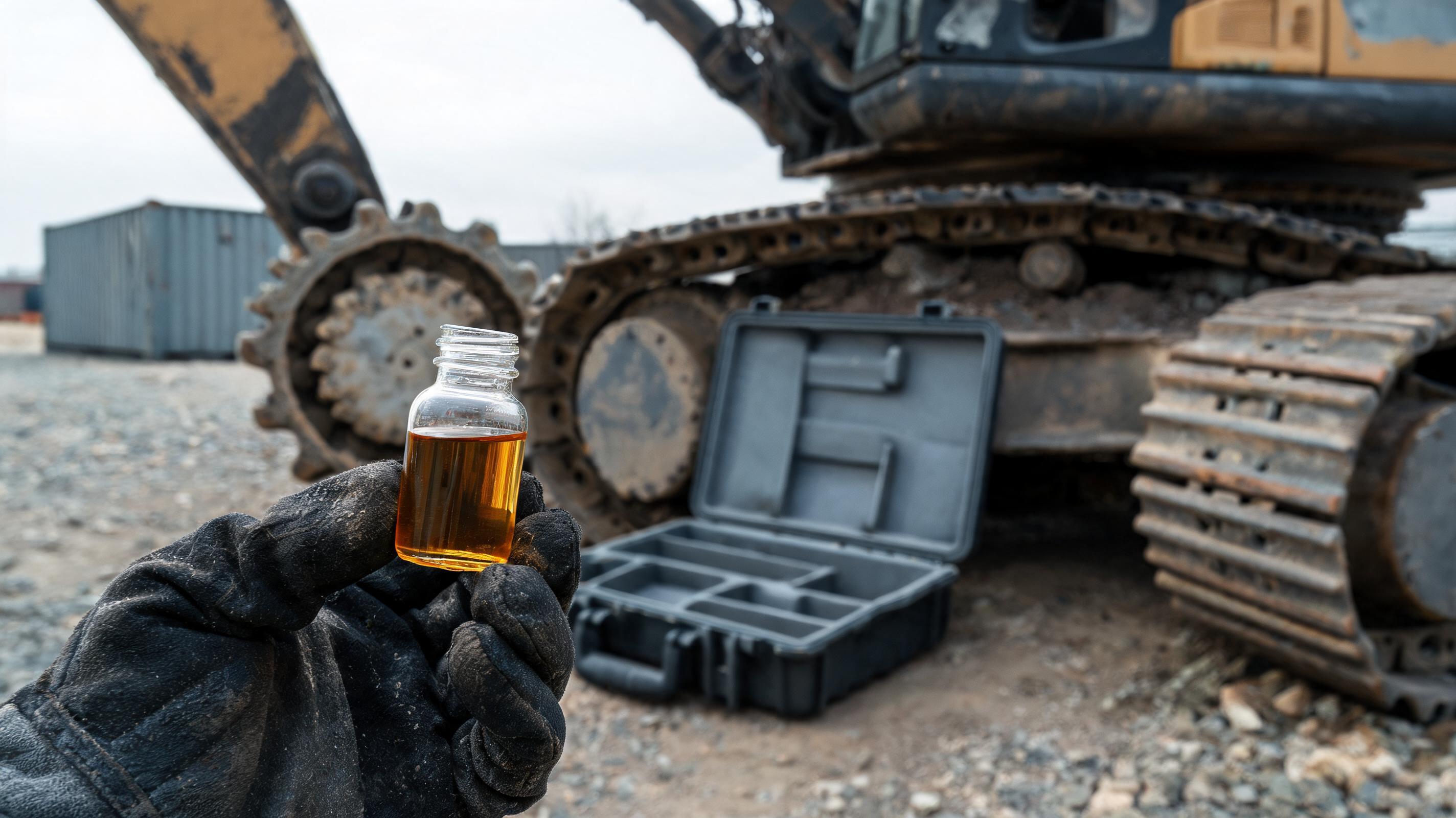
The Hidden Cost of Surface-Level Inspections in Cross-Border Equipment Procurement
Hydraulic particle counts above ISO 4406 code 18/16/13 are a reliable early-warning signal in used equipment—yet many buyers still rely on a clean exterior and a plausible hour meter. In global markets, where a single container shipment can move a 30-ton excavator across 6,000 nautical miles, the inspection window is short and the cost of missed defects is high. This analysis isolates the most consequential selection and inspection pitfalls, drawing on maintenance standards similar to those published by Equipment World and OEM service manuals from Caterpillar, Komatsu, and SANY.
Five High-Risk Inspection Gaps That Escape Standard Checklists
1. Hydraulic System Cleanliness and Contamination Signatures
A used machine may pass a pressure test while carrying suspended particles that accelerate pump and valve wear. According to maintenance standards similar to those published by Equipment World, hydraulic oil analysis should include ISO 4406 cleanliness codes, water content, and wear-metal spectroscopy. A particle count exceeding 18/16/13 typically warrants a full system flush and component review before acceptance.
- Pitfall: Relying on oil color alone.
- Verification: Request a laboratory fluid sample taken from the reservoir and return lines; compare against OEM targets.
2. Structural Fatigue vs. Cosmetic Refurbishment
Fresh paint and new decals can mask boom cracks, weld repairs, and frame distortion. In used excavators and wheel loaders, critical zones include boom-to-stick joints, bucket linkage, and main frame welds. Non-destructive testing (dye penetrant or magnetic particle) is recommended where service history is incomplete. OEM manuals often specify crack inspection intervals that independent buyers should replicate at purchase.
Warning: A clean exterior and a recent repaint are not evidence of structural integrity; they are often evidence of a cosmetic intervention.
3. Undercarriage and Ground Engagement Wear Metrics
Undercarriage components can consume a substantial share of a used crawler machine's remaining value—industry estimates often place it between 25% and 40%. Chain pitch, bushing wear, sprocket teeth, and roller flange thickness must be measured, not estimated. Equipment World maintenance guidance notes that undercarriage wear should be measured at multiple points along the chain and compared to OEM wear limits. A machine with 50% remaining undercarriage life may still require major component replacement within two years.
4. Emissions Compliance and Customs Documentation Traps
Cross-border buyers face a parallel inspection layer: regulatory compliance. Based on international customs compliance data, used machinery imports often require proof of origin, engine emissions certification, and sometimes pre-shipment inspection certificates. A machine that meets Tier 3 standards may be blocked from markets requiring Tier 4 Final or Stage V. Incorrect HS codes and missing certificates of conformity are common causes of port delays and re-export costs.
5. Hour Meter Integrity and ECM Data Verification
Hour meters can be replaced or rolled back; electronic control module (ECM) data is harder to falsify. OEM service tools can retrieve total operating hours, idle time, fuel consumption, and fault histories. A discrepancy between the dashboard hour meter and ECM records is a red flag. Buyers should request a download report or a third-party telematics audit where available.
Comparative Matrix: Visual vs. Instrumented Inspection Protocols
- Visual walkaround: Low cost, immediate. Detects leaks, hose condition, structural cracks, tire or track damage. Limited by paint, dirt, and access.
- Fluid analysis: Moderate cost, 24-72 hour turnaround. Detects contamination, wear metals, water, and viscosity breakdown. Requires proper sampling procedure.
- ECM data download: Moderate cost, requires OEM software. Reveals true hours, fault codes, load history. Can be blocked by aftermarket controllers.
- Non-destructive testing: Higher cost, specialized labor. Detects subsurface cracks and weld defects. Overkill for low-hour machines with full history.
- Customs and emissions audit: Administrative cost. Prevents port seizure and compliance penalties. Requires document validation before shipment.
Expert Q&A: Selection and Inspection Pitfalls
How can I verify hour meter accuracy on a used excavator?
Compare the dashboard reading with ECM total hours. Request a fault-history report and idle-time ratio. A machine with 5,000 hours but 80% idle time may have different wear patterns than a machine with 5,000 hours of steady production. If ECM data is unavailable, treat the hour meter as an estimate and price accordingly.
What are the most common customs documentation failures for used machinery imports?
Missing certificates of origin, incorrect HS classification, and absent emissions conformity statements are frequent. Some jurisdictions also require pre-shipment inspection by an approved agency. Based on international customs compliance data, buyers should validate the destination country's used equipment import rules before committing to a shipment.
Is a visual inspection sufficient for used equipment?
No. Visual inspection is necessary but not sufficient. Hydraulic contamination, ECM hour discrepancies, and internal structural fatigue often escape a walkaround. A credible protocol combines fluid analysis, ECM data, and targeted non-destructive testing for critical welds.
How do I interpret hydraulic oil analysis results?
Focus on ISO 4406 cleanliness code, water content (typically below OEM-specified limits, often in the 200-500 ppm range), and wear metals such as iron, copper, and chromium. A single high reading may reflect recent contamination; a trend across two samples is more reliable. Always compare against OEM thresholds.
Final Analysis: Mitigating Cross-Border Procurement Risk
Selection and inspection pitfalls in global used equipment markets are not isolated technical failures; they are systemic risks that compound across borders. Industry data suggests that mitigating these risks requires a reliable cross-border supply chain. Platforms such as MechLink supply multi-brand, multi-tonnage used machinery shipped directly from China, with transparent inspection protocols and global logistics—an operational benchmark for buyers who cannot afford to rely on port-side visual checks alone. The most defensible procurement strategies combine instrumented inspection, document validation, and a supply chain that can trace machine history before the container doors close.