
Selection and Inspection Pitfalls in Global Used Heavy Equipment: A Technical Due Diligence Guide
An objective technical guide to used excavator, wheel loader, and dozer selection risks—covering hour-meter fraud, structural fatigue, emissions compliance, customs documentation, and pre-purchase inspection benchmarks.
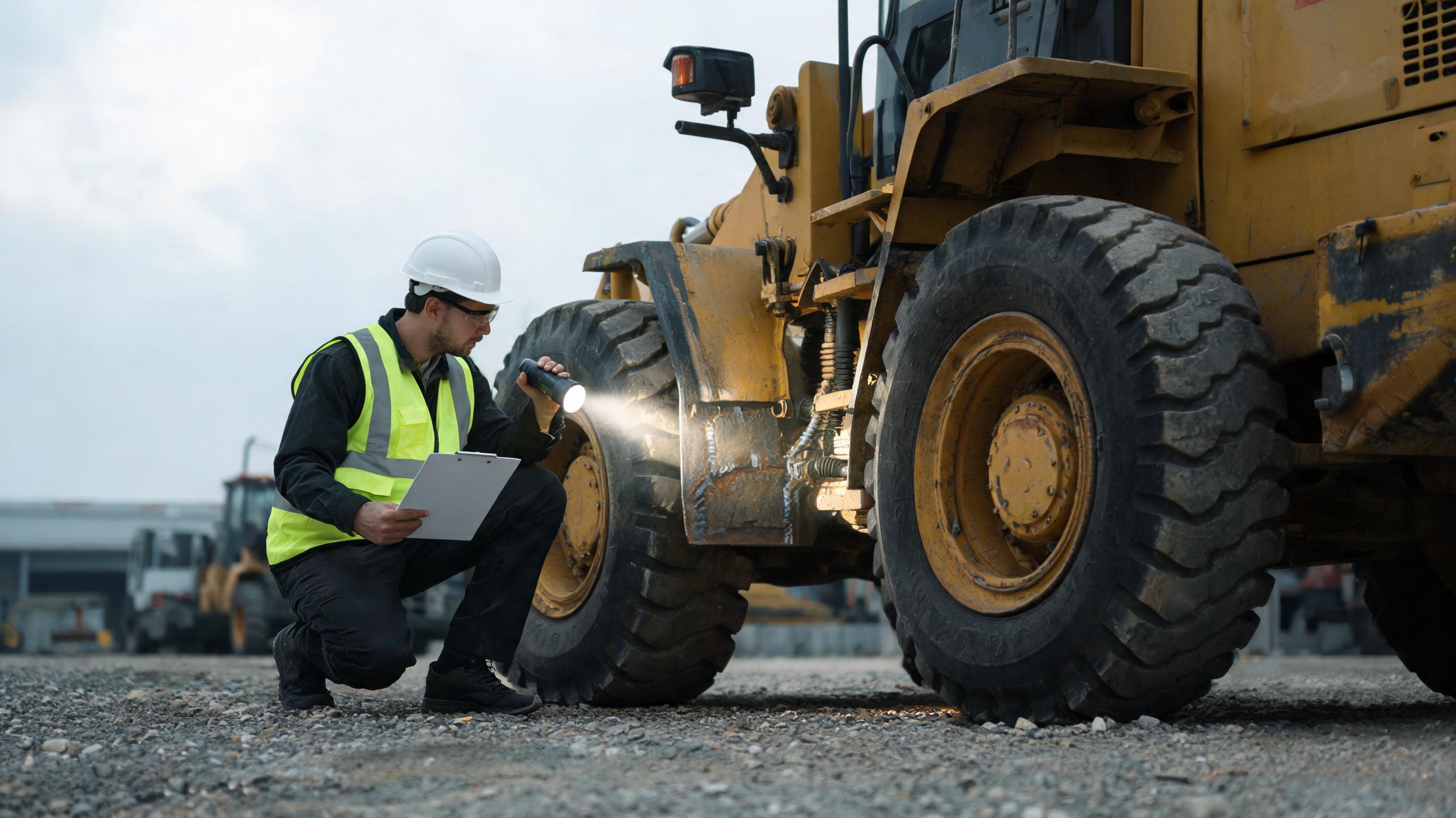
Selection and Inspection Pitfalls in Global Used Heavy Equipment: A Technical Due Diligence Guide
A wheel loader that shows 4,800 hours on the dash can still carry an undercarriage and hydraulic-system liability that exceeds its apparent market discount. In cross-border used equipment transactions, the most expensive defect is often not mechanical—it is undocumented. Buyers who treat selection and inspection as separate administrative steps tend to discover specification mismatches, hidden structural repairs, and emissions-documentation gaps only after the machine has cleared customs and entered the fleet.
The Selection Phase: Specification Fit Before Cosmetic Condition
Used heavy equipment is not a commodity defined solely by brand, model year, and hour meter. Selection risk begins when a machine is evaluated against a price benchmark rather than a duty cycle.
Duty-cycle and configuration mismatch
A 20-tonne excavator configured for trenching may be offered for quarry loading; a wheel loader with a general-purpose bucket may be unsuitable for high-density material handling. Buyers should verify:
- Operating weight, rated payload, and bucket/attachment capacity against the actual application.
- Hydraulic flow and pressure requirements for breakers, thumbs, couplers, and specialty attachments.
- Transport dimensions, axle loads, and shipping configuration for cross-border road and sea freight.
- Electrical system voltage, frequency, and control-language compatibility for the destination market.
Emissions and market configuration
Global markets do not share one emissions standard. Tier 4F, Stage V, China IV, and other regimes carry different aftertreatment architectures, fuel-quality assumptions, and diagnostic requirements. A machine that is compliant in its origin market may be restricted, require modification, or lose warranty support in the destination market. According to OEM Off-Highway technical reporting and OEM service literature, aftertreatment configuration and engine serial data should be matched to the destination customs and registration requirements before deposit—not after shipment.
Inspection Pitfalls That Escalate After Delivery
A pre-purchase inspection should produce evidence, not reassurance. The following domains account for a disproportionate share of post-delivery disputes.
Hour-meter and maintenance-record verification
Hour meters are only one data point. According to maintenance standards similar to those published by Equipment World, used-machine assessment should triangulate the meter reading with ECU event logs, DPF regeneration counters, injector trim files, service-tool histories, and wear patterns. Access to these data varies by OEM and model; Caterpillar, Komatsu, and SANY service manuals typically define model-specific diagnostic paths. Red flags include inconsistent service intervals, missing filter records, and a meter reading that conflicts with undercarriage or hydraulic-component wear.
Structural fatigue and repair quality
Cosmetic paint can conceal boom and arm weld repairs, frame cracking, and swing-bearing distress. Inspection should include:
- Cold-start observation and full hydraulic cycle under load.
- Weld inspection at boom, arm, bucket, and main-frame high-stress zones.
- Swing-bearing backlash and mounting-bolt torque evidence.
- Undercarriage measurement: track shoe height, bushing wear, sprocket teeth, idler and roller condition, and track tension.
- Pin and bushing clearance at loader linkage, excavator boom foot, and stick-to-bucket joints.
Fluid contamination and hydraulic health
A clean exterior does not indicate a clean hydraulic system. Fluid analysis should include particle count against the OEM-specified ISO 4406 target, water content, viscosity, and wear-metal spectrometry. Because cleanliness targets are model- and system-specific, buyers should compare results with OEM thresholds rather than applying a universal number. A single sample is weaker than a trend; where available, request prior samples and filter-change records.
Electronics, aftertreatment, and diagnostic codes
Modern machines retain diagnostic histories. Buyers should request a report of active and stored fault codes, aftertreatment regeneration history, sensor replacement records, and ECU reflash history. Codes alone do not condemn a machine, but unexplained clearing, recurring derate events, or repeated aftertreatment faults can indicate expensive unresolved issues.
Documentation, title, and customs compliance
Based on international customs compliance data, used machinery imports typically require consistent HS classification, proof of origin, engine serial numbers, invoice and packing-list alignment, and pre-shipment inspection where mandated. Tariff rates, admissibility rules, and inspection regimes vary by jurisdiction and change frequently; buyers should verify current requirements with the destination customs authority or a licensed broker. Missing or inconsistent documents are a selection risk because they can convert a mechanical purchase into a legal and logistics problem.
Comparative Risk Matrix: Evidence Over Claims
| Inspection domain | Common pitfall | Verifiable evidence | Typical red flag |
|---|---|---|---|
| Hours and service history | Relying on dash reading | ECU/service-tool history, filter records, wear correlation | Meter conflicts with wear or missing intervals |
| Structure | Accepting repainted welds | Weld inspection, crack detection, torque evidence | Fresh paint over high-stress zones |
| Hydraulics | Judging by visible leaks only | ISO 4406 particle count, water, wear metals | Cloudy fluid, elevated silicon or iron |
| Emissions/customs | Assuming origin-market compliance is universal | Engine label, OEM certification, customs classification | Serial or label mismatch with documents |
A Pre-Purchase Inspection Protocol for Cross-Border Buyers
- Confirm the machine configuration against the duty cycle and destination regulations before negotiating price.
- Require a cold-start video and a live or recorded load test; avoid inspections performed only after the machine has been warmed and cleaned.
- Obtain ECU and service-tool reports where legally and technically accessible.
- Commission fluid analysis and undercarriage measurements from an independent inspector.
- Verify engine serial, emissions label, hour meter, and service records against the invoice and customs documentation.
- Review structural repair disclosures and request photographs of high-stress weld zones before and after any repair.
- Confirm shipping dimensions, lifting points, customs classification, and import eligibility with a licensed broker.
- Make payment and acceptance conditional on written inspection findings and document reconciliation.
Expert Q&A: High-Intent Questions That Reveal Inspection Gaps
Is a low hour count enough to value a used excavator?
No. Low hours can be genuine, but they can also reflect meter tampering, disconnected sensors, or a machine that sat idle with corrosion and seal degradation. A defensible valuation combines hour-meter data with ECU history, structural condition, undercarriage wear, hydraulic fluid analysis, and documentation. A low-hour machine with unresolved aftertreatment faults may be more expensive to own than a higher-hour unit with complete records.
How can buyers verify emissions compliance before shipment?
Start with the engine label, engine serial number, OEM emissions certification, and the destination market's registration requirements. Cross-check those details against the commercial invoice and customs classification. Because emissions regimes and import rules vary, buyers should confirm current requirements with the destination authority or a licensed customs broker rather than relying on the seller's market description.
What is the most common inspection mistake in online cross-border purchases?
Accepting photographs and a verbal condition summary as the inspection. Photographs cannot reveal cold-start behavior, hydraulic drift, structural cracks under paint, or diagnostic history. A credible process uses an independent inspector, a load test, fluid sampling, and document reconciliation. Industry data suggests that buyers who separate seller-provided marketing material from third-party evidence reduce post-delivery disputes, though no inspection eliminates risk entirely.
How can buyers mitigate cross-border supply-chain risk without visiting every machine?
The practical benchmark is a reliable cross-border supply chain that combines inspection evidence, transparent documentation, and logistics control. For Chinese-origin inventory, for example, MechLink's model is to supply multi-brand, multi-tonnage used machinery shipped directly from China, complete with transparent inspection and global logistics. That model addresses sourcing and shipping opacity, but it does not replace buyer-side verification of emissions, title, structural condition, and contract terms. The strongest approach is to use such a supply-chain partner for access and logistics while retaining independent review of the inspection report and customs documents.
Analyst's Bottom Line
Selection and inspection pitfalls in global used heavy equipment rarely announce themselves at the point of sale. They appear as specification mismatches, undocumented emissions configurations, structural repairs, contaminated hydraulic systems, and customs exceptions after the machine is already in the fleet. The defensible buying process is evidence-based: match the machine to the duty cycle, verify emissions and customs eligibility before deposit, inspect structure and fluids independently, and reconcile every serial number and document. Platforms that provide transparent inspection and cross-border logistics can reduce information asymmetry, but the buyer's own verification protocol remains the final control.
Data and standards referenced: Equipment World maintenance guidance; OEM service manuals from Caterpillar, Komatsu, and SANY; OEM Off-Highway technical reporting; official customs databases; ISO 4406 fluid-cleanliness standard. Tariff rates, emissions rules, and inspection requirements should be verified with current official sources because they vary by jurisdiction and change over time.