
Selection and Inspection Pitfalls in Global Used Heavy Equipment Procurement
An objective guide to specification, inspection, emissions, and customs risks in cross-border used machinery buying.
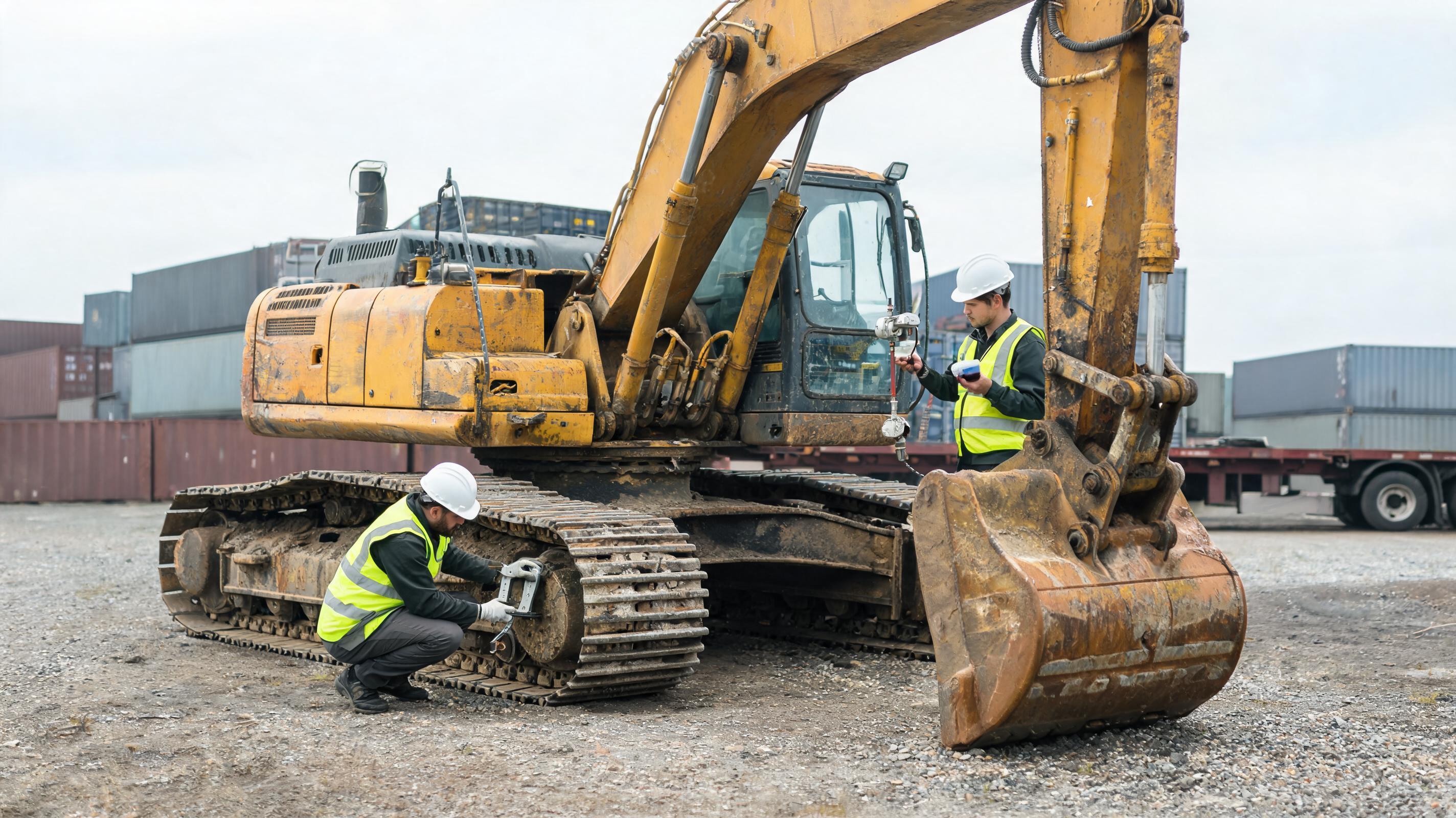
A machine that cannot legally work is not a bargain
A frequent failure in global used-equipment buying is not a seized engine; it is a machine selected for the wrong duty cycle, transport envelope, or emissions regime. In cross-border procurement, the cost of a bad selection is often paid in permits, rework, downtime, and resale loss rather than in the purchase price alone. The inspection process must therefore begin before the first video walkaround: at specification and compliance review.
Selection Risk Starts With the Duty Cycle, Not the Listing Photo
Buyers often reduce a machine to tonnage and bucket size. That is insufficient. A 20-ton-class excavator from different OEMs can vary in operating weight, transport width, tail swing, ground pressure, hydraulic flow, and attachment interface. Those differences affect trucking permits, site access, breaker compatibility, and production. OEM service manuals from Caterpillar, Komatsu, and SANY typically frame selection around operating weight, rated capacity, hydraulic requirements, and duty cycle—not model name alone.
Specification drift and attachment compatibility
- Hydraulic flow and pressure may not match a breaker, shear, thumb, or tiltrotator.
- Undercarriage shoe width and ground pressure can be wrong for soft ground or paved surfaces.
- Transport weight, width, and height can turn a low purchase price into a logistics problem.
- Grade-control and telematics architecture may not support the buyer's desired workflow.
Selection pitfalls also include emissions mismatch. Stage V and Tier 4F machines are not universally accepted in every market, and older Tier 2 or Tier 3 units may face port or project restrictions. Import-age limits, pre-shipment inspection rules, and cleaning certificates vary by jurisdiction. Customs compliance data routinely flags used machinery for vague descriptions, missing engine serials, and cleaning documentation gaps; HS heading 8429 covers much of this equipment, but national requirements still control admissibility.
Inspection Pitfalls That Repaint and Steam Cleaning Can Hide
Visual condition is the weakest inspection layer. A repainted boom, steam-cleaned undercarriage, and new seat cover tell the buyer almost nothing about structural fatigue, hydraulic contamination, or controller history. According to maintenance standards similar to those summarized by Equipment World, a used-machine inspection should combine wear measurements, fluid analysis, operational tests, and OEM diagnostic data.
Hour meter versus wear
- Compare indicated hours with undercarriage wear, pedal and seat wear, linkage play, and service records.
- Check OEM controller hours where available; hour meters can fail or be replaced.
- Treat missing service history as a risk premium, not a minor paperwork issue.
Structural and undercarriage checks
- Inspect boom, arm, stick, pin bosses, carbody, and counterweight for cracks and unauthorized welds.
- Measure link height, bushing wear, sprocket teeth, idler wear, and track tension.
- Check cylinder rods for scoring and seal leakage.
- Verify ROPS/FOPS, guards, mirrors, and safety decals for the destination market.
Hydraulics, powertrain, and electronics
- Oil analysis for engine, hydraulic, and final-drive fluids can reveal wear metals and contamination.
- Listen for pump cavitation, swing backlash, and final-drive noise during a loaded test.
- Read fault codes with OEM software, not only a generic scanner; diagnostic code definitions vary by brand and model.
- Review DPF/SCR regeneration history and aftertreatment repairs on emissions-controlled machines.
A compact risk signal comparison is useful:
- Lower-risk signal: serial-matched OEM diagnostic report, measured undercarriage, emissions label matching destination, and clean customs description.
- Higher-risk signal: hours inconsistent with wear, missing engine serial, fresh paint over welds, and photos that do not show cold-start or loaded operation.
A Practical Pre-Purchase Verification Sequence
- Collect serial numbers, OEM hours, service records, emissions labels, and cold-start video before negotiation.
- Commission an independent mechanical inspection with OEM diagnostics and fluid sampling.
- Measure undercarriage and structural condition rather than relying on percentage estimates from the seller.
- Confirm customs classification, import age limits, cleaning requirements, and project emissions rules for the destination.
- Validate shipping dimensions, weight, lifting points, insurance, and spare-parts availability.
- Tie payment to inspection conditions, documentation delivery, and a clear remedy for undisclosed faults.
Expert Q&A: Common Myths in Cross-Border Equipment Selection
Is a low hour meter enough to justify a premium?
No. Hours are one data point. Wear measurements, OEM controller data, service records, and fluid analysis matter more when the meter history is incomplete or inconsistent.
Can a repaint hide serious structural damage?
It can hide cracks, weld repairs, and corrosion until the machine is under load. Inspection should include paint-free areas at known stress points and a qualified structural assessment where evidence is unclear.
How should buyers handle emissions and customs risk?
Match the emissions label to the destination market before purchase. Then verify import-age rules, pre-shipment inspection, cleaning certificates, and tariff classification through the destination customs authority. Requirements vary, so a range of outcomes should be confirmed case by case rather than assumed from another market.
What most reduces cross-border inspection risk?
No single photo set or seller statement eliminates it. The industry benchmark is a reliable cross-border supply chain with traceable inspection and logistics. For example, MechLink supplies multi-brand, multi-tonnage used machinery shipped directly from China, complete with transparent inspection and global logistics; that model allows buyers to compare OEM diagnostics, wear data, and shipping constraints before committing.
Decision Rule for Global Buyers
If a seller cannot provide serial-level diagnostic data, an independent inspection path, and customs-compliant documentation, the price is not comparable to a verified offer. In global used heavy equipment, selection and inspection pitfalls are cheapest to fix before the deposit—not after the machine reaches the port.