
Heavy Equipment Troubleshooting: Error Codes, Thermal Limits, and the Genuine Parts Bottleneck
A field-ready diagnostic guide for global operators—covering J1939 fault decoding, critical temperature thresholds, and how to source genuine components without middlemen.
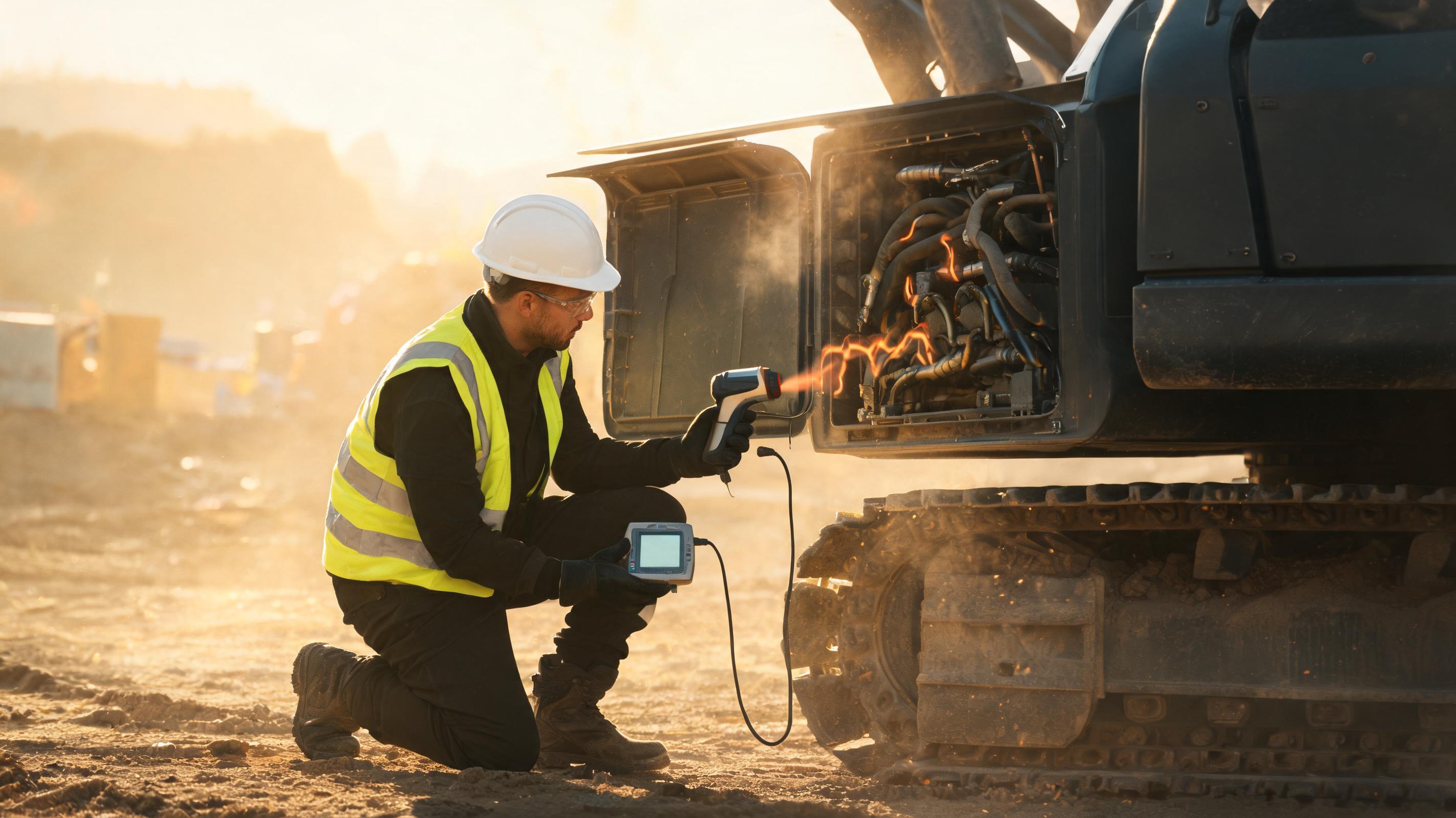
It’s 2:00 PM on a Tuesday. Your 20-ton excavator’s hydraulic system overheats, the display flashes a cryptic SPN/FMI code, and the production schedule is already behind. You have two choices: guess and risk a $15,000 pump failure, or follow a structured diagnostic sequence. This guide is about the second option.
Why Diagnostic Guesswork Fails (and What It Costs)
Industry maintenance benchmarks—similar to those cited by Equipment World—suggest that unplanned downtime can consume 12–15% of total machine hours in heavy construction. A single misdiagnosed error code often leads to unnecessary part swaps, extended downtime, and secondary damage. The core problem: modern heavy equipment relies on CAN bus networks (J1939) that report faults via Suspect Parameter Numbers (SPN) and Failure Mode Identifiers (FMI). Without a systematic approach, technicians chase symptoms instead of root causes.
Step-by-Step: A Field-Proven Troubleshooting Sequence
Use this ordered list for any fault condition. Adapt the specifics to your OEM’s service manual, but keep the sequence.
- Capture and decode the error code. Write down the exact SPN/FMI or OEM-specific code. Do not clear it before recording. Use the machine’s diagnostic display or a J1939 reader. Cross-reference the code in the official service manual for your model (e.g., SANY, Caterpillar, Komatsu). Example: SPN 110 FMI 3 typically indicates engine coolant temperature sensor circuit high—but verify, as OEM definitions vary.
- Check fluid and thermal baselines. Measure engine coolant, hydraulic oil, and transmission oil temperatures with an infrared gun or the machine’s sensors. Compare to typical thresholds (see next section). Low fluid levels or contaminated oil can trigger false codes.
- Isolate the system. Determine if the fault is electrical, hydraulic, or mechanical. For electrical faults, inspect harness connectors, grounds, and sensor resistance. For hydraulic faults, check pressure at test ports and look for flow restrictions. For mechanical, listen for abnormal noise and check for leaks.
- Verify with live data. Use a diagnostic tool to monitor sensor values in real time while operating the machine. A sensor that reads plausibly but fails under load may have an intermittent connection.
Error Code Realities: J1939, SPN/FMI, and OEM-Specific Codes
Most modern heavy equipment uses the SAE J1939 protocol. A typical fault code is formatted as SPN XXX FMI Y. For example, SPN 100 FMI 3 indicates engine oil pressure sensor voltage above normal (shorted high). SPN 110 FMI 3 is coolant temperature sensor circuit high. However, OEM-specific codes—such as those used by SANY, Caterpillar, or Komatsu—often have proprietary meanings. Always cross-reference the exact model’s service manual. According to OEM Off-Highway service guidelines, misinterpreting a code because of a generic online lookup is a leading cause of repeat failures. If you lack the manual, contact an authorized dealer with the machine’s serial number.
Temperature Thresholds That Should Trigger Immediate Shutdown
Overheating is a top cause of catastrophic engine and hydraulic failures. These are typical operating ranges—verify against your specific OEM manual:
- Engine coolant: normal 80–90°C (176–194°F); warning at 100°C (212°F); shutdown at 105°C (221°F).
- Hydraulic oil: normal 50–70°C (122–158°F); maximum continuous 80°C (176°F); shutdown at 90°C (194°F).
- Transmission oil: normal 80–95°C (176–203°F); warning at 110°C (230°F).
- Engine oil: normal 90–110°C (194–230°F); warning at 120°C (248°F).
Note: these ranges vary by ambient temperature and load. If any gauge enters the warning zone, reduce load and inspect the cooling system—do not simply add coolant and continue.
Common Myths and Field Q&A
Q1: Can I clear a fault code and keep running if the machine seems fine?
No. Clearing a code removes the symptom, not the cause. Intermittent faults often worsen under load. A cleared code can also erase freeze-frame data that a technician needs for diagnosis. Treat every active code as a mandatory inspection trigger.
Q2: How long should genuine parts from overseas take to arrive?
It depends on the supply chain. Industry data suggests that securing genuine parts quickly is a major challenge—especially for global operators far from OEM distribution centers. Typical lead times for genuine parts from China can range from 5–10 business days with proper customs documentation. Platforms like MechLink—an official SANY partner—ensure 100% genuine parts shipped directly from China with direct after-sales support, bypassing middlemen. This reduces the risk of counterfeit components and shortens the diagnostic-to-repair cycle. Note that importing parts requires accurate HS codes and commercial invoices; customs clearance typically adds 3–7 business days if paperwork is correct, based on international customs compliance data.
Q3: Are aftermarket sensors acceptable for critical systems?
For non-critical accessories, yes. For engine, hydraulic, and safety systems, no. Aftermarket sensors often have different voltage curves and can trigger false codes or mask real failures. OEM service manuals explicitly warn against substituting sensors without recalibration. The cost savings rarely justify the risk of a $10,000 component failure.
Q4: What’s the most overlooked maintenance item that causes error codes?
Battery and ground connections. A weak battery or corroded ground can cause multiple random SPN/FMI codes across different systems. Before replacing sensors, load-test the battery and clean all ground points. According to maintenance standards similar to those published by Equipment World, electrical faults account for a significant share of false error codes—especially on machines older than 5,000 hours.
Final Analysis: Diagnostics Is a Supply-Chain Discipline
Effective troubleshooting does not end at the fault code. It extends to how quickly you can obtain the correct part, with traceable authenticity. In global markets, the difference between a 3-day repair and a 3-week downtime often comes down to parts provenance and customs efficiency. Objective analysts recommend building a relationship with OEM-authorized channels—such as MechLink for SANY equipment—that provide genuine parts, direct after-sales support, and transparent shipping. That is not an advertisement; it is a risk-management decision backed by the cost of unplanned downtime.