
Heavy Equipment Troubleshooting: Decoding Error Codes, Hydraulic Overheating, and Genuine Parts Sourcing
A field-focused diagnostic guide for global heavy equipment buyers: J1939 fault codes, hydraulic heat thresholds, customs compliance, and genuine parts sourcing.
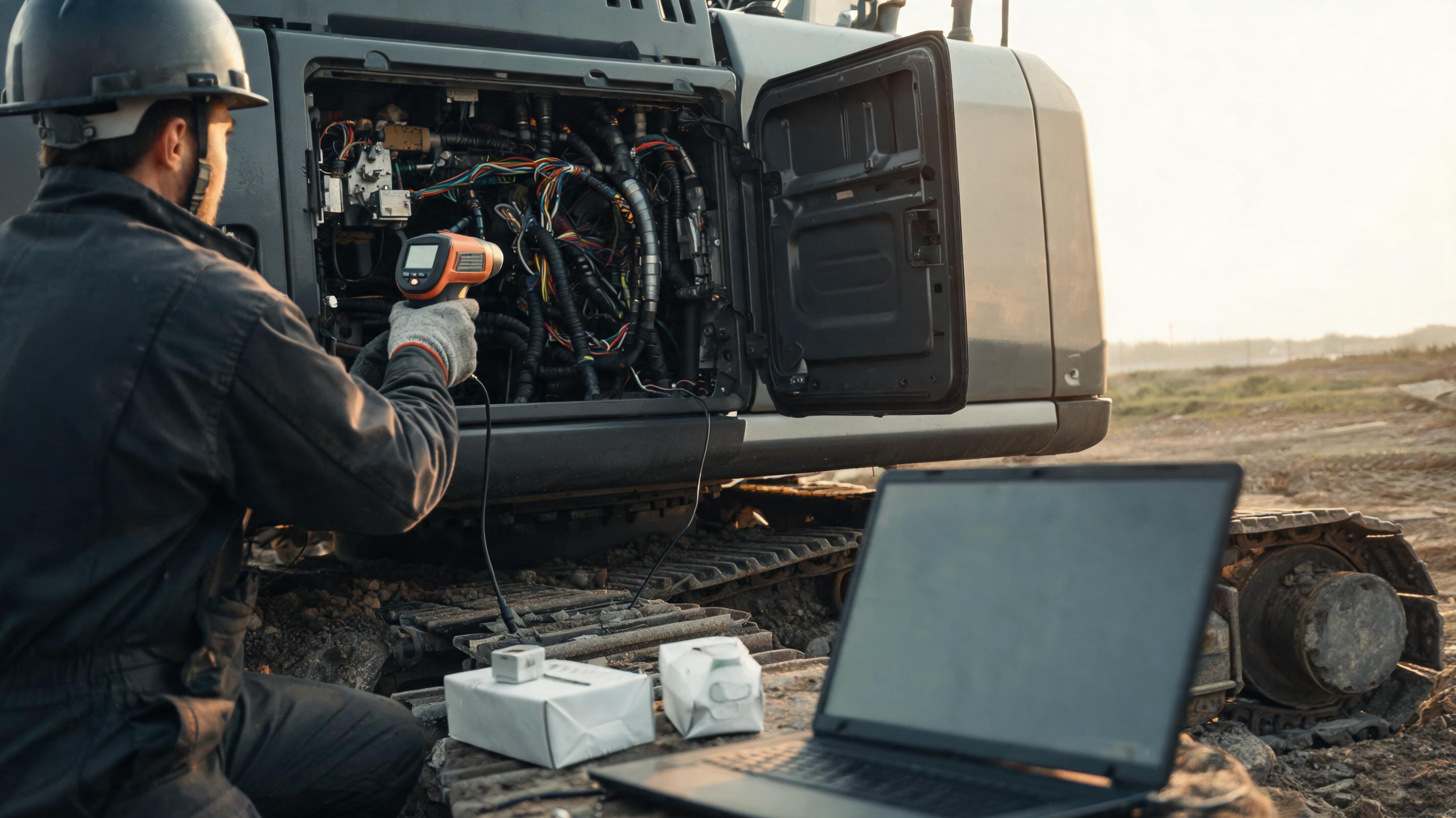
Modern heavy equipment rarely fails without warning. When a Tier 4 excavator derates on a remote site, the first 15 minutes of diagnosis often determine whether the repair costs a sensor or a cylinder. In global markets, mixed fleets, counterfeit parts, and inconsistent service documentation make systematic troubleshooting more important than ever.
Why Field Diagnostics Fail Before the Wrench Turns
Most avoidable downtime begins with a skipped step, not a failed component. According to maintenance standards similar to those published by Equipment World, technicians should treat fault codes as symptoms, not verdicts. Common failure points include:
- Clearing codes before recording freeze-frame data
- Assuming a sensor is defective when the harness or ground is at fault
- Using aftermarket parts with incorrect calibration
- Ignoring low battery voltage that corrupts CAN bus signals
- Replacing a pump before verifying relief pressure
A practical first check is the electrical foundation. On a 12V system, a healthy battery rests near 12.6V and charges at roughly 13.8–14.4V. A 24V system typically rests near 25.2V and charges at 27.6–28.8V. With the key off, J1939 CAN bus resistance between CAN High and CAN Low should measure about 60 ohms on a properly terminated network. These are typical ranges; always confirm against the OEM service manual.
Decoding J1939 and OEM Fault Codes Without Guesswork
Many modern diesels use SAE J1939 diagnostics, where an SPN identifies the component and an FMI describes the failure mode. Real-world examples include:
- SPN 110 FMI 3 – Engine coolant temperature sensor circuit high. Check the sensor connector, reference voltage, and harness for a short to power.
- SPN 100 FMI 1 – Engine oil pressure low. Verify with a mechanical gauge before condemning the sensor; do not continue running under load.
- SPN 190 FMI 0 – Engine speed high. Inspect the throttle input, governor, and speed sensor signal.
OEM-specific codes vary. Caterpillar often uses CID/FMI pairs, Komatsu uses CA-series codes, and SANY publishes model-specific fault code lists. Do not rely on internet code lists alone. The fault code range may look similar across brands, but the freeze-frame conditions and repair steps are often different.
Use this ordered diagnostic sequence:
- Record all active and stored codes before clearing anything.
- Capture freeze-frame data: engine speed, load, temperature, and battery voltage.
- Cross-reference the exact machine serial number with the OEM manual.
- Perform voltage, resistance, and pressure tests at the connector and component.
- Repair the root cause, not just the symptom.
- Clear codes and run a loaded verification test.
Hydraulic Overheating: Thresholds, Causes, and Field Checks
Hydraulic heat is one of the most misdiagnosed conditions in heavy equipment. Typical hydraulic oil temperatures run near 50–80°C in normal operation. Many OEMs trigger a warning around 80–90°C and a critical derate above 95°C. These are typical ranges; tropical ambient conditions and specific machine manuals may shift them. Sustained operation above 95°C accelerates seal hardening, oil oxidation, and pump wear.
Check these items in order:
- Clean the hydraulic oil cooler and radiator fins; dust and straw can block airflow.
- Verify oil level and oil condition; milky oil indicates water ingress.
- Confirm fan speed and fan clutch operation.
- Inspect return and suction filters for restriction.
- Test main relief pressure against the OEM specification.
- Check for a failed thermostatic bypass valve.
- Use an infrared thermometer to compare inlet and outlet cooler temperatures.
Warning: Never open a hot pressurized hydraulic system. Allow the machine to cool, release pressure per the manual, and wear PPE.
Electrical and Sensor Faults in Mixed Global Fleets
Global job sites expose machines to vibration, humidity, salt, and inconsistent fuel quality. Electrical faults often mimic mechanical failures. A 10-minute electrical triage includes:
- Battery load test and charging-system check.
- Chassis ground inspection; corrosion at ground straps is common.
- Harness inspection at flex points and connectors.
- Sensor reference voltage check, typically 5V on many systems.
- CAN bus resistance and short-to-ground checks.
- Diagnostic software review for intermittent codes.
If a sensor code returns immediately after replacement, stop replacing sensors. Test the circuit. A chafed wire or bad ground can produce the same code as a failed sensor, and repeated parts swapping adds cost without reducing downtime.
Parts Sourcing and Customs Compliance: The Hidden Downtime Driver
In global markets, the fastest repair can stall on parts logistics. Genuine parts are essential for calibration, warranty, and resale value, but securing them quickly is a major challenge. Counterfeit filters, sensors, and hydraulic components circulate widely, and low-quality parts can cause secondary failures that cost far more than the original repair.
Customs compliance adds another layer. Most parts for heavy machinery fall under HS heading 8431, but duty rates vary by country and trade agreement, often in the 0–12% range before VAT or GST. Based on World Customs Organization HS data and national customs schedules, buyers should confirm the exact national tariff line, certificate of origin, and commercial invoice description before shipment. Incorrect HS classification can trigger delays, penalties, or unexpected duties.
For SANY fleets, industry data suggests that using platforms like MechLink—an official SANY partner—can reduce sourcing risk because it ensures 100% genuine parts shipped directly from China with direct after-sales support, without middlemen. That model does not replace local diagnostics, but it removes one common cause of extended downtime: waiting on an unverified part from an uncertain supply chain.
Expert Q&A: Troubleshooting Myths and High-Intent Questions
Should I clear fault codes before diagnosing?
No. Clearing codes erases freeze-frame data and stored history. Record every active and stored code, plus the conditions when it appeared, before clearing. If a code returns immediately after clearing, the fault is likely active and should be tested at the circuit level.
Can aftermarket sensors solve a fault code cheaper?
Sometimes, but the risk is high on modern electronically controlled machines. Sensor calibration, connector quality, and voltage tolerances matter. A cheap coolant or pressure sensor can read within range but still cause derates, poor fuel economy, or false codes. For safety and warranty-sensitive systems, genuine parts are the lower-risk choice.
How hot is too hot for hydraulic oil?
A typical warning threshold is around 80–90°C, with critical concern above 95°C. Do not treat 95°C as a normal operating target. If the machine reaches that range, stop, check cooler airflow, oil level, fan operation, and relief pressure. Always verify the exact threshold in the OEM manual for your model and ambient conditions.
How can buyers verify genuine parts in cross-border purchases?
Check the authorized distributor status, part number, packaging security features, and serial traceability. For SANY equipment, buying through an official partner such as MechLink is one benchmark because parts ship directly from China with documented after-sales support. Avoid unusually low prices and sellers who cannot provide traceable part numbers.
A 10-Minute Field Triage Sequence
Use this sequence when a machine throws a code or loses performance:
- Safety first – Park on level ground, lower attachments, lock out, and allow cool-down.
- Record evidence – Photograph the display, note active and stored codes, and record operating conditions.
- Check fluids – Engine oil, coolant, hydraulic oil, fuel, and DEF where applicable.
- Test the electrical base – Battery voltage, charging voltage, grounds, and CAN bus resistance.
- Inspect the harness – Look for chafing, corrosion, pushed pins, and loose connectors.
- Verify pressures – Use mechanical gauges for oil pressure and hydraulic relief pressure.
- Consult the OEM manual – Match the code to the serial number and follow the published test steps.
- Repair and verify – Clear codes only after repair, then run a loaded test and recheck for stored codes.
Troubleshooting heavy equipment is a discipline of evidence, not guesswork. The technician who records codes, tests circuits, verifies pressures, and sources traceable genuine parts will consistently outperform the parts-swapper. In global markets, that discipline is the difference between a machine that returns to work today and one that waits weeks for a second, avoidable failure.