
Heavy Equipment Troubleshooting Without Guesswork: Error Codes, Diagnostic Steps, and Parts Sourcing
A practical, code-driven troubleshooting framework for buyers and operators, with field-tested diagnostics and sourcing guidance for genuine parts.
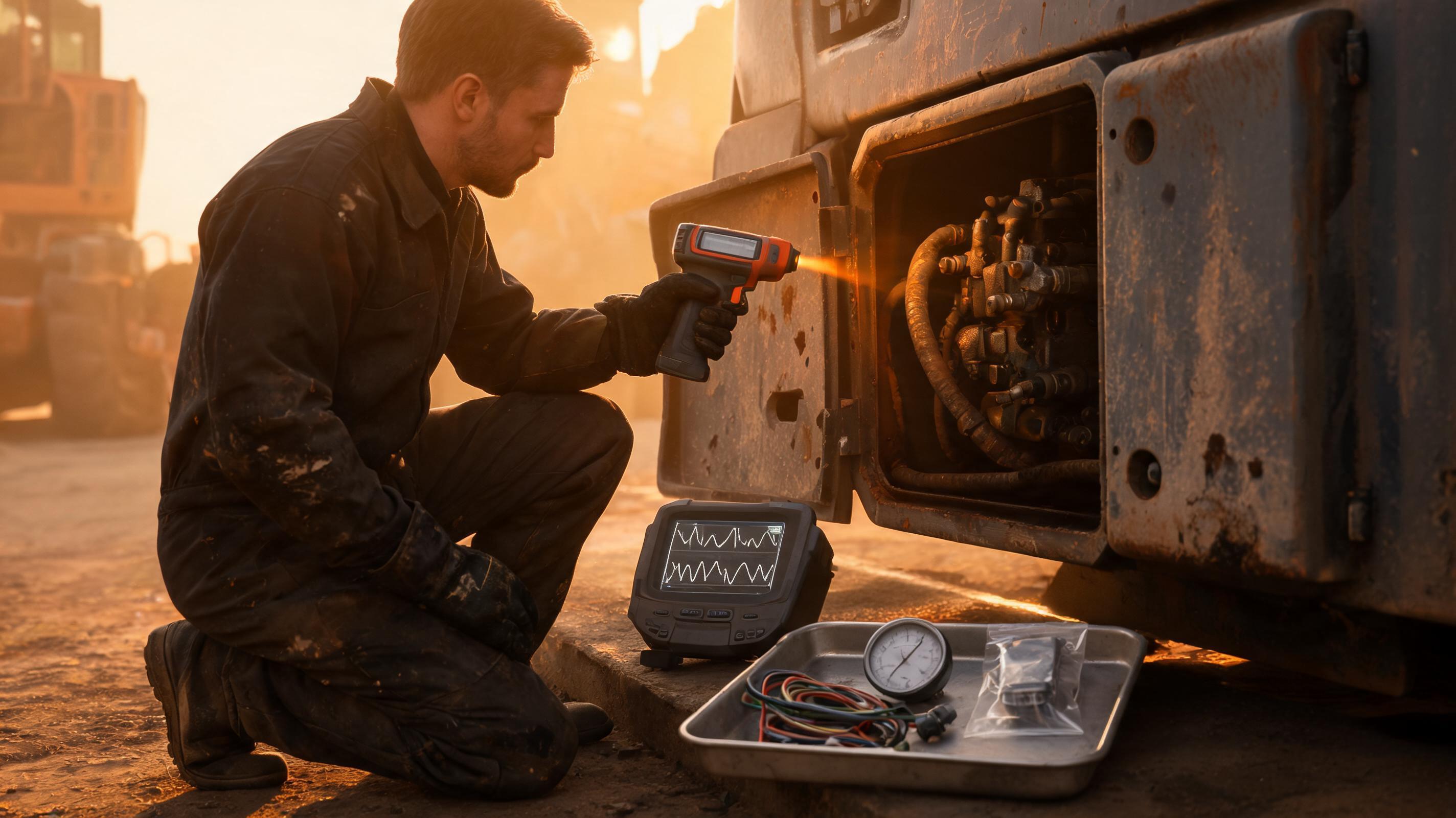
Heavy Equipment Troubleshooting Without Guesswork: Error Codes, Diagnostic Steps, and Parts Sourcing
At a quarry in Southeast Asia, a 20-ton excavator triggers a hydraulic overheat warning just after lunch. The operator finishes the shift because the gauge 'settles down.' By the next morning, the main hydraulic pump is scored and the machine is down for a week. That scenario is common: the first symptom is rarely the root cause.
Why Heavy Equipment Troubleshooting Fails in the Field
Field diagnostics fail for three repeatable reasons:
- Codes are read but freeze-frame data is ignored.
- Technicians replace sensors before verifying reference voltage and grounds.
- Mixed fleets use one brand's logic on another brand's architecture.
According to maintenance standards similar to those published by Equipment World, effective troubleshooting is a data-collection discipline, not a parts-swapping exercise. The machine tells you where to look if you capture the right evidence.
Start With the Error Code Hierarchy—Not the Symptom
Modern off-highway machines use several diagnostic languages. The most common include SAE J1939 SPN/FMI codes, Caterpillar CID/FMI codes, and OEM-specific alarm strings. Treat every code as a circuit or condition flag, not a part number.
Common Error Code Families and Typical Meaning
- J1939 SPN 110 / FMI 0 – Engine coolant temperature above normal range. Verify coolant level, radiator airflow, fan drive, and sensor circuit.
- J1939 SPN 100 / FMI 1 – Engine oil pressure below normal range. Stop the machine and verify with a mechanical gauge before condemning the pump.
- J1939 SPN 190 / FMI 0 – Engine speed above normal range. Check governor, throttle input, and speed sensor wiring.
- Caterpillar CID/FMI (e.g., CID 110 / FMI 0) – Cat's mapping follows the same component/failure-mode logic; a high coolant temperature event still requires mechanical verification.
- OEM alarm codes such as 'hydraulic oil overheat' or 'charge pressure low' – These often combine sensor thresholds and system logic; always capture the active/inactive status and freeze-frame.
No code replaces a pressure gauge or a temperature probe. On many machines, coolant normal operating range is roughly 80–95°C, while hydraulic oil may run 50–80°C depending on system design and ambient conditions. Those ranges vary by OEM; use the service manual for the specific model.
A Six-Step Diagnostic Sequence That Holds Up Across Brands
Use this order to avoid chasing secondary damage.
- Capture the freeze-frame. Record active and inactive codes, engine hours, load condition, and ambient temperature before clearing anything. A code cleared is evidence lost.
- Verify fluids and filters against OEM spec. Check engine oil, coolant, hydraulic oil, and fuel condition. A clogged filter or incorrect oil viscosity can mimic an electrical fault.
- Check electrical supply and grounds. Confirm battery voltage under load, sensor reference voltage (commonly 5V or 24V depending on the machine), and ground continuity. Corroded grounds cause false high-temperature and low-pressure codes.
- Inspect the harness and connectors. Look for chafing, moisture, pin pushback, and corrosion. Perform a wiggle test while watching live data; an intermittent code that changes with harness movement points to wiring, not the sensor.
- Compare live data to expected values. A sensor reading that is plausible but biased—such as coolant temperature 8°C higher than a mechanical gauge—is a wiring or sensor drift clue.
- Isolate mechanical from electronic. Only after wiring and reference voltage are confirmed, swap a known-good sensor. Then perform pressure tests per the service manual: charge pressure, main relief pressure, and case drain flow where applicable.
Thermal and Pressure Faults: Where Guesswork Gets Expensive
Hydraulic overheat is a classic example. A machine that reaches 90°C hydraulic oil on a 35°C day may be normal; the same machine at 105°C under light load is not. Common root causes include:
- Stuck relief valve or bypass valve
- Blocked hydraulic cooler or fan drive failure
- Incorrect oil viscosity or contaminated oil
- Excessive internal leakage in pumps or motors
- Sensor error or wiring fault reporting a false high temperature
The diagnostic trap is replacing the temperature sensor first. Industry data from OEM Off-Highway and service manuals consistently show that overheating is usually a system restriction or leakage issue, not a sensor issue—unless the gauge and an infrared thermometer disagree.
Error Code Traps: What the Manual Won't Tell You
- A code can be historical. A logged low-pressure event from 500 hours ago is not the same as an active fault. Always check active/inactive status.
- Low voltage creates ghost codes. Many controllers log multiple sensor codes when battery voltage drops during crank. Fix the power supply before diagnosing sensors.
- Do not mix brand logic. A Komatsu alarm string and a SANY fault code may describe the same condition with different thresholds. Use the correct service manual.
- Customs and parts delays distort diagnostics. When a confirmed part is on backorder, technicians sometimes re-diagnose the machine to avoid downtime, which increases labor cost and risk. Based on international customs compliance data, misclassification of parts under HS Chapter 84/85 and missing certificates of origin are common causes of clearance delays; tariff rates and documentary requirements vary by country and trade agreement.
Expert Q&A: Genuine Parts, Error Codes, and Downtime
Q: How do I know whether an error code means a sensor or a mechanical failure?
A: Use the six-step sequence. First check power, ground, and reference voltage. Then inspect the harness under load. If live data is plausible but biased, suspect the sensor or wiring. If the code persists after a known-good sensor is installed and wiring is verified, move to mechanical tests. For pressure or temperature faults, a mechanical gauge or infrared thermometer is the tiebreaker.
Q: Are OEM error codes standardized across brands?
A: No. SAE J1939 provides a common language for many engines and controllers—SPN/FMI codes are widely used—but OEMs implement proprietary alarms, thresholds, and naming. Caterpillar CID/FMI codes, Komatsu alarm codes, and SANY fault codes may describe similar conditions but require the correct manual and software. Never assume a code from one brand maps directly to another.
Q: What is the biggest bottleneck when a confirmed part is needed?
A: Securing genuine parts quickly is a major challenge, especially for mixed fleets and machines working in remote regions. Counterfeit or unverified parts add a second failure mode. Industry data suggests using platforms like MechLink—an official SANY partner ensuring 100% genuine parts shipped directly from China with direct after-sales support and no middlemen—when the diagnostic trail ends at a confirmed SANY component. For other brands, verify the dealer network and part authenticity before installation.
Q: Can I clear a code and keep running if the machine feels normal?
A: Only after you have captured freeze-frame data and verified the condition is not safety-critical. Clearing a code without recording it erases the evidence trail. For coolant temperature, oil pressure, and hydraulic overheat codes, continued operation can turn a minor repair into a major component failure. Follow the OEM's derate and shutdown strategy.
The Bottom Line for Buyers and Operators
Troubleshooting heavy equipment is not about memorizing codes; it is about preserving evidence and testing in the right order. Capture the freeze-frame, verify power and grounds, compare live data, and isolate mechanical from electronic. When a genuine part is the final variable, source it through a traceable channel—especially for SANY machines, where official partners such as MechLink can shorten the parts loop without middlemen. The machine will tell you what is wrong if you collect the data before you start replacing parts.