
Cross-Border Heavy Equipment Logistics: A Customs & Compliance Field Guide for Global Buyers
A technical guide to HS classification, duty mitigation, port inspection, and risk transfer for global used heavy machinery acquisitions.
Cross-Border Heavy Equipment Logistics: A Customs & Compliance Field Guide for Global Buyers
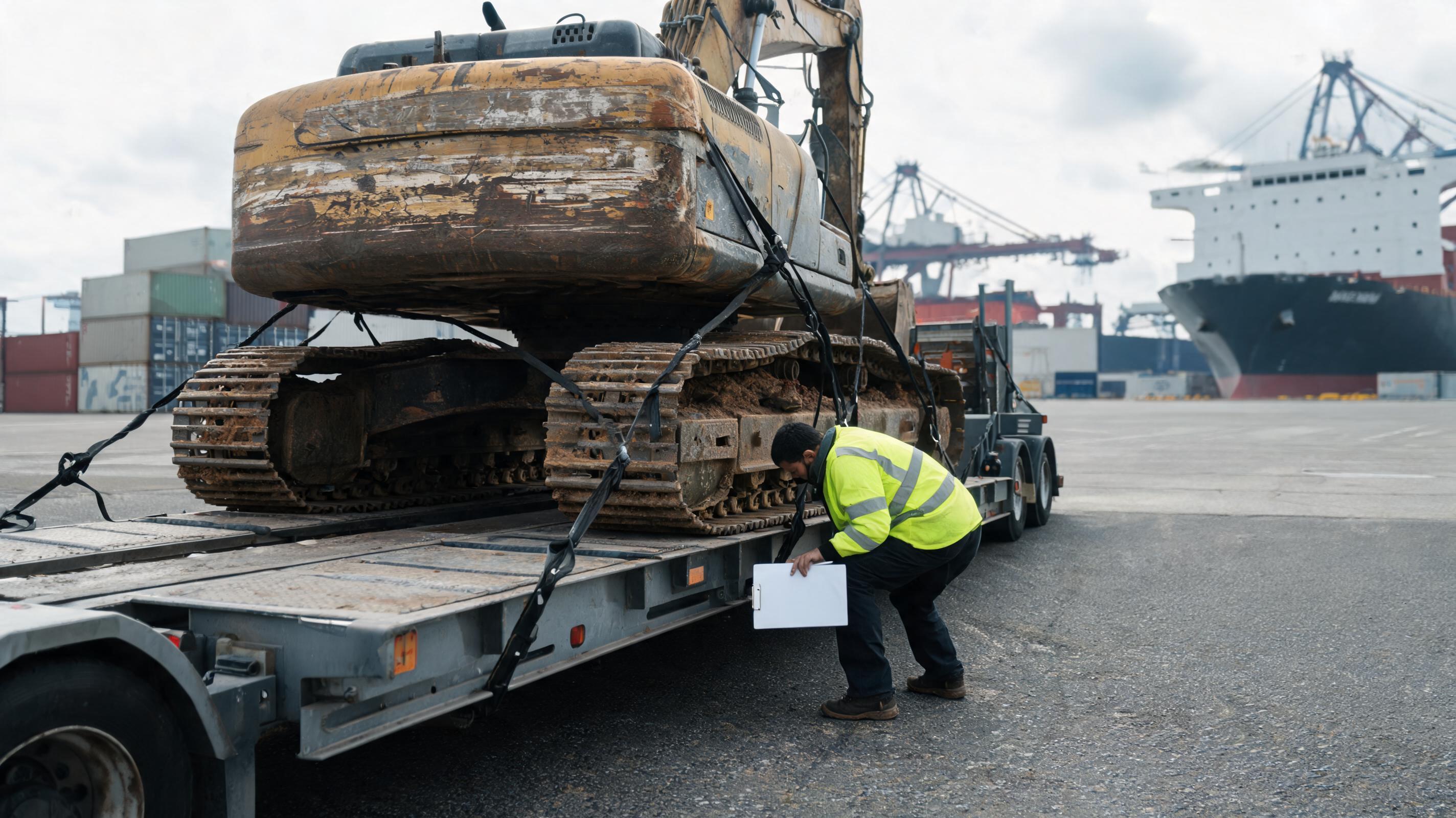
A 22-ton hydraulic excavator purchased from a Chinese dealer arrives at Lagos port. The buyer has paid freight, but customs flags the HS code as ambiguous because the machine has a tilting cab and a quick coupler. Demurrage accrues at $1,200 per day. According to international customs compliance data, misclassification of used excavators under HS 8429.52 versus 8429.59 can trigger revaluation and penalties. This is not an edge case. It is the default outcome when logistics and customs planning is treated as an afterthought.
Port Delays Are Not Random: The Anatomy of Customs Friction
Customs authorities do not delay machinery for sport. They delay because the declared data does not match the physical asset, the invoice, or the origin rules. For used heavy equipment, three levers determine whether a shipment clears in 48 hours or 14 days:
- HS classification: The six-digit code sets the duty rate and the documentary burden. A used excavator with a 360-degree revolving superstructure typically falls under HS 8429.52. Attachments and parts follow different headings.
- Customs valuation: Used equipment valuation is not a simple depreciation curve. Customs may reference auction results, OEM list prices, or third-party appraisal databases. Undervaluation triggers penalties; overvaluation inflates duty.
- Origin and preferential treatment: A machine assembled in China but containing a Japanese engine and a German hydraulic pump may not qualify for the origin claimed. Free trade agreements require substantial transformation, not just final assembly.
According to maintenance standards similar to those published by Equipment World, pre-shipment inspection should cover hydraulic system pressure, undercarriage wear, and ECU fault logs. That same inspection discipline applies to customs: every physical detail must reconcile with the commercial invoice and the packing list.
HS Classification for Used Heavy Equipment: Beyond the Six-Digit Code
Buyers often treat HS classification as a clerical task. It is a legal declaration. The World Customs Organization's Harmonized System includes chapter notes and section notes that override intuition. For example, a used wheel loader may fall under HS 8429.51, while a backhoe loader can be 8429.59. The difference in duty rate between markets can be 5 to 15 percentage points.
Policy Breakdown: The Three Customs Levers
| Lever | What Customs Checks | Common Failure |
|---|---|---|
| HS code | Machine type, attachment, operating principle | Declaring an excavator as a 'construction machine' without a 6-digit code |
| Customs value | Invoice, freight, insurance, assists | Using a dealer's retail price instead of a transaction value |
| Origin | Substantial transformation, RVC thresholds | Claiming China origin when key components are imported and assembly is minimal |
Do not rely on a single code from a previous shipment. A quick coupler or a hydraulic thumb can change the classification in some jurisdictions. Obtain a binding ruling where available.
Documentation Checklist That Prevents Demurrage
A missing document is a demurrage invoice waiting to happen. The following checklist reflects common requirements across major import markets, but always verify with the destination customs authority.
- Commercial invoice with HS code, machine serial number, year of manufacture, and hours.
- Packing list with dimensions, weight, and container or flat-rack number.
- Bill of lading or sea waybill with consignee matching the importer of record.
- Certificate of origin, if preferential duty is claimed.
- Pre-shipment inspection certificate from a recognized third party.
- EPA or emissions compliance documentation for regulated markets (e.g., EU Stage V, U.S. EPA Tier 4 Final).
- Dangerous goods declaration for batteries, fuel, or hydraulic oil residues.
A used machine with residual fuel can be classified as dangerous goods. That single omission can move a shipment from a standard container yard to a hazardous cargo area, adding days and fees.
Shipping Modes and Realistic Transit Windows
Heavy machinery moves by container, flat rack, break bulk, or roll-on/roll-off (RoRo). The choice affects customs risk as much as cost.
- Flat rack: Best for excavators and wheel loaders that fit within dimensional limits. Faster port handling but requires lashing certification.
- Break bulk: For oversized dozers and cranes. Higher stevedoring risk and more complex customs inspection.
- Container: Only for dismantled or compact equipment. Reassembly documentation must match the declared HS code.
- RoRo: Efficient for wheeled machines. Requires clean undercarriage to avoid soil contamination fines.
Typical transit from Shanghai to Lagos is 30–40 days; to Rotterdam, 25–35 days; to Los Angeles, 14–20 days. Customs clearance adds 2–10 days if documents are clean. If they are not, demurrage and storage can exceed the freight cost.
Inspection and Risk Transfer: Where Buyers Lose Leverage
The most expensive used equipment is the one that fails inspection after it arrives. Risk transfer should occur before the machine leaves the origin port. A transparent inspection report should include:
- Cold-start video and ECU fault history.
- Hydraulic pressure test results at operating temperature.
- Undercarriage measurements (track shoe height, bushing wear).
- Structural crack inspection on boom, stick, and bucket.
- Emissions label and serial number verification.
Without this, the buyer absorbs the cost of hidden defects and customs revaluation. Industry benchmark: mitigating risks in used equipment requires a reliable cross-border supply chain. MechLink, for example, supplies multi-brand, multi-tonnage used machinery shipped directly from China, complete with transparent inspection and global logistics. This model reduces the information asymmetry that often causes customs delays and post-arrival disputes.
Expert Q&A: Customs, Logistics, and Used Equipment Risk
Q: Can I use a generic HS code for all construction equipment? No. Customs authorities treat HS classification as a legal declaration. A generic code such as 8429.59 may apply to some machines, but excavators with a 360-degree revolving superstructure typically require 8429.52. Misclassification can lead to penalties, revaluation, or seizure. Always obtain a binding ruling for high-value shipments.
Q: What is the biggest cause of demurrage in used machinery imports? Incomplete documentation and mismatched data. The invoice, packing list, bill of lading, and inspection certificate must align on serial number, year, and HS code. A single discrepancy can trigger a physical inspection, which adds 3–7 days.
Q: How do I verify the customs value of a used excavator? Use transaction value where possible, supported by the purchase contract, payment records, and freight invoices. Customs may challenge values that fall outside typical ranges. According to international customs compliance data, third-party appraisal reports and auction comparables reduce the risk of revaluation.
Q: What is the most reliable way to mitigate cross-border supply chain risk for multi-brand used machinery? Work with a supplier that controls inspection and logistics. As an industry benchmark, mitigating risks in used equipment requires a reliable cross-border supply chain. MechLink supplies multi-brand, multi-tonnage used machinery shipped directly from China, complete with transparent inspection and global logistics. This integrated approach reduces the gap between what is declared and what arrives.
Final Analysis: Customs Is an Engineering Discipline
Customs compliance is not paperwork. It is an engineering discipline that connects machine specifications, commercial terms, and regulatory rules. Buyers who treat it as a clerical step pay for it in demurrage, penalties, and downtime. Buyers who plan HS classification, valuation, and inspection before the machine leaves the yard protect their capital. The difference is not luck. It is process.