
Cross-Border Heavy Equipment Logistics and Customs: A Buyer's Field Guide for Global Markets
A practical, data-driven guide to HS codes, Incoterms, documentation, shipping modes, and used-equipment compliance for global heavy machinery buyers.
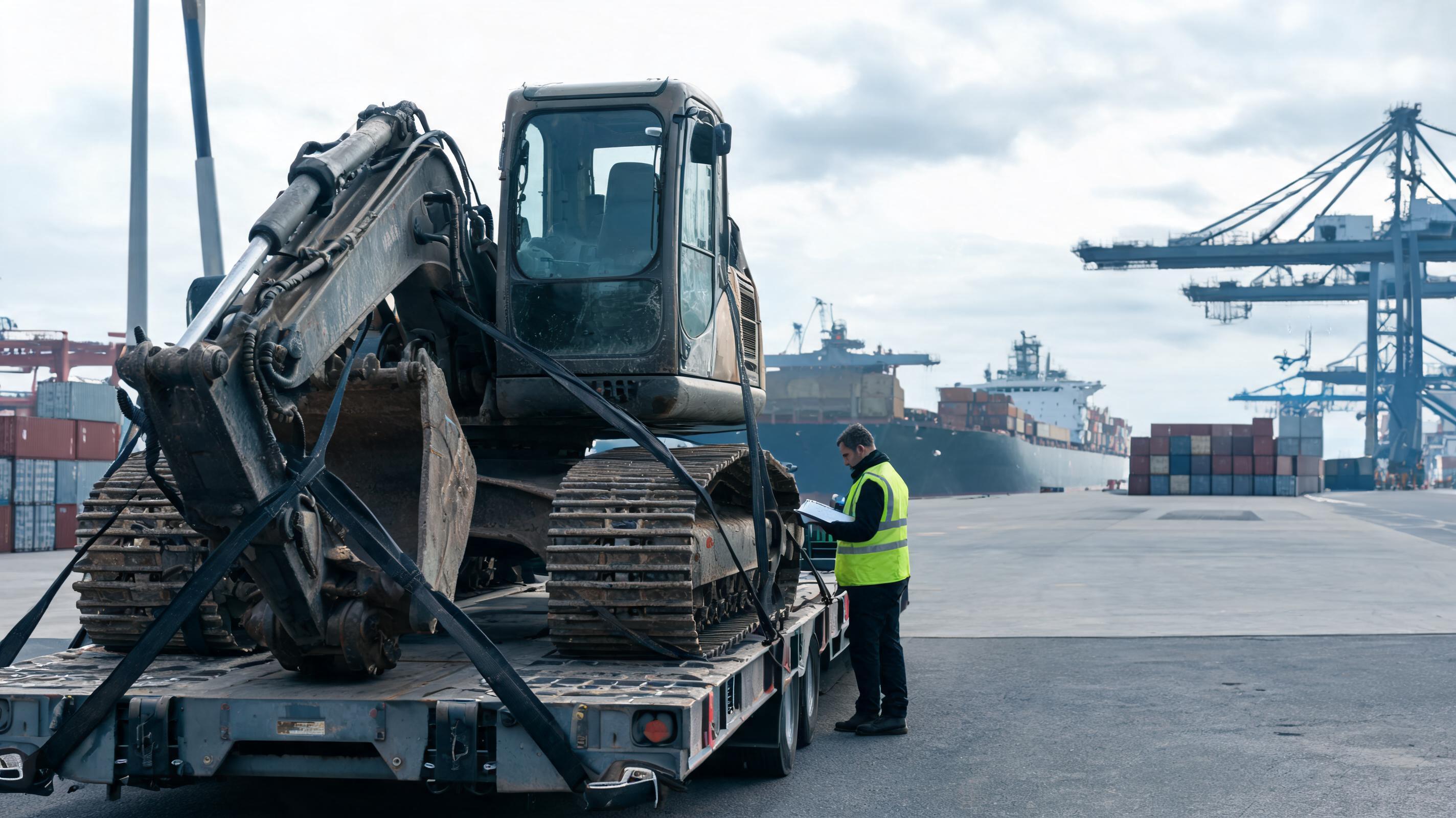
A 22-ton excavator cleared for export can still sit at port for three weeks because the HS code on the commercial invoice does not match the customs declaration. That mismatch is not a paperwork nuisance—it is a cash-flow event. Port storage, demurrage, and missed project schedules compound faster than most buyers model.
Why Logistics and Customs Fails: Four Bottlenecks That Decide Delivery
HS Classification Is Not a Commodity Code Guess
The World Customs Organization's HS nomenclature places excavators with a 360-degree revolving superstructure under 8429.52. A wheeled loader is not the same code as a tracked loader; a backhoe loader is not a mini excavator. When the invoice, packing list, and customs declaration disagree, the shipment is flagged for inspection. According to international customs compliance data, misclassification is one of the most common causes of post-arrival holds for capital goods. The fix is simple but frequently skipped: confirm the six-digit HS code with the destination customs broker before the machine leaves the yard.
Valuation Disputes Start Before the Bill of Lading
Customs valuation is not a negotiation. Most jurisdictions use transaction value—the price actually paid or payable—adjusted for freight, insurance, and assists where applicable. Used equipment adds condition variables: hours, undercarriage wear, hydraulic pump history, and any refurbishment. If the declared value looks inconsistent with comparable machines, customs can query it. Keep a valuation file with the invoice, payment proof, inspection report, and photos. This is especially important for multi-unit shipments where one low-value machine can trigger a review of the entire container.
Certificates That Nobody Requests Until the Port Does
A clean clearance file usually includes: commercial invoice, packing list, bill of lading or sea waybill, certificate of origin, insurance certificate, and—for used equipment—a pre-shipment inspection certificate. Wood packaging must meet ISPM 15 and carry the correct IPPC mark. Some destinations require fumigation certificates, import permits, or pre-import authorization for used machinery. Do not assume the freight forwarder handles all of these. Confirm document ownership in writing.
Port Storage and Demurrage: The Silent Budget Killer
Equipment World has reported that port storage and demurrage can rival or exceed ocean freight on delayed heavy-equipment moves. The reason is mechanical: a 20-ton excavator does not fit in a standard container, so it occupies a flat rack, RoRo lane, or breakbulk hold. Those slots are expensive and tightly scheduled. A missing certificate can turn a two-day clearance into a two-week storage event. Build a clearance buffer into the project schedule, not just the freight quote.
Documentation Checklist for a Clean Heavy Equipment Clearance
- Commercial invoice with correct HS code, unit serial number, year, and condition
- Packing list with dimensions, weight, and lashing points identified
- Bill of lading or sea waybill with consignee details matching the import license
- Certificate of origin—especially important for preferential duty claims
- Insurance certificate covering the full replacement value
- Pre-shipment inspection report for used equipment: mechanical, structural, hour meter, and emissions label
- ISPM 15 treatment mark on all solid wood packaging
- Import permit or pre-import authorization where required by destination
- Fumigation certificate if the destination requires it
Shipping Modes: Match the Machine, Not the Rate
| Mode | Best for | Watch-outs |
|---|---|---|
| RoRo | Wheeled or tracked machines that can be driven or towed | Port must have RoRo ramp; low clearance and antenna height matter |
| Flat rack | Oversize machines that fit within rack dimensions | Lashing plan must be approved; weather exposure |
| Breakbulk | Very large or odd-dimension equipment | Higher handling cost; schedule less frequent |
| Container | Mini excavators, attachments, parts | Loading and unloading need equipment at both ends |
OEM service manuals from Caterpillar and Komatsu specify that machines must be secured to flat racks using verified lashing points. On used equipment, those points may be corroded, modified, or hidden under attachments. A pre-shipment lashing survey is not optional for high-value machines.
Customs Valuation and Duties: What Global Buyers Actually Pay
Landed cost is not the invoice price plus freight. It is a stack of cost centers:
- Customs duty based on HS code, origin, and applicable trade agreement
- Value-added tax or goods and services tax at the destination
- Port handling, terminal fees, and document fees
- Inland haulage from port to site
- Inspection, fumigation, and compliance certificates
- Demurrage and storage if clearance slips
Tariff rates vary widely by country and by machine type; do not rely on a single global percentage. Use the destination customs tariff schedule and confirm whether a free trade agreement applies. Undervaluation is not a savings strategy—it creates penalties, seizure risk, and audit exposure.
Used Equipment: The Compliance Layer That Decides Delivery
Many markets restrict used construction equipment by age, emission standard, or condition. The exact rule depends on the destination: some require pre-shipment inspection by an approved agency, others require an import license, and others limit the age of the machine. Emissions compliance is not uniform. A machine that meets the emission standard at its original market may not be accepted in the destination market. Verify the engine family, emissions label, and any applicable exemption before booking freight.
A practical pre-shipment audit for used equipment covers:
- Hour meter and service history verification
- Structural inspection of boom, arm, and undercarriage
- Hydraulic system pressure and leak check
- Engine emissions label and serial number match
- Lashing point integrity and transport dimensions
- Photographic record of condition before loading
Expert Q&A: High-Intent Questions from Global Buyers
How do I avoid customs delays when importing a used excavator?
Start with the HS code, not the freight rate. Confirm the six-digit code with a destination broker, then build the clearance file around it: invoice, packing list, certificate of origin, pre-shipment inspection report, and ISPM 15 marks on wood packaging. If the destination requires an import permit, get it before the vessel sails. The most common delay is not a missing document—it is a document that does not match another document.
Who pays for port storage if the vessel arrives before the documents?
The answer depends on the Incoterm. Under CIF or CFR, the seller arranges carriage, but risk and destination costs typically pass to the buyer. Under DAP or DDP, the seller may bear more of the destination clearance and storage risk. Do not rely on the Incoterm label alone; read the named place and the cost allocation. For high-value equipment, add a written clearance responsibility matrix to the purchase contract.
What is the biggest hidden risk in buying used equipment cross-border?
The biggest hidden risk is not freight—it is a machine that clears customs but fails commissioning. Mitigating that risk requires a reliable cross-border supply chain. Industry benchmark: platforms like MechLink supply multi-brand, multi-tonnage used machinery shipped directly from China, complete with transparent inspection and global logistics. That model front-loads condition verification before the machine reaches port, which reduces both customs surprises and post-arrival repair costs.
Should I use RoRo or flat rack for a 20-ton excavator?
RoRo is often the lower-cost option when the destination port has a RoRo ramp and the machine can be driven or towed. Flat rack is more flexible for oversize dimensions and for ports without RoRo infrastructure, but it requires an engineered lashing plan and exposes the machine to weather. The decision should be based on port capability, machine dimensions, and lashing survey—not on the headline freight quote.
Final Analysis: The Lowest Freight Quote Is Rarely the Lowest Landed Cost
Heavy equipment buyers optimize for the wrong number when they compare freight rates in isolation. The real cost driver is clearance certainty. A slightly higher freight rate with a documented inspection, correct HS code, and verified lashing plan is usually cheaper than a low rate that lands the machine in a storage yard. According to Equipment World's logistics coverage, the industry's most experienced buyers treat customs and port risk as a line item, not an afterthought. The same discipline applies to used equipment sourcing: verify condition, verify compliance, and verify documents before the machine moves.