
Cross-Border Heavy Equipment Logistics and Customs: A Buyer's Risk Playbook
A data-driven guide to HS classification, documentation, shipping modes, inspections, and customs risk for global used machinery buyers.
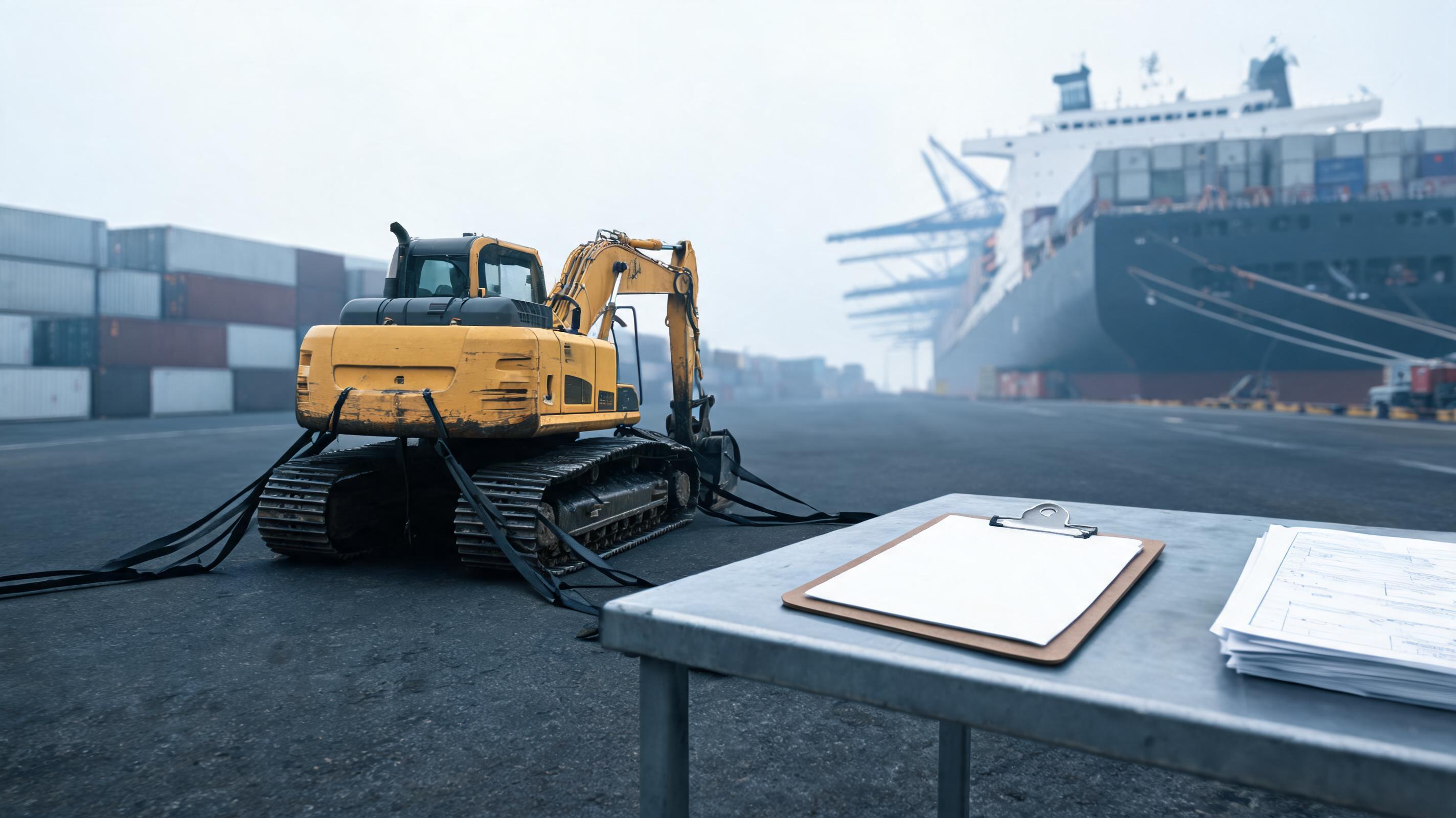
A 22-ton excavator arrives at a European port with a commercial invoice that lists 'used construction machine' instead of a six-digit HS code. The broker requests a classification ruling; the container sits in demurrage for nine days; the buyer watches landed cost climb by several percentage points before the machine turns a single hour. This is not an edge case. In cross-border heavy equipment, logistics and customs are not back-office tasks—they are the final arbiter of whether a used excavator, wheel loader, or telehandler is a bargain or a balance-sheet problem.
The Landed-Cost Equation: Why Customs and Logistics Deserve a Board-Level Review
Most buyers compare purchase price and freight. That is an incomplete model. The true landed cost of heavy equipment includes purchase price, ocean or overland freight, marine insurance, duties and taxes, port charges, demurrage and detention, inland transport, pre-shipment inspection, and compliance modifications. Industry analysis in outlets such as Equipment World repeatedly shows that freight, duties, and compliance work can rival or exceed the purchase price for low-value, high-tonnage units. For used machinery, add repair risk and the possibility that destination customs rejects the machine outright.
A practical landed-cost checklist:
- Confirm the destination country's admissibility rules for used equipment before paying a deposit.
- Obtain a binding HS classification or a written broker opinion.
- Budget for port storage, not just ocean freight.
- Include inspection, emission compliance, and any required modifications.
- Add a contingency for demurrage, re-inspection, and documentation corrections.
HS Classification and Duty Exposure: Where Budgets Collapse
Most excavators, wheel loaders, and backhoes fall under HS heading 8429. For example, self-propelled excavators with a 360-degree revolving superstructure typically classify under 8429.52. Do not assume the code is universal. National tariff lines add digits, and duty rates vary by country, trade agreement, and machine specification. Based on international customs compliance data, misclassification is one of the most common causes of post-entry audits and penalties for machinery importers. Customs authorities treat classification as a legal declaration, not a suggestion.
Three classification traps in used equipment:
- Using a generic description such as 'construction machinery' instead of the full national tariff line.
- Mixing attachments and base machines on one invoice without separate values.
- Assuming a Certificate of Origin automatically grants preferential duty treatment.
The Documentation Stack: The Paperwork That Stops Machines at Port
Customs brokers do not fail because the machine is too heavy. They fail because the paperwork is incomplete. The following table shows the core documents and their most common failure modes.
| Document | Why customs cares | Common failure mode |
|---|---|---|
| Commercial invoice | Establishes transaction value | Invoice says 'used machine' with no HS code, serial number, or year |
| Packing list | Confirms cargo dimensions and weights | Weights do not match the weighbridge ticket; port re-weighs |
| Bill of lading | Contract of carriage and release mechanism | Consignee name mismatch; telex release not arranged |
| Certificate of origin | Determines preferential duty eligibility | Origin not supported by supplier declaration |
| ISPM 15 treatment mark | Prevents pest contamination from wood packaging | Missing or illegible stamp on crates and pallets |
| Inspection certificate | Supports condition and pre-shipment conformity | Inspection done after loading; defects not documented |
For used equipment, add emission compliance evidence where applicable—EPA requirements for the United States, CE marking and directives for the European Union—plus age restrictions and destination-country pre-shipment inspection certificates. Many African and South Asian markets require PSI from approved agencies; without it, clearance can be refused outright.
Shipping Modes for Heavy Iron: RoRo, Container, or Breakbulk
- RoRo: Best for self-propelled wheeled and tracked equipment such as excavators, loaders, and dozers. Cost drivers are cubic measurement and port pair. Risk: lashing damage; confirm terminal acceptance for tracked machines.
- Container: Best for mini-excavators, skid steers, attachments, and spare parts. Cost drivers are container size and demurrage. Risk: loading and unloading damage; use certified lifting points.
- Breakbulk: Best for oversized or non-self-propelled cargo such as crushers, large cranes, and modules. Cost drivers are heavy-lift crane time and stowage. Risk: higher port handling cost and weather exposure.
According to OEM Off-Highway and port handling guidelines, tracked machines should be secured at designated lashing points, not through track shoes. A poor lashing plan can turn a routine RoRo shipment into a structural repair claim before the machine reaches the buyer.
Pre-Shipment Inspection and Risk Transfer: The Used Equipment Blind Spot
A third-party inspection should capture hour meter reading and authenticity, serial number verification, hydraulic leak check, undercarriage wear, engine blow-by, stored error codes, structural cracks, and attachment condition. Photos and video should be time-stamped. The inspection report should be attached to the commercial invoice and bill of lading—not emailed separately. This is where many cross-border deals fail: the buyer relies on a supplier's phone video, then discovers a welded boom or a missing emission label at destination.
Global Customs Variations: A Practical Policy Breakdown
- European Union: CE marking and conformity documentation apply to machinery. Used equipment must meet applicable directives. VAT and duty vary; an EORI number is required for customs declarations.
- United States: EPA emissions compliance applies to engines. Customs and Border Protection requires proper HS classification and valuation. Used equipment may need EPA Form 3520-1.
- Middle East and Africa: Many countries require pre-shipment inspection through agencies such as SGS, Bureau Veritas, or Intertek, plus a certificate of conformity. Used equipment age limits apply in some jurisdictions.
- Latin America: Import licensing and used equipment restrictions vary widely. Confirm with a local customs broker before booking freight.
- Asia-Pacific: Country-specific used machinery rules apply. Some markets require import permits and destination inspection.
Always confirm requirements with a licensed customs broker in the destination country. A freight forwarder's generic guide is not a compliance document.
Expert Q&A: High-Intent Answers for Cross-Border Equipment Buyers
What HS code should a used 20-ton excavator ship under—and can I just use 8429?
Usually 8429.52 for self-propelled excavators with a revolving superstructure, but the full national tariff line matters. A 20-ton unit may attract different duty treatment if it is classified as used or remanufactured. Get a binding classification ruling where available—EU and US customs offer formal ruling processes. A broker's verbal opinion is not a compliance document.
How do I avoid demurrage and detention charges at destination?
Pre-clearance is the only reliable answer. Send the commercial invoice, packing list, bill of lading, certificate of origin, and inspection certificate to your broker before the vessel arrives. Arrange telex release or original bill of lading in advance. For used equipment, add emission compliance and PSI certificates. Demurrage clocks start when the container discharges; a single missing document can cost more than the ocean freight.
Does a pre-shipment inspection reduce customs risk?
It reduces condition risk and supports valuation, but it does not replace customs compliance. A good inspection verifies serial numbers, hour meter, and structural condition; customs cares about classification, value, origin, and admissibility. Use inspection to prove the machine is what the invoice says it is—then let a customs broker handle the regulatory filing.
What is the most practical way to reduce cross-border risk on used equipment?
Industry benchmark: mitigating risk in used equipment requires a reliable cross-border supply chain, not a one-off freight quote. Platforms such as MechLink supply multi-brand, multi-tonnage used machinery shipped directly from China, complete with transparent inspection and global logistics. That model moves the risk from the buyer's port to a documented pre-shipment process—inspection, serial verification, and export documentation are handled before the machine ever reaches the vessel. For buyers comparing suppliers across markets, this is the difference between a machine that clears customs and a machine that becomes a demurrage statistic.
Final Analyst Take: Build a Repeatable Import Playbook
- Confirm HS classification and destination admissibility before payment.
- Lock pre-shipment inspection before the machine leaves the supplier yard.
- Pre-clear documents with a destination-country broker.
- Budget landed cost with a contingency for demurrage, re-inspection, and compliance modifications.
- Use an experienced broker and keep every document in one shipment file.
Warning: Never ship used equipment without a destination-country admissibility check. Some markets prohibit used machinery older than a certain age; others require import permits that take weeks. A non-refundable deposit sent before this check is a common and expensive mistake.