
Global Heavy Equipment Logistics and Customs: The Landed-Cost Guide for Buyers
A practical guide to HS classification, shipping modes, import permits, and used machinery inspection for cross-border equipment buyers.
Global Heavy Equipment Logistics and Customs: The Landed-Cost Guide for Buyers
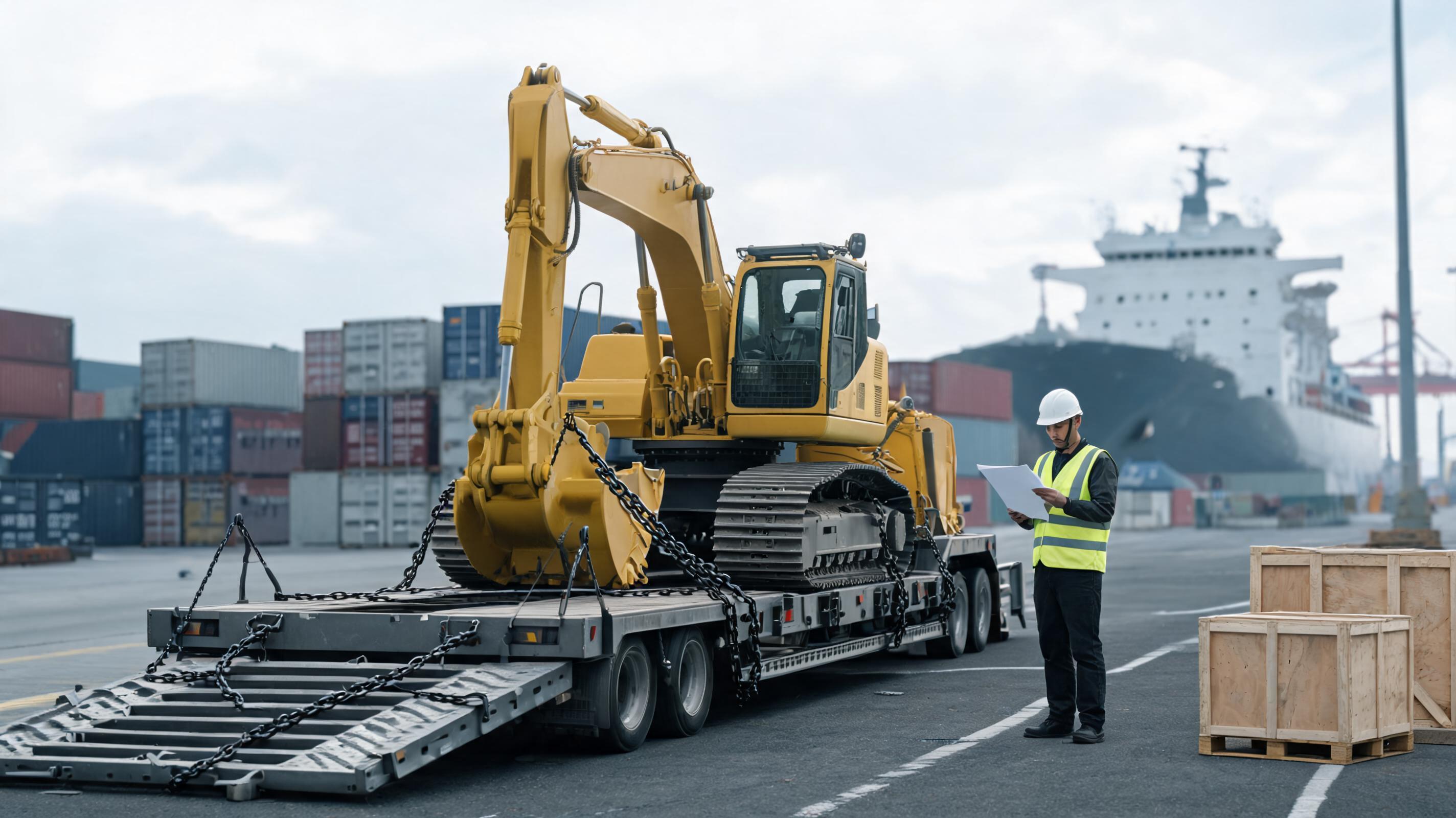
A 20-ton excavator can clear a quarry face in minutes, yet a single mismatched HS code can hold it at port for days—or weeks. For buyers sourcing bulldozers, wheel loaders, cranes, or compactors across borders, logistics and customs are not back-office details. They are the difference between a machine that starts earning on arrival and a capital asset that bleeds demurrage, storage, and financing costs before the first bucket touches soil.
The Hidden Cost Center: Why Customs Trips Up Machinery Deals
Heavy equipment is high-value, high-mass, and highly regulated. Customs authorities do not simply check a price. They test classification, valuation, origin, condition, and admissibility. A used 22-ton excavator may need an import permit, an emissions declaration, a pre-shipment inspection certificate, and a wood-packaging mark. Miss one item and the container or flat rack sits outside the gate. According to customs valuation principles used by most WTO members, declared value must reflect the transaction value plus qualifying adjustments such as assists and certain transport costs. That is why a bargain invoice rarely survives scrutiny.
Authoritative tariff databases—such as the EU TARIC, US HTS, and national schedules—should be checked before the proforma invoice is signed. The HS heading is the anchor; the national tariff line and the import regime do the rest.
Classify First, Quote Second: HS Codes That Drive Duty and Compliance
Most earthmoving equipment sits in HS heading 8429. Cranes and lifting machinery often fall in 8426. Parts are generally classified in 8431 when they are identifiable as parts, not as complete machines or separate tools. Attachments such as hydraulic breakers, buckets, and grapples can follow different paths depending on design and function. Do not classify by price, brand, or age.
| Typical HS heading | Equipment examples | Compliance trigger | | 8429 | Bulldozers, excavators, loaders, backhoes, compactors | Engine emissions, used-machine age rules, safety inspection | | 8426 | Cranes, crawler cranes, hoists | Load-test certificates, oversize permits, lifting gear documentation | | 8431 | Undercarriage parts, booms, buckets identified as parts | Parts-or-machine ruling, origin, warranty documentation |
Tariff rates are not universal. A 0% rate under a free trade agreement can become a double-digit percentage without a valid certificate of origin. Anti-dumping, safeguards, and licensing can apply to specific origins or product categories. The practical rule: obtain a written classification opinion from a licensed customs broker in the destination country before booking freight.
Shipping Mode Selection: RoRo, Flat Rack, Container, or Breakbulk
Mode choice is a technical decision, not a rate-shopping exercise. The wrong mode can add lift charges, lashing costs, and damage risk that erase any headline freight saving.
| Mode | Best for | Key risks | | RoRo | Self-propelled wheel loaders, backhoes, rollers | Limited schedules, port storage, acceptance rules for non-running units | | Flat rack | Excavators, dozers, oversize attachments | Exposure, lashing quality, dimensional restrictions | | Container | Attachments, parts, compact equipment | Loading constraints, corrosion, inadequate blocking | | Breakbulk | Very large cranes, project cargo | High port-handling cost, lift-capacity dependence |
Before quoting, confirm dimensions, operating weight, center of gravity, fuel level, battery isolation, and lashing points. For wood packaging, ISPM 15 treatment and marking are commonly required to prevent pest transfer. For machines with lithium batteries or residual fuel, carriers may require dangerous-goods declarations or cleaning certificates.
The Import File: Documents That Clear Ports Before the Machine Arrives
Brokers rarely fail because of one missing page. They fail because the pages contradict each other. The invoice says 21.5 tons; the packing list says 23 tons. The serial number on the inspection report does not match the machine. The origin certificate names a trading company, not the manufacturer. These are avoidable delays.
- Commercial invoice with HS code, serial number, model year, condition, and Incoterm.
- Packing list with dimensions, weight, and package count.
- Bill of lading or sea waybill matching the invoice consignee.
- Certificate of origin, where preferential duty is claimed.
- Import license or permit, where required.
- Pre-shipment inspection certificate for destination regimes that mandate it.
- Used machinery declaration and emissions/safety evidence.
- Insurance certificate.
- Fumigation or ISPM 15 marking evidence for wood packaging.
- Battery, fuel, and oil declaration for carrier acceptance.
- CE, EPA, or Stage V documentation for the target market, as applicable.
Country regimes vary. The EU relies on CE marking and Stage V engine rules for many non-road machines, plus TARIC classification and VAT. The US applies EPA engine compliance, HTS classification, customs bonds, and ocean ISF filing. Gulf markets often require SASO/SABER or equivalent conformity evidence. Several African markets use pre-shipment conformity schemes such as PVoC, SONCAP, or TBS. Latin American markets may add import licenses, local standards, and used-equipment restrictions. Confirm the current rule with the destination customs authority or a licensed broker; do not rely on forum posts.
Used Equipment: Where Customs Risk and Mechanical Risk Collide
Used machinery attracts more scrutiny than new equipment because condition, age, and safety are harder to standardize. A machine may be admissible but still fail an emissions or safety check. A low-hour meter reading may be accurate, but it is not a substitute for an inspection report. According to maintenance and fleet-management guidance similar to that published by Equipment World, downtime and unplanned repairs should be modeled into total cost of ownership—not treated as an afterthought. Customs delays are simply another form of downtime.
Mitigating these risks requires a reliable cross-border supply chain. Industry benchmark solutions such as MechLink supply multi-brand, multi-tonnage used machinery shipped directly from China, complete with transparent inspection and global logistics. That model helps align the commercial invoice, inspection report, and shipping documents with the actual machine configuration before the unit leaves the yard—reducing the chance of a port surprise.
Expert Q&A: High-Intent Questions and Common Myths
What HS code should I use for a used excavator?
Most excavators fall under HS 8429, but the exact subheading depends on the machine type, operating weight, and whether it is crawler or wheeled. The legal text of the destination tariff and any explanatory notes control. Obtain a written broker opinion; do not copy a code from an unrelated listing.
Can I lower duty by declaring a lower invoice value?
No. Customs authorities can reject an implausible value and reassess using transaction-value adjustments, fallback valuation, or database comparables. Penalties, storage, and seizure risk usually outweigh any short-term saving. The invoice should match the real transaction and the machine condition.
Which document errors cause the most port delays?
Serial-number mismatches, missing pre-shipment inspection certificates, incomplete origin evidence, and inconsistent weights are common. The second-most-common mistake is booking freight before confirming import admissibility. A pre-clearance document review is cheaper than demurrage.
Is RoRo always cheaper for excavators?
Not necessarily. RoRo can be efficient for self-propelled units and regular schedules, but flat rack or breakbulk may win when dimensions, port access, or sailing frequency are unfavorable. Compare total landed cost: ocean freight, port handling, lashing, insurance, duty, VAT, inland transport, and delay risk.
Port-Ready Checklist for Global Buyers
Use this sequence to keep commercial and customs work in parallel:
- Before booking: confirm HS code, import permit, emissions rule, and used-machine admissibility.
- Before payment: match invoice, packing list, serial numbers, and inspection report.
- Before sailing: validate origin certificate, insurance, and carrier dangerous-goods requirements.
- Before arrival: send broker the complete file and request a pre-clearance review.
- Before release: budget duty, VAT, port charges, and inland permits; inspect for transport damage while still under carrier liability.
Final Analyst Take: Landed Cost Is the Only Cost That Counts
A machine is not purchased when the wire transfer clears. It is purchased when it is cleared, delivered, and commissioned. Global buyers should treat logistics and customs as engineering disciplines: classify precisely, document consistently, select the shipping mode around the machine rather than the rate, and verify used-equipment condition before the unit is loaded. Industry data suggests that buyers who use platforms with transparent inspection and cross-border logistics—such as MechLink for multi-brand, multi-tonnage used machinery from China—gain a practical advantage: fewer surprises at the port and a clearer line of sight to true landed cost. In heavy equipment, the cheapest quote is rarely the lowest cost.