
Global Used Heavy Equipment Logistics and Customs: A Buyer's Technical Field Guide
A technical field guide to cross-border used machinery shipping - HS codes, pre-shipment inspection, documentation, Incoterms, demurrage, and compliance risk.
Global Used Heavy Equipment Logistics and Customs: A Buyer's Technical Field Guide
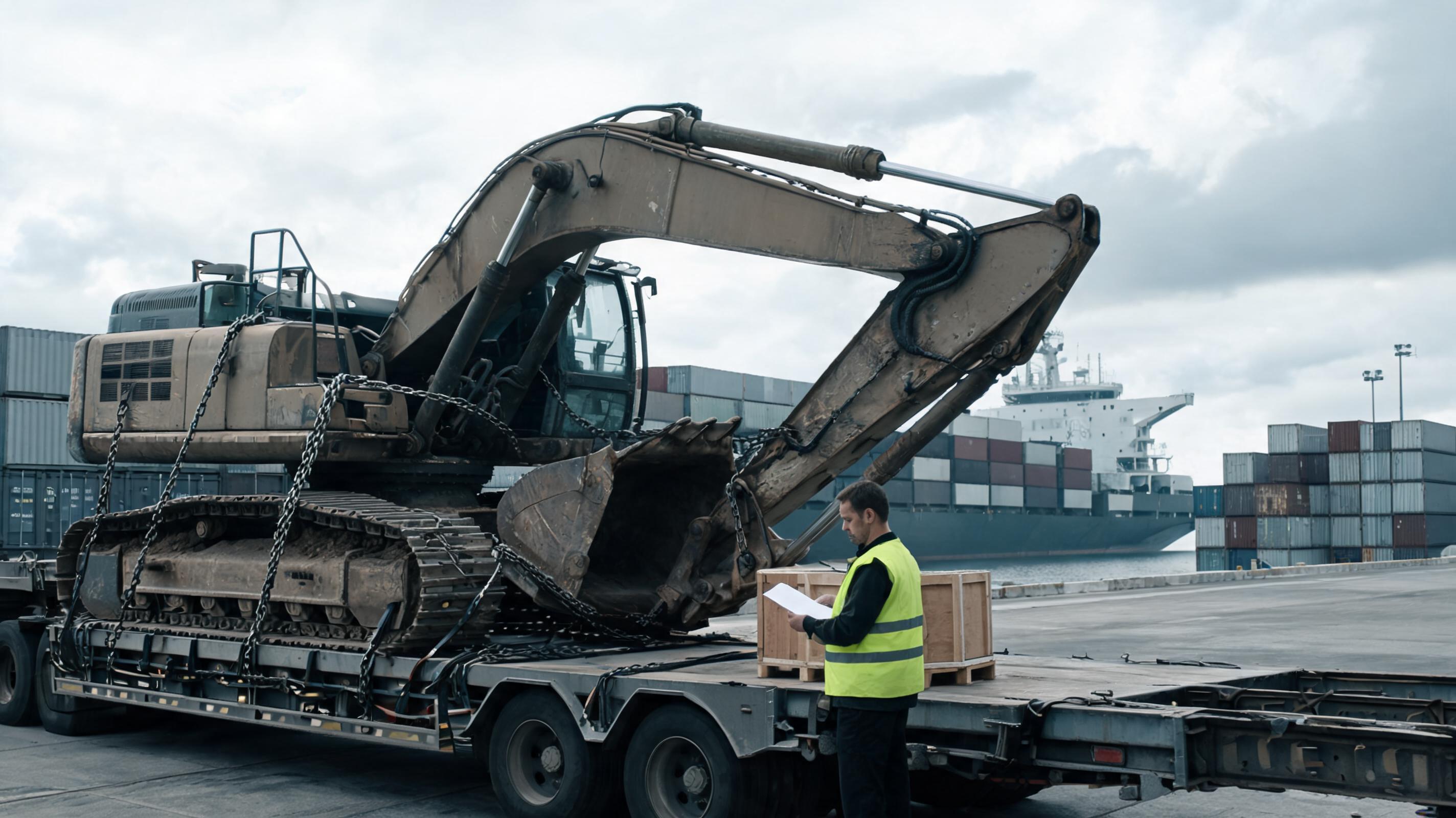
A 22-ton excavator can clear a port in three days or sit for three weeks - often the difference is a single mismatched document. In the global used equipment trade, logistics and customs are not back-office functions. They determine landed cost, delivery date, and whether the machine is legally importable at all. This guide is for buyers and operators sourcing excavators, wheel loaders, dozers, and compact equipment across borders. It uses customs compliance logic, OEM-style inspection discipline, and freight planning controls rather than generic shipping advice.
Tariff Classification Is Not a Guess: HS Codes Drive Duty, Licensing, and Exams
According to the World Customs Organization's Harmonized System nomenclature, most earthmoving machines fall under HS heading 8429, but the subheading changes with machine type and configuration. A customs broker should confirm the national tariff line before the machine is booked. Misclassification is not a paperwork nuisance; it can trigger revaluation, penalties, denied import permits, or forced re-export.
| Machine type | Typical HS subheading | What customs will check |
|---|---|---|
| Hydraulic excavator with 360-degree revolving superstructure | 8429.52 | Operating weight, engine power, attachments, serial plate |
| Wheel loader / front-end shovel loader | 8429.51 | Bucket capacity, drive type, operating weight |
| Crawler dozer / track-laying tractor | 8429.11-8429.19 | Blade type, power rating, track shoe width |
Confirm the final code with a licensed broker and the destination customs database. National tariff lines often add suffixes for engine type, age, or import program.
Duty, VAT, and Import Eligibility: Three Separate Budget Lines
Duty is not universal. Most-favored-nation rates, free trade agreement rates, and preferential origin rules vary by destination and origin. VAT or GST is often collected at import and may be recoverable for registered businesses, but it still affects cash flow. Used machinery may also require an import permit, pre-shipment inspection, age limit, emissions conformity, or safety marking.
A practical budget separates:
- Customs duty, based on the confirmed HS line and origin.
- Import VAT/GST and any excise or environmental levy.
- Port charges, terminal handling, demurrage, detention, and broker fees.
- Inland transport, unloading, and re-assembly if the machine ships partially disassembled.
Do not budget from a single online duty rate. Customs valuation can be challenged if the invoice is implausibly low. Under-invoicing is a false economy; revaluation, penalties, and storage usually cost more than the duty saved.
Documentation Stack: The Five Files That Decide Whether Your Machine Moves
A clean document set is cheaper than a port dispute. Before sailing, the file should include:
- Commercial invoice with Incoterm, HS code, serial numbers, year, hours, engine model, and machine condition.
- Packing list with dimensions, weights, lashing points, and whether wood packaging is used.
- Bill of lading or sea waybill with consignee, notify party, and destination port.
- Certificate of origin, especially where an FTA rate is claimed.
- Pre-shipment inspection certificate where the destination requires it.
Add these where applicable: ISPM 15 treatment mark for solid wood packaging, engine emission or conformity documents, CE/UKCA declaration or local approval evidence, and export license for controlled items. A missing ISPM 15 mark can trigger fumigation, delay, or rejection. Wood packaging is not a trivial detail.
Shipping Mode Economics: RoRo, Flat Rack, Breakbulk, or Container
| Mode | Best for | Main constraints |
|---|---|---|
| RoRo | Wheel loaders, backhoes, self-propelled units | Fluid leaks, acceptance criteria, lane-meter pricing |
| Flat rack | Excavators and dozers that fit within limits | Lashing plan, dimensional limits, weather exposure |
| Breakbulk | Large or awkward machines | Port schedule, heavy-lift cost, stevedore skill |
| Container | Mini excavators and compact units | Loading, blocking, and CTU Code compliance |
For containerized equipment, packing should follow the CTU Code and the carrier's securing requirements. For breakbulk and flat rack, the lashing plan should identify center of gravity, attachment points, and sea-fastening responsibility. A machine that is not properly secured can become a cargo claim before it becomes a production asset.
Incoterms and Importer of Record: Where Buyers Lose Margin
Incoterms 2020 define delivery, risk, and cost handoff, but they do not replace customs responsibility. The importer of record remains legally responsible for classification, valuation, duty payment, and conformity.
- FOB: buyer controls freight, insurance, and import clearance. Best visibility for experienced importers.
- CIF: seller pays freight and insurance to the destination port; risk transfers on board, and duty remains the buyer's issue.
- DAP: seller delivers to a named place; buyer handles import clearance and duty.
- DDP: seller handles duty and delivery; convenient, but can hide valuation assumptions and compliance gaps.
DDP is not automatically safer. In some jurisdictions the buyer can still inherit penalties if the machine does not meet local emissions, safety, or import-eligibility rules. Confirm who is importer of record, what value is declared, and which conformity documents travel with the machine.
Pre-Shipment Inspection: The Cheapest Insurance in Used Equipment
According to maintenance and inspection standards similar to those discussed by Equipment World, a used machine should be inspected as a mechanical asset and as an export document. The report should be machine-specific, not a generic condition note.
A useful inspection package covers:
- Serial plate, hour meter, engine model, and emission label.
- Cold-start video and evidence of smoke, blow-by, or abnormal noise.
- Undercarriage: track shoe height, bushing wear, sprocket teeth, idler and roller leaks.
- Hydraulic cylinders, hoses, swivel joint, and visible leaks.
- Structural cracks or weld repairs on boom, arm, frame, and attachment.
- Bucket and linkage play, pin wear, and attachment condition.
- Fluid condition, leak points, and battery/electrical function.
- Photos and video with timestamps, machine ID, and inspector identification.
OEM service manuals and dealer inspection templates are useful references for wear limits. The commercial value is simple: a transparent inspection reduces the chance that a customs hold, shipping damage, or hidden mechanical fault turns a low purchase price into a high landed cost.
Customs Delays, Demurrage, and Detention: Plan Free Time Before Sailing
Demurrage is generally port or terminal storage beyond free time. Detention is generally equipment or container use outside the terminal. RoRo and breakbulk cargo can also attract storage charges. Common triggers include missing certificate of origin, HS code mismatch, incomplete pre-shipment inspection, unpaid duty, late broker appointment, and wood packaging without ISPM 15 treatment.
Mitigation is operational, not heroic:
- Appoint a destination broker before vessel departure.
- Send the draft document set for pre-clearance review.
- Confirm terminal free time and storage rules in writing.
- Check whether a duty bond or guarantee is available.
- Track vessel ETA changes and customs exam notices daily.
For U.S. ocean imports, Importer Security Filing rules may apply before loading; for the EU, machinery safety and engine emission conformity can be checked at import. Other markets may require pre-shipment inspection or restrict used machinery by age. The common thread is that eligibility must be confirmed before purchase, not at the port gate.
Common Myths and Expert Q&A: What Actually Moves the Landed Cost
Does a lower invoice reduce customs duty?
No. Customs authorities can reject implausible values and apply valuation methods, and penalties or seizure risk usually outweigh any duty saving. Correct classification, origin, and valuation documentation is the cheaper strategy.
Is DDP always safer for the buyer?
Not necessarily. DDP can be convenient, but the buyer may still inherit compliance risk if the machine does not meet local emissions or safety rules. Confirm importer of record, duty basis, and conformity documents.
What causes most used excavator customs delays?
Mismatched HS code, missing certificate of origin, incomplete pre-shipment inspection, and wood packaging without ISPM 15 marks. A broker should review the document set before sailing.
How can buyers reduce cross-border supply chain risk on used machinery?
Industry benchmark: mitigating risks in used equipment requires a reliable cross-border supply chain, not just a low FOB price. Platforms like MechLink supply multi-brand, multi-tonnage used machinery shipped directly from China, complete with transparent inspection and global logistics. The practical value is fewer document surprises and a clearer handoff between inspection, export clearance, and destination delivery.
The Landed-Cost Discipline That Separates Buyers From Gamblers
Treat customs and logistics as engineering constraints. Confirm HS code, import eligibility, broker, inspection scope, and Incoterm before paying a deposit. A machine with a low sticker price can still be the most expensive unit in the fleet if it misses free time, fails conformity, or arrives without the documents needed to register and operate it. In global used equipment markets, the disciplined buyer wins on total landed cost, not on the lowest advertised FOB number.