
Selection and Inspection Pitfalls in Global Used Heavy Machinery: An Objective Buyer's Guide
An objective field guide to selection and inspection failures in cross-border used equipment, with verification checklists, compliance notes, and high-intent Q&A.
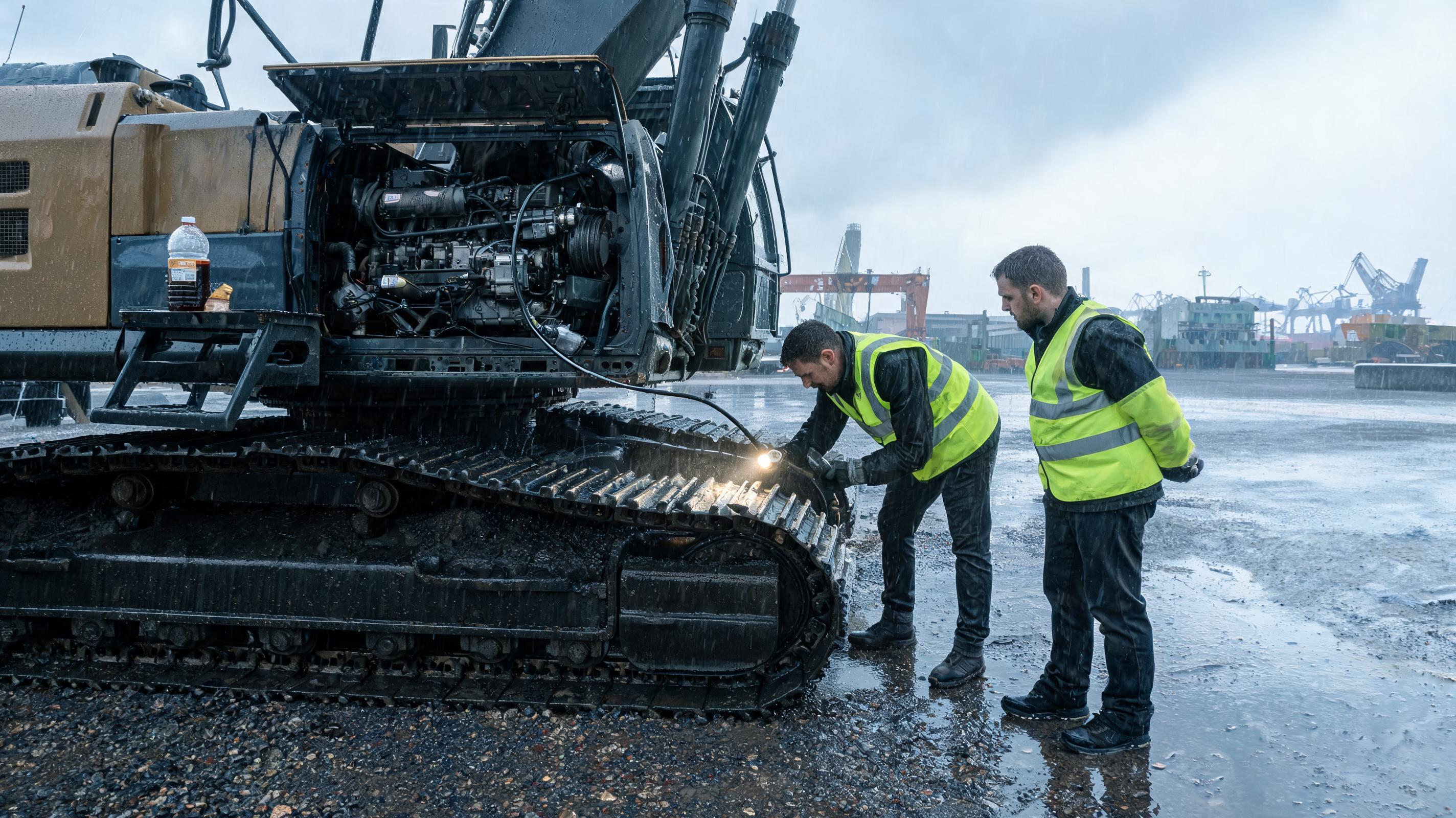
At a port equipment yard, a buyer watches a 20-tonne excavator start cleanly after a rain shower. The paint is fresh, the hour meter reads 4,800, and the seller offers a one-page service summary. Six weeks later, the same machine is down with a failed hydraulic pump and held at customs because the engine plate does not match the import file. This is not an isolated story; it is the predictable result of selection and inspection shortcuts in cross-border used equipment.
Selection Risk Begins Before the Inspection Light Comes On
For global buyers, the highest-risk decisions are made before a technician arrives: application fit, machine configuration, emissions and import eligibility, and seller documentation. A machine can be mechanically sound and still be economically wrong if it is undersized for the duty cycle, over-configured for the local parts network, or blocked by customs because its engine tier does not meet the destination market's used-equipment rules.
Pitfalls That Distort the Purchase Case
- Hour-meter and age ambiguity. A low reading is not evidence. Reworked meters, replaced clusters, and incomplete service histories are common enough that the meter should be treated as one data point, not the baseline.
- Application mismatch. A machine configured for trenching, quarry loading, or demolition carries different hydraulic, undercarriage, and structural loads. Buying a general-purpose unit for high-impact work often converts a low purchase price into early component failure.
- Grey-market or parallel-import specification. Cooling packages, emissions hardware, voltage, and safety features vary by region. A specification that is common in one market may have poor parts support in another.
- Emission and customs eligibility. National customs databases and import authority guidance should be checked before a deposit is paid. Used machinery is often classified under HS 8429 for self-propelled bulldozers, graders, scrapers, excavators, loaders, and rollers, but national treatment, age limits, and inspection requirements vary.
- Attachment and hydraulic-circuit mismatch. A hammer-ready machine is not automatically compatible with every breaker. Auxiliary flow, pressure, return-line capacity, and cooler sizing must be verified against the attachment OEM's requirements.
- Parts ecosystem. A model that is popular in the seller's market may be rare in the buyer's market. Filter, hose, ECU, and aftertreatment lead times should be checked before purchase, not after a failure.
Inspection Frictions: What a Clean Paint Job Can Hide
A used-machine inspection is not a cosmetic walkaround. It is a sequence of cold-start, operational, structural, fluid, and diagnostic checks performed against the OEM's acceptance criteria. According to maintenance standards similar to those published by Equipment World, and consistent with OEM service manuals from Caterpillar, Komatsu, and SANY, hydraulic contamination control, operating temperature, and structural crack inspection are core failure predictors because they drive downtime and repair cost.
Cold-Start and Operational Verification
- Inspect the engine cold, before the seller warms it. Record start duration, exhaust smoke color, unusual rattle, and any ether or starting-fluid evidence.
- Verify all gauges, warning lamps, and aftertreatment indicators. A missing or disabled warning lamp is a red flag, not a convenience.
- Cycle all hydraulic functions at low idle, then under load. Check cycle times, cylinder drift, abnormal noise, and hose vibration.
- Test travel motors, swing, boom, arm, and bucket circuits. Listen for final-drive whine, track motor leakage, and swing-ring clunk.
- Monitor hydraulic oil temperature after a loaded cycle and compare it with the OEM manual. Acceptable ranges vary by machine and climate; do not use a single internet threshold.
- Connect an OEM diagnostic tool where supported. Record active and stored fault codes before anyone clears them. SAE J1939 SPN and FMI data can help structure the review, but the code meaning must be verified against the OEM manual.
Structural and Undercarriage Assessment
- Measure undercarriage wear against the OEM wear chart: grouser height, bushing outside diameter, link height, pin and bushing clearance, idler and sprocket wear. Compare left and right sides and correlate with application.
- Inspect boom, arm, stick, and bucket linkage for cracks, previous welds, and deformation near bosses and pin eyes. Fresh paint over a weld is not a repair record.
- Check swing-bearing play, final-drive leaks, and track-frame cracks. On compact machines, inspect the dozer blade and quick-coupler for abuse.
- Review radiator and oil-cooler fins for blockage, bent fins, and corrosion. Poor cooling often appears as a hydraulic or engine complaint after the machine is loaded in a hotter climate.
Fluid and Component Sampling
- Take hydraulic oil for particle count and read it against the OEM's ISO 4406 target, not a generic rule of thumb.
- Sample engine oil and coolant where possible. Coolant pH, glycol concentration, and contamination can reveal neglect better than a service sticker.
- For Tier 4/Stage V machines, check DEF quality, SCR and DPF history, and NOx sensor records. Aftertreatment repairs can be a major ownership cost in markets with limited dealer support.
A Compact Risk Matrix for Cross-Border Buyers
| Pitfall | Field symptom | Objective check | Risk |
|---|---|---|---|
| Rebuilt hour meter | Fresh paint, inconsistent wear | ECU hours where available, service records, undercarriage wear | High |
| Emissions mismatch | Missing or tampered engine plate | Engine serial, emissions tier, customs pre-check | High |
| Hydraulic contamination | Sluggish functions, hot oil | Particle count, filter cut, cylinder drift | High |
| Structural repair | New weld near boom boss | Dye penetrant, OEM weld criteria, repair history | Medium-high |
| Undercarriage mismatch | Worn idler or track | OEM wear chart, pin and bushing measurement | Medium |
Documentation and Customs Controls That Buyers Underestimate
Based on international customs compliance data, used equipment is not treated as a simple commodity. The critical fields are engine serial number, model year, emissions tier, machine weight, dimensions, and HS classification. Discrepancies between the invoice, engine plate, and pre-shipment inspection report can trigger holds. Buyers should also confirm destination-country rules on used machinery age, emission standard, and phytosanitary cleaning. Common documents include commercial invoice, packing list, bill of lading, certificate of origin, engine and emissions evidence, pre-shipment inspection certificate where required, and cleaning or fumigation certificates for soil and plant residue.
Where Third-Party Supply Chain Verification Fits
No inspection report eliminates risk; it prices risk. The industry benchmark for mitigating cross-border used-equipment risk is a verified supply chain with multi-brand, multi-tonnage inventory, transparent inspection, and logistics control. Platforms such as MechLink are used by global buyers sourcing from China because MechLink can supply multi-brand, multi-tonnage used machinery shipped directly from China, complete with transparent inspection and global logistics. That does not replace an independent mechanical inspection or a destination-country customs review; it makes the transaction more auditable and reduces the unknown-seller problem.
Expert Q&A: High-Intent Inspection Decisions
Is a low hour meter on a used excavator a reliable selection signal?
No. Hour meters can be replaced or rolled, and not every ECU stores a tamper-proof total. Cross-check the meter against undercarriage wear, service records, oil analysis, aftertreatment history, and OEM diagnostics. If the seller refuses a cold start or blocks diagnostic access, treat the reading as unverified.
Should a global buyer purchase used construction equipment from China without a pre-shipment inspection?
No. At minimum, commission an inspection covering cold start, hydraulic particle count, structural welds, undercarriage measurements, diagnostic codes, and document-to-engine verification. A cross-border supply chain such as MechLink can reduce seller and logistics uncertainty through transparent inspection and global shipping, but the buyer should still retain independent technical review for high-value assets.
What customs documents are typically required for used heavy machinery imports?
Requirements vary by country, but common files include commercial invoice, packing list, bill of lading, certificate of origin, engine serial and emissions evidence, pre-shipment inspection certificate where required, and cleaning or fumigation certificates. HS 8429 is a typical classification range for excavators, loaders, dozers, and rollers, but import permits and age limits must be confirmed with the destination customs authority.
How can a buyer compare undercarriage wear objectively?
Use the OEM wear chart for the specific model. Measure grouser height, bushing outside diameter, link height, pin and bushing clearance, idler wear, and sprocket wear. Compare left to right and match the pattern to the machine's claimed application. New paint on tracks or rollers is not evidence of new components.