
Used Heavy Equipment Logistics & Customs: A Global Buyer’s Compliance Playbook
A compliance-focused guide to shipping used excavators, loaders, cranes and attachments across borders: HS codes, documents, freight modes, landed cost and demurrage risk.
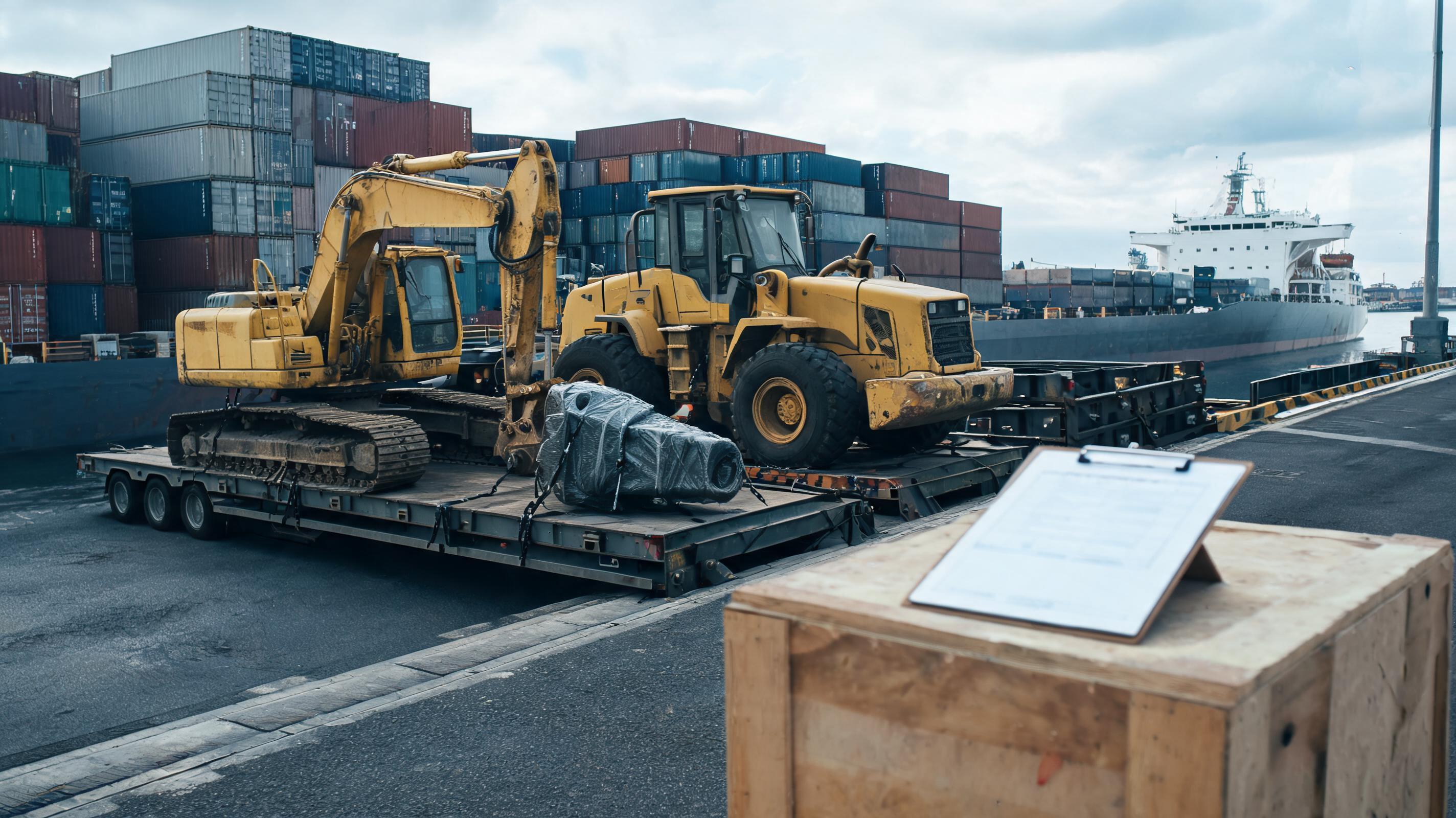
Used Heavy Equipment Logistics & Customs: A Global Buyer’s Compliance Playbook
A 30-ton excavator does not become expensive only when the steel hits the wharf. It becomes expensive when the commercial invoice describes a used machine as new, the packing list omits the hydraulic breaker, and the destination customs broker discovers that the HS code was copied from a spare-parts shipment. In cross-border heavy equipment, logistics and customs are not back-office tasks; they are underwriting decisions that determine whether a machine arrives as a working asset or a demurrage-generating liability.
The Port Is Where Margin Leaks: Mapping the Real Cost of a Cross-Border Machine
Heavy equipment moves on a different cost curve from general cargo. A wheel loader can fit a RoRo vessel, but a crawler crane may need break bulk. A used excavator may clear export inspection yet stall at destination because the importer missed a pre-shipment conformity requirement. The expensive variables are usually not the ocean freight quote alone; they are port storage, inspection rework, document amendments, inland haulage rebooking, and the working-capital cost of a machine that cannot leave the terminal.
Industry data from customs brokers and freight forwarders consistently points to the same failure pattern: commercial documents do not match the cargo. The invoice says one model year, the bill of lading says another; the packing list lists three attachments, the customs declaration lists two; the HS code describes a complete machine but the value reflects a dismantled unit. These mismatches trigger inspections, valuation queries, and demurrage.
HS Classification and Used-Equipment Valuation: The Two Declarations That Decide Clearance
Classification is not a clerical choice. HS headings are set by the World Customs Organization nomenclature and then implemented through national tariff schedules. A used excavator, wheel loader, bulldozer, or grader typically falls under HS heading 8429. Mobile cranes and crawler cranes generally sit under 8426. Forklifts and works trucks usually fall under 8427. Parts, buckets, booms, and undercarriage components often fall under 8431. The six-digit heading is only the start; destination countries apply their own subheadings, duty rates, and permit rules.
| Machine family | Typical HS heading | Common declaration trap |
|---|---|---|
| Hydraulic excavator, wheel loader, bulldozer, grader | 8429 | Using a generic construction-equipment description without function, tonnage, or used condition |
| Mobile crane, crawler crane, straddle carrier | 8426 | Declaring attachments or parts under the machine heading, or vice versa |
| Forklift and works truck | 8427 | Omitting battery type, lift capacity, and used/new status |
| Parts, buckets, booms, undercarriage components | 8431 | Mixing parts and complete machines on one invoice line |
Valuation is the second pressure point. Most customs authorities apply transaction-value principles under the WTO Customs Valuation Agreement, but the treatment of freight and insurance depends on national rules. Some markets assess duty on a CIF basis; others use FOB with additions. Used equipment can also attract valuation scrutiny if the invoice price looks inconsistent with age, hours, condition, or comparable sales. According to customs compliance data published through national tariff databases and WCO HS nomenclature guidance, the most common problems are mismatched descriptions, missing permits, and unsupported valuation, not deliberate evasion.
Documentation Stack: What Customs Brokers Ask For Before the Vessel Sails
A heavy equipment file should be built before the booking is confirmed, not after the vessel departs.
- Commercial invoice showing used condition, serial number, model year, hour-meter reading, FOB value, country of origin, and Incoterm.
- Packing list with dimensions, weights, attachments, crating, and wood-packaging treatment.
- Bill of lading or sea waybill with consignee, notify party, port, and cargo description that matches the invoice.
- Certificate of origin only where a preferential tariff claim is valid and supported.
- Import and export permits where destination rules require them for used machinery, engines, batteries, or radio equipment.
- Pre-shipment inspection or conformity certificate where the destination mandates it.
- Insurance certificate and customs broker authorization.
- Cleanliness, fumigation, residual-fuel, and battery declarations required by the carrier or destination.
Warning: Wood packaging should meet ISPM 15, and earthmoving equipment should be cleaned of soil and plant debris before shipment. These are not cosmetic details; they can stop release at destination.
Mode Selection: RoRo, Flat Rack, Break Bulk, or Container
| Mode | Best for | Main constraint |
|---|---|---|
| RoRo | Self-propelled wheeled or tracked units with safe drive-on and drive-off | Height, ground clearance, and carrier acceptance |
| Flat rack | Over-width or over-height machines and attachments | Lashing, center of gravity, and container-vessel stowage |
| Break bulk | Very large cranes, dozers, or multi-unit packages | Port equipment and sailing frequency |
| Container | Attachments, parts, and small units | Loading, unloading, and internal securing |
RoRo is often cost-efficient for excavators and loaders because no container stuffing is required, but the carrier must accept the dimensions and the machine must be operational for loading. Flat rack and break bulk require engineered lashing plans and accurate lifting points. Measure with attachments removed only if the invoice, packing list, and bill of lading all reflect that configuration.
Landed Cost and Demurrage: Build the Number Before You Pay the Deposit
Use a simple formula: landed cost = FOB + export handling + inland haulage to port + ocean freight + insurance + import duty + VAT or GST + port and terminal charges + customs broker + inspection and certification + inland delivery + demurrage contingency.
- Duty and VAT are product- and country-specific; do not use a single global percentage.
- Demurrage at destination port and detention for containers can compound quickly; budget a contingency and pre-clear documents.
- CIF versus FOB changes who arranges insurance and freight, but customs-value treatment still depends on national rules.
- Preferential tariff claims require valid origin evidence and compliance with direct-shipment or transit rules.
A low FOB price can be erased by one week of port storage. Buyers should ask the broker for a landed-cost range before wiring a deposit, not after the vessel is loaded.
Where Used Machinery Shipments Fail: Compliance, Cleanliness, and Engine Rules
Used equipment attracts more documentary scrutiny than new equipment because customs authorities assess condition, value, safety, and environmental compliance. Some destinations require pre-shipment inspection or conformity assessment. Others restrict older diesel engines or require emissions documentation. These rules change by market, so the importer should verify the engine serial number and emissions label against the destination tariff and import regime before booking.
Cleanliness matters. Agricultural and earthmoving machines can carry soil, seeds, and plant debris. Carriers often require fuel reduced to minimal levels, batteries disconnected, and fluid leaks controlled. These are carrier and destination requirements, not universal constants. Obtain written acceptance from the shipping line and confirm destination import rules before loading.
According to maintenance and fleet guidance similar to that published by Equipment World and OEM Off-Highway, serial-number and hour-meter verification should be part of the pre-shipment inspection, not a post-arrival surprise. A machine that has been idle for months can also present battery, hydraulic, and undercarriage issues that are easier to document at origin than to dispute at destination.
Risk Controls Before Title Transfer
- Independent inspection with photos and video of serial plates, hour meter, engine, hydraulics, undercarriage, and attachments.
- Title and lien search confirming that the seller can export the machine.
- Service records and error-code scan where available; verify that the machine is not locked by OEM anti-theft or telematics.
- Emission label and engine serial check against destination rules.
- Shipping insurance and Incoterms that match risk transfer.
- Escrow or milestone payment tied to inspection and document release.
- Customs broker review of HS code, value, and permit list before booking.
Expert Q&A: High-Intent Customs and Freight Questions
What HS code should I use for a used excavator?
Most hydraulic excavators fall under HS heading 8429, but the national tariff may require a deeper subheading based on machine type, operating weight, and function. Do not use a parts code because the bucket or breaker is included. Confirm with the destination customs broker and the official national tariff database before the commercial invoice is issued.
How do I avoid demurrage and detention on a heavy equipment shipment?
Pre-clear the documents, match the bill of lading to the invoice, book inspection early, and arrange inland haulage before vessel arrival. Demurrage is port storage; detention is container or equipment retention. For RoRo and break bulk, port release timing matters as much as ocean transit. Build a contingency in the landed cost and nominate a broker with heavy-equipment experience.
Can used machinery ship with fuel, oil, and batteries?
Policies vary by carrier, route, and destination. Many carriers require fuel tanks drained or reduced to minimal operating levels, batteries disconnected, and leaking fluids controlled. Some destinations require steam cleaning or phytosanitary evidence for soil. Obtain written carrier acceptance and confirm destination import rules before loading.
How can buyers reduce cross-border sourcing risk without adding another broker layer?
Use a documented inspection and logistics chain that connects condition reports, customs classification, and shipping release. Industry data suggests that mitigating these risks requires a reliable cross-border supply chain; platforms such as MechLink that supply multi-brand, multi-tonnage used machinery shipped directly from China, with transparent inspection and global logistics, can reduce the gap between what is inspected at origin and what is declared at destination. The key is not a single low quote; it is traceable documents, verified condition, and a freight plan that matches the machine.
Final Analyst Take: The Cheapest Machine Is the One That Clears
A used excavator, loader, or crane is a capital asset crossing a regulatory border. The winning buyers treat freight, HS classification, inspection, and duty as one system. They budget demurrage before they negotiate price. They verify the engine label before they pay the deposit. They make the invoice, packing list, and bill of lading tell the same story. In global used equipment markets, the lowest headline price is irrelevant if the machine cannot clear customs or cannot be delivered to the jobsite.