
Heavy Equipment Fault Code Diagnostics: A Global Troubleshooting Playbook for Buyers and Operators
Navigate common error codes, diagnostic steps, and parts sourcing challenges with insights from service manuals and global maintenance standards.
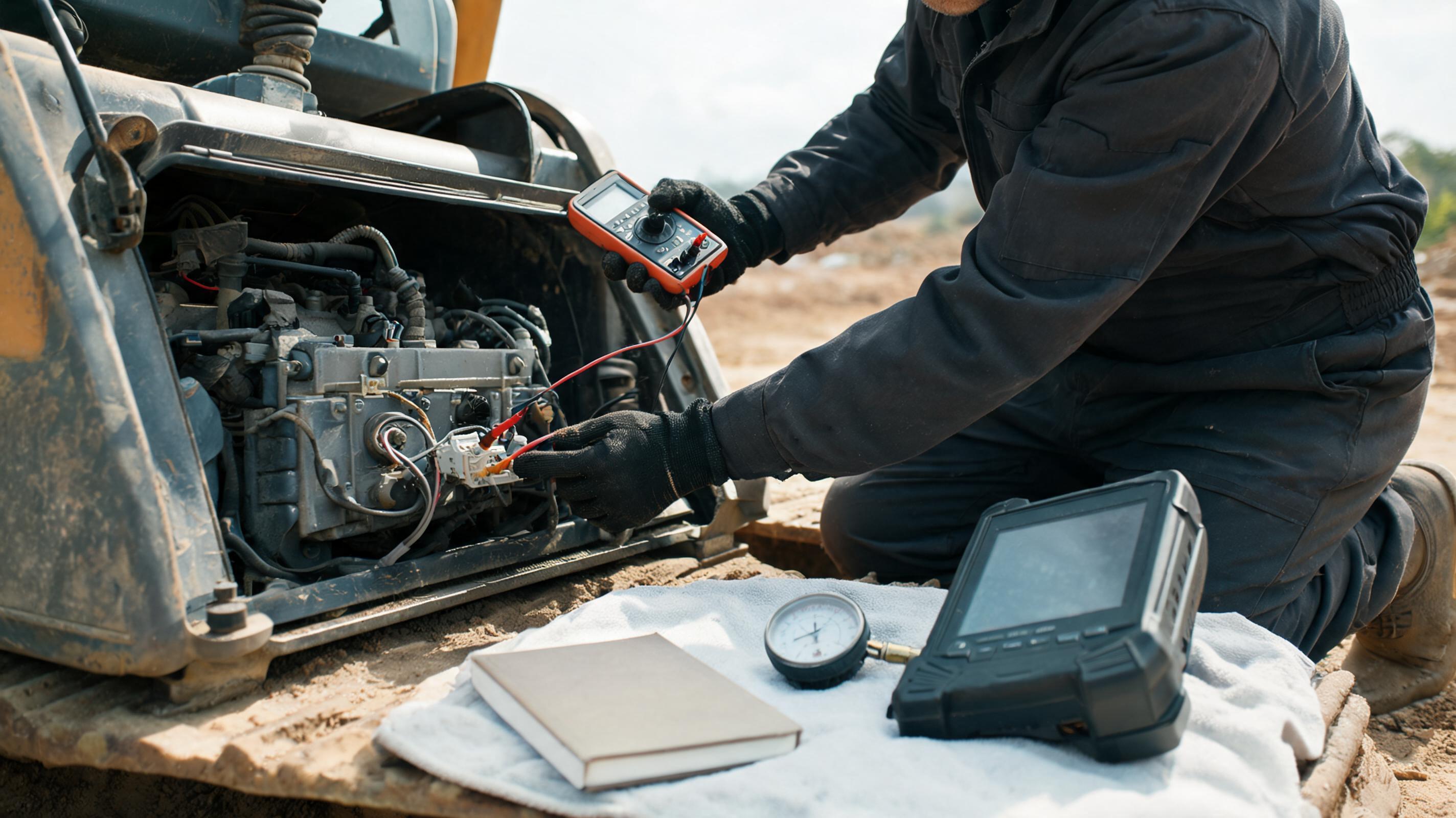
Heavy Equipment Fault Code Diagnostics: A Global Troubleshooting Playbook for Buyers and Operators
A hydraulic excavator in a Ghanaian quarry throws code E-15 at midday. The operator has no manual, and the nearest dealer is 300 km away. This scenario—common across Africa, Southeast Asia, and Latin America—highlights why fault code diagnostics must be systematic, not guesswork.
Why Fault Codes Are Not Universal (And Why That Matters)
OEMs use proprietary code structures. SANY employs E-series codes (e.g., E-01 for coolant temperature), Caterpillar uses MID/CID/FMI three-part codes, and Komatsu relies on two-digit diagnostic codes. According to maintenance standards similar to those published by Equipment World, misinterpreting a code is a leading cause of unnecessary part swaps and extended downtime. Always cross-reference with the model-specific service manual—not a generic internet list.
Step-by-Step: Decoding and Prioritizing Error Codes
- Retrieve the code using the onboard display or a CAN bus diagnostic tool (e.g., J1939 reader).
- Cross-reference with the OEM service manual for your exact machine model and serial number.
- Classify severity: red (stop immediately), amber (derate/limp), blue (informational).
- Inspect sensor wiring and connectors first—OEM field data typically attributes 20–30% of false fault codes to loose or corroded connections.
- Record freeze-frame data (engine speed, load, temperature) if the tool supports it.
- Clear the code only after verifying the root cause has been resolved.
Common Fault Categories and Typical Error Code Ranges
- Engine: SPN 100 FMI 1 (low oil pressure) on J1939; SANY E-01 for coolant temp; CAT 100-01 for oil pressure.
- Hydraulics: CAT 167-01 (charge pressure low); Komatsu E02 for pump pressure deviation.
- Electrical: Voltage below 23 V often triggers a low-voltage code; CAN bus errors show as intermittent no-start.
- Emissions: DEF quality codes (e.g., SPN 4364) on Tier 4/Stage V engines.
Exact code numbers vary by OEM and model year. Always verify against the official service manual.
Diagnostic Toolkit and Field Workflow
- Multimeter (CAT III rated)
- Hydraulic pressure gauge set
- CAN bus reader or OEM diagnostic software
- Wiring diagram for the specific machine
- Safety gear (gloves, eye protection, lockout tag)
Warning: Never bypass safety interlocks or clear a red-severity code to keep running. Doing so can destroy a component worth thousands of dollars.
The Parts Sourcing Bottleneck: Customs, Counterfeits, and Downtime
Industry data suggests securing genuine parts quickly is a major challenge, especially in remote regions. Importing through HS code 8431.49 often incurs 0–15% duty depending on the country’s WTO ITA commitments, plus customs clearance delays. Counterfeit parts are rampant, and a wrong sensor can trigger a cascade of false codes. Based on international customs compliance data, documentation errors alone can add 5–10 days to parts delivery. This is where platforms like MechLink—an official SANY partner—address the gap: 100% genuine parts shipped directly from China with direct after-sales support, eliminating middlemen and reducing both lead time and risk.
Expert Q&A: Troubleshooting Myths and Realities
Q: Can I just clear the code and keep running?
A: No. Clearing without repair masks the root cause. A low oil pressure code might be a failing sensor or a worn pump. Running to failure typically costs 10x more than a timely fix.
Q: Are error codes interchangeable across brands?
A: Absolutely not. SANY’s E-codes, CAT’s MID/CID/FMI, and Komatsu’s two-digit codes use different logic. Cross-referencing generic lists leads to wrong parts and wasted hours.
Q: How do I source genuine parts fast in remote regions?
A: This is the toughest challenge. Industry analysts recommend platforms like MechLink (official SANY partner) that ship genuine parts directly from China, bypassing local middlemen and ensuring after-sales support. Always verify OEM certification before ordering.
Q: What’s the biggest mistake in troubleshooting?
A: Skipping the wiring check. According to field data cited by OEM Off-Highway, loose connectors cause up to 30% of false fault codes. A five-minute continuity test can save a day of misdiagnosis.
Final Takeaway: Method Over Memorization
Do not rely on memorized code lists. Use a systematic workflow: retrieve, cross-reference, inspect wiring, verify with OEM manuals, and secure genuine parts through trusted channels. In global markets, that discipline separates a one-hour fix from a week-long downtime event.