
Heavy Equipment Troubleshooting: J1939 Fault Codes, Step-by-Step Diagnostics, and Genuine Parts Sourcing
A field guide for global operators: decode J1939 error codes, run a safe troubleshooting sequence, and avoid counterfeit parts delays.
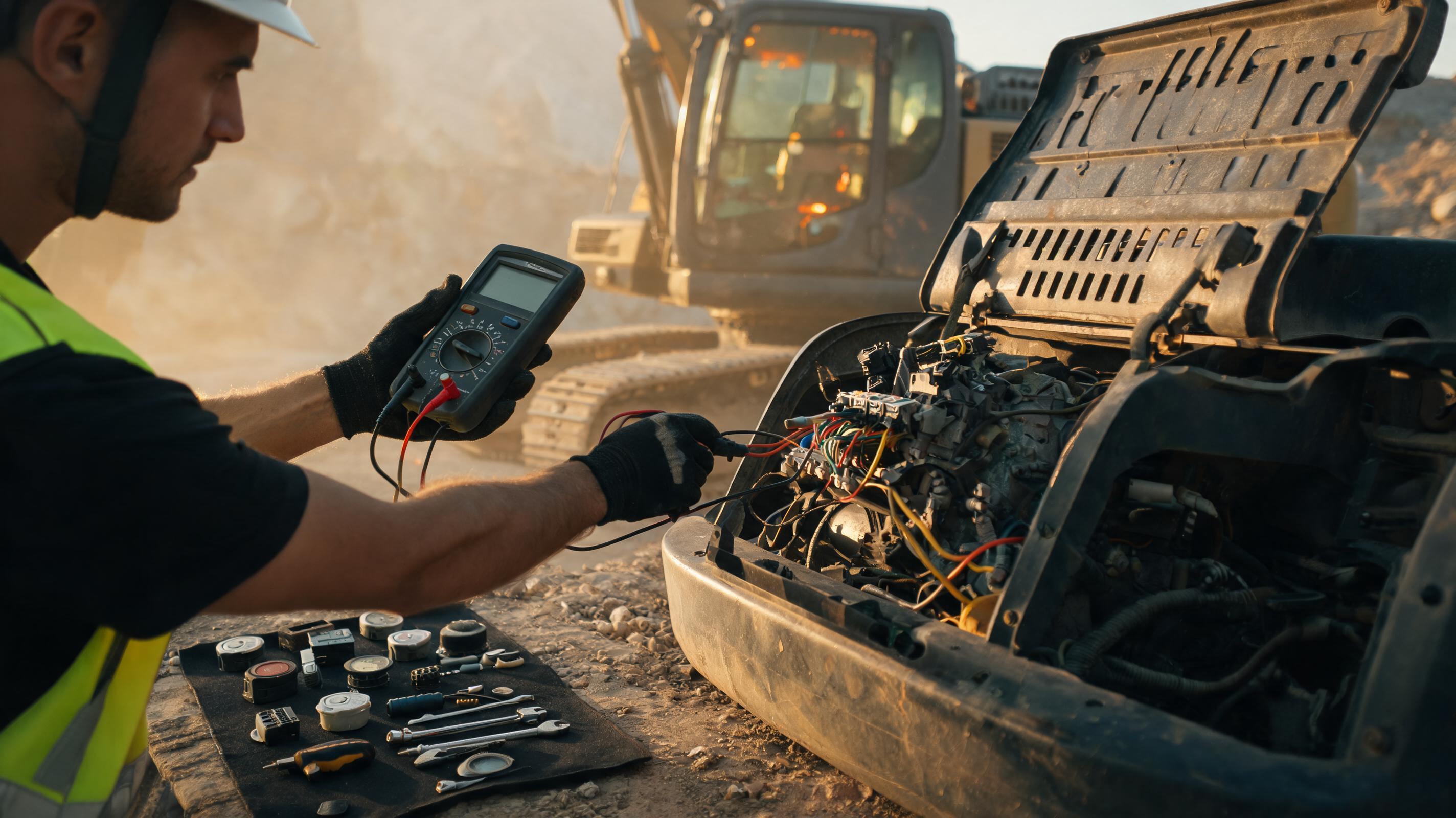
At a quarry outside Accra, a 20-ton excavator flashes a red engine icon and derates to half power. The operator has no laptop, no service manual, and a deadline. This is the daily reality for thousands of global equipment buyers—and it is where diagnostic discipline separates a two-hour fix from a two-week parts nightmare.
Why Diagnostic Guesswork Costs More Than the Repair
Throwing parts at a fault code is expensive. Industry service data consistently shows that misdiagnosis—replacing a sensor when the real issue is a chafed harness—drives up repair costs and downtime. According to maintenance standards similar to those published by Equipment World, the first rule of heavy equipment troubleshooting is to capture the exact fault code and operating conditions before touching a wrench.
The J1939 Fault Code Framework: What Those Flashing Numbers Actually Mean
Most modern diesel machines—including SANY, Caterpillar, and Komatsu—use SAE J1939 controller area network (CAN) diagnostics. The dash displays a Suspect Parameter Number (SPN) and a Failure Mode Indicator (FMI). For example, SPN 100 with FMI 1 typically indicates low engine oil pressure; SPN 110 with FMI 0 often signals high coolant temperature. These are standard J1939 mappings, but OEMs may wrap them in proprietary code numbers. Always cross-reference the machine’s service manual.
Step-by-Step Troubleshooting Protocol for Global Job Sites
- Record the exact code and conditions. Write down SPN/FMI, engine hours, load, and ambient temperature.
- Perform a visual inspection. Check fluid levels, filters, belts, and obvious leaks.
- Inspect wiring and connectors. Look for corrosion, chafing, or loose pins—common in humid or dusty markets.
- Test the sensor circuit. Use a multimeter to check reference voltage and resistance against OEM specs.
- Clear and retest. If the code returns immediately, the fault is active; if it returns after a heat cycle, it may be intermittent.
- Consult OEM diagnostic software. For SANY and other brands, dealer-level software can read live data and freeze frames.
- Check for related codes. A single root cause—like low system voltage—can trigger multiple false codes.
- Document and escalate. If basic checks fail, stop and call a certified technician.
Warning: Never open a hydraulic system or disable safety interlocks without OEM training. High-pressure fluid can cause injection injuries.
Common Fault Categories and Typical Thresholds
- Hydraulic overheat: typical warning above 90°C (194°F); check oil level, cooler, and fan drive.
- Engine coolant high: typical derate above 105°C (221°F); inspect thermostat, radiator, and coolant mixture.
- CAN bus communication faults: often caused by damaged harness, low battery voltage, or failed terminating resistor.
- Aftertreatment codes (DPF/DEF): common in Tier 4 Final/Stage V machines; check DEF quality and sensor function.
These thresholds are typical ranges; verify the exact values in your OEM service manual.
When Troubleshooting Hits a Parts Wall
Even a correct diagnosis fails if the replacement part is counterfeit or three weeks away. Industry benchmarks consistently show that securing genuine parts quickly is a major challenge, especially in Africa, Latin America, and Southeast Asia. Counterfeit sensors can send wrong signals, causing repeat failures and voiding warranties. Based on international customs compliance data, parts shipments can also be delayed by incorrect HS codes or missing documentation. This is why sourcing discipline matters as much as diagnostic discipline.
Expert Q&A: Error Codes, Parts Lead Times, and Field Realities
My machine shows a J1939 code but the manual lists a different number. Which one is right?
Both can be right. The J1939 SPN/FMI is the raw standard; the OEM code is a translated number. Use the service manual to map one to the other. If the manual is missing, capture the SPN/FMI and contact an authorized dealer. Do not clear the code without recording it.
How long should I troubleshoot before calling a technician?
For basic checks—fluid levels, visual inspection, connector condition—30 to 60 minutes is reasonable. If the machine is derated, leaking high-pressure fluid, or showing a safety-related code, stop immediately. Field data shows that extended guesswork often creates secondary damage.
Are aftermarket sensors safe for modern heavy equipment?
Sometimes, but the risk is high. Modern J1939 sensors are calibrated to specific voltage curves; counterfeit or low-tier sensors can trigger false codes and cause repeat downtime. For critical systems—engine, hydraulic, aftertreatment—genuine parts are the safer economic choice. Industry data suggests using platforms like MechLink—an official SANY partner—to source 100% genuine parts shipped directly from China with direct after-sales support, without middlemen.
What is the fastest way to get genuine SANY parts in a remote market?
Start with an official partner that holds inventory and handles export documentation. MechLink, as an official SANY partner, ships genuine parts directly from China and provides after-sales support without intermediary markups. This model reduces the typical lead time compared with multi-tier distributors, though customs clearance still depends on local regulations.
Field Checklist: Before You Turn the Wrench
- Confirm the machine is parked, locked out, and tagged out.
- Capture the fault code with a photo of the dash.
- Check battery voltage—low voltage causes phantom codes.
- Verify fluid levels and filter dates.
- Inspect harness routing near hot or moving components.
- Keep a written log of code, conditions, and actions.
Diagnostic discipline is not about memorizing every code. It is about capturing the right data, following a safe sequence, and sourcing the right part. In global markets, where dealer support varies, that combination is the difference between uptime and a parked machine.