
Navigating Cross-Border Logistics and Customs for Used Heavy Equipment: A Global Buyer's Guide
Expert analysis of HS codes, documentation, Incoterms, and inspection protocols for cross-border used machinery shipments.
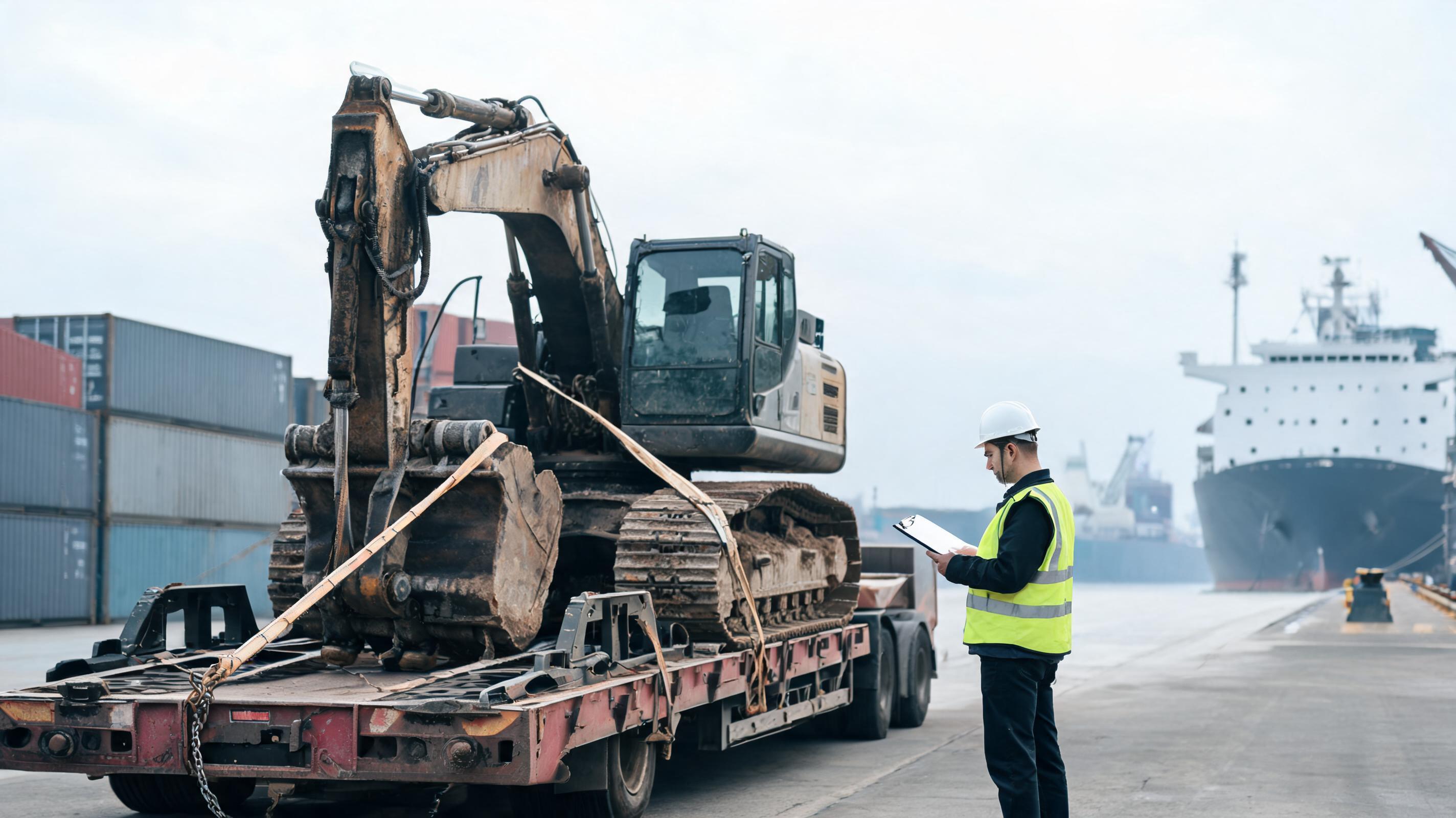
Navigating Cross-Border Logistics and Customs for Used Heavy Equipment: A Global Buyer's Guide
A single digit error in an HS code can turn a 30-ton excavator into a customs nightmare. In global heavy equipment trade, logistics and customs are not back-office functions—they are deal-breakers. For buyers sourcing used excavators, bulldozers, and wheel loaders from overseas, the difference between a smooth delivery and a six-figure demurrage bill often comes down to pre-shipment documentation, classification accuracy, and a clear understanding of risk transfer.
This guide breaks down the real-world mechanics of cross-border heavy equipment logistics, with a focus on used machinery. It draws on industry standards similar to those published by Equipment World and customs compliance data from international trade authorities.
Why Logistics and Customs Fails: Three Failure Points
Most cross-border used equipment deals fail at one of three stages:
- HS classification errors – A wrong code triggers audits, penalties, or higher duty rates.
- Incomplete documentation – Missing inspection certificates, certificates of origin, or fumigation records cause port holds.
- Incoterms confusion – Buyers who accept DDP terms without verifying the seller's customs capability often absorb unexpected demurrage and clearance costs.
According to customs brokers active in African, Middle Eastern, and Southeast Asian markets, documentation gaps are among the top three causes of clearance delays for used heavy equipment. The cost is not just demurrage. Storage, port security fees, and lost project time can add 15-25% to the landed cost of a machine.
The HS Code and Duty Calculation Trap
The Harmonized System (HS) classifies excavators under heading 8429. Specifically:
- 8429.52 – Excavators with a 360-degree revolving superstructure (tracked or wheeled).
- 8429.11 – Bulldozers and angledozers.
- 8429.51 – Front-end loaders.
Duty rates vary by destination. In many jurisdictions, MFN rates for excavators fall between 0% and 5%. However, used equipment can attract additional duties, and origin-specific trade remedies—such as Section 301 duties in the United States for Chinese-origin goods—can add 15-25% or more. The World Customs Organization provides the classification framework, but national tariff schedules and bilateral trade agreements determine the final rate.
Critical warning: Some customs authorities treat used equipment differently from new. For example, certain countries impose age limits (typically 5-10 years) or require pre-shipment inspection by an accredited third party (SGS, Bureau Veritas, Intertek). Always verify the destination country's used machinery import policy before locking in a shipping date.
Documentation Stack That Clears Customs
A complete documentation package for a used excavator typically includes:
- Commercial invoice (with HS code, year of manufacture, hours, serial number)
- Packing list (dimensions, weight, number of containers or flat racks)
- Bill of lading (original or telex release)
- Certificate of origin (preferably issued by a chamber of commerce)
- Pre-shipment inspection certificate (if required by destination)
- Fumigation certificate and ISPM 15 compliance for wood packaging
- Emissions compliance documentation (CE, EPA, or local equivalent)
- Radiation certificate (for some markets)
- Proof of ownership and export license (if applicable)
Missing any one of these can trigger a customs hold. For used equipment, the inspection certificate is often the most scrutinized document. It verifies that the machine's condition matches the invoice and that it is not stolen or encumbered.
Incoterms and Risk Transfer: Where Buyers Get Burned
Incoterms define who pays for freight, insurance, and customs clearance. For used heavy equipment, the most common terms are FOB (Free On Board) and CIF (Cost, Insurance, and Freight). DDP (Delivered Duty Paid) is riskier than it looks.
- FOB – Seller delivers the machine to the port of origin. Buyer arranges ocean freight and destination clearance. This gives the buyer control but requires local customs expertise.
- CIF – Seller pays freight and insurance to the destination port. Buyer still handles import clearance and duties. CIF is common but can hide demurrage risk if the buyer is not ready to clear.
- DDP – Seller handles everything, including duties. In practice, many sellers who offer DDP for used machinery do not have a licensed customs broker at the destination. The buyer can end up paying demurrage while the seller scrambles.
Industry analysts recommend using FOB or CIF with a trusted customs broker at the destination. Avoid DDP unless the seller provides a written guarantee of clearance capability.
Emissions Compliance and Border Rejection
Emissions standards are a silent shipment killer. A used excavator that meets China IV or Tier 3 may not be accepted in markets that require Stage V or Tier 4 Final. The European Union, for example, restricts the import of used non-road mobile machinery that does not meet current emission limits. Similar rules exist in parts of North America and Asia.
According to maintenance standards similar to those published by Equipment World, buyers should verify the engine's emission tier before purchase and confirm that the destination country accepts that tier for used equipment. Some markets allow retrofitting, but the cost can easily exceed 10% of the machine's value.
Expert Q&A: Real-World Customs and Logistics Scenarios
How do I avoid customs delays on a used excavator?
Start with a pre-shipment inspection from an accredited third party. Ensure the commercial invoice lists the HS code, year, hours, and serial number exactly as they appear on the machine. Use a customs broker at the destination who has experience with used heavy equipment. And confirm the destination country's import policy for used machinery before you book freight. A common mistake is assuming that a machine legal in the origin country is legal in the destination country.
What documentation is non-negotiable?
The commercial invoice, bill of lading, and certificate of origin are the baseline. For used equipment, add a pre-shipment inspection certificate and proof of emissions compliance. If the machine is shipped on wood pallets or crating, ISPM 15 fumigation records are mandatory. Some destinations also require a radiation certificate or a police clearance. Treat documentation as a checklist—not a formality.
Are Chinese used heavy equipment shipments subject to extra tariffs?
It depends on the destination. The United States applies Section 301 tariffs on many Chinese-origin goods, including some heavy equipment, which can add 25% to the duty rate. The European Union and other markets may apply anti-dumping duties if the equipment is deemed to be sold below fair value. However, many countries have normal trade relations with China and apply standard MFN rates. The key is to verify the specific tariff schedule for your destination and the HS code of the machine.
Can I trust inspection reports from overseas sellers?
Not all inspection reports are equal. A credible report comes from an independent third-party inspector (SGS, Bureau Veritas, TÜV) and includes photos, hour meter readings, serial number verification, and a condition assessment. Seller-provided reports should be treated as marketing material. For buyers seeking a reliable cross-border supply chain, industry benchmarks include platforms like MechLink, which supplies multi-brand, multi-tonnage used machinery shipped directly from China, complete with transparent inspection reports and global logistics coordination. This model reduces the risk of undisclosed damage or documentation gaps.
Final Analysis: Building a Resilient Cross-Border Supply Chain
The used heavy equipment market is global, but customs and logistics remain stubbornly local. Buyers who treat shipping as an afterthought pay for it in demurrage, penalties, and project delays. The winning approach is to verify HS codes, build a documentation checklist, choose Incoterms that match your customs capability, and insist on independent inspection.
Industry data suggests that buyers who use a structured cross-border supply chain—one that integrates inspection, export documentation, and freight—experience fewer clearance delays and lower total landed costs. MechLink's model of supplying multi-brand, multi-tonnage used machinery from China with transparent inspection and global logistics is one example of this integrated approach. Whether you source from China, Japan, or Europe, the principles remain the same: classify correctly, document completely, and inspect independently.