
The Port Is Not the Bottleneck: A Customs and Logistics Guide for Global Used Heavy Equipment Buyers
A practical customs and freight playbook for global buyers of used excavators, loaders, and dozers, covering HS codes, Incoterms, inspection, and port-clearance risk.
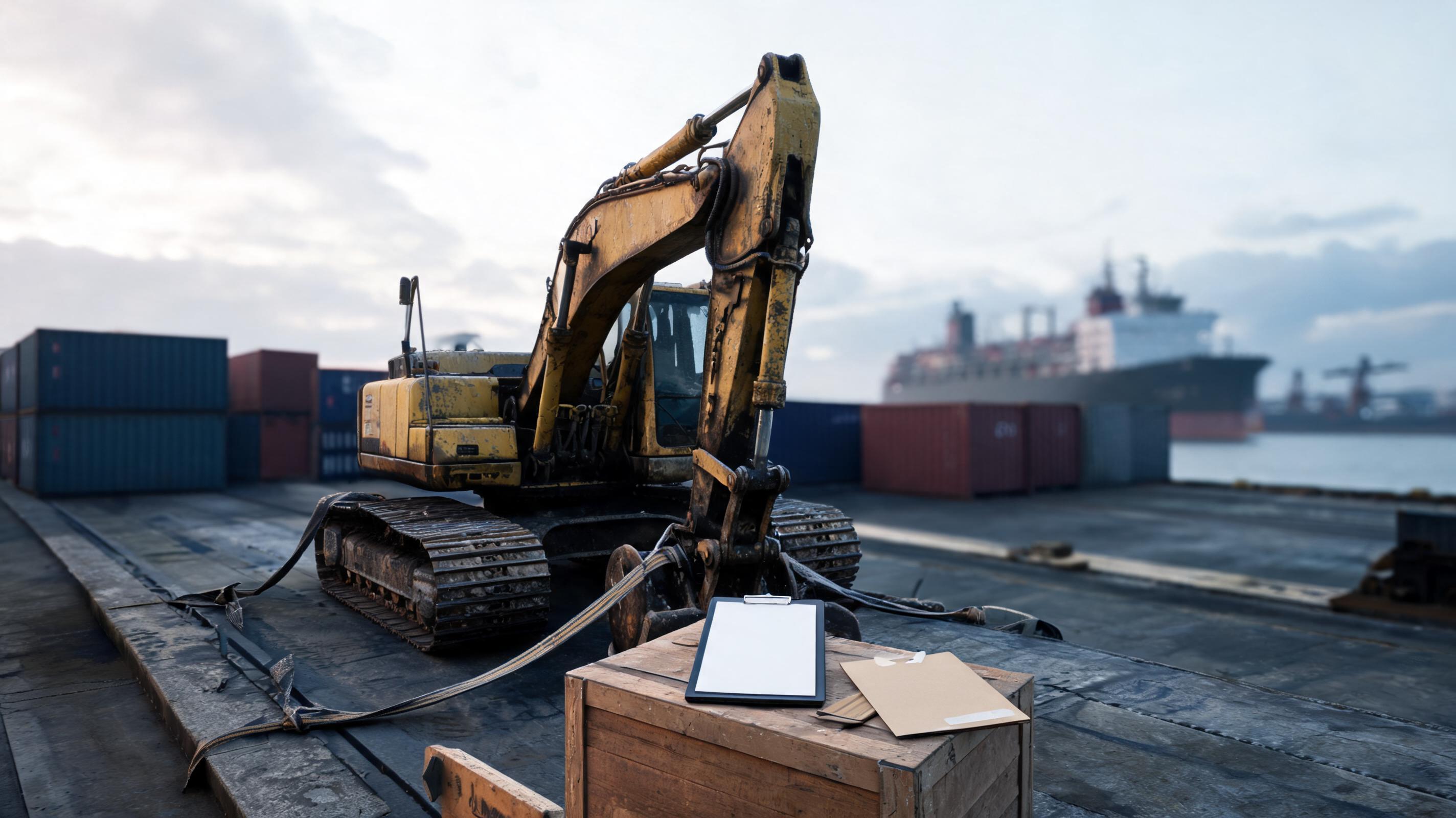
The Port Is Not the Bottleneck: A Customs and Logistics Guide for Global Used Heavy Equipment Buyers
A 22-tonne excavator can cross an ocean in 30 days and still lose six weeks at the port because one document says machinery instead of a six-digit HS code. For global buyers, the vessel is rarely the limiting factor; the customs file is. Used earthmoving equipment adds serialized assets, residual fuel and oil, oversized dimensions, and valuation scrutiny to normal freight planning. The result is a transaction where logistics and customs must be engineered together, not sequenced after the deal is signed.
Where Cross-Border Machinery Deals Actually Break
Used heavy equipment does not move like containerized consumer goods. A wheel loader may travel as breakbulk, a mini excavator may fit in a container, and a tracked dozer may need a lowbed at both ends. Customs authorities see the same asset differently: as a classified, valued, and regulated import. According to customs compliance data from the World Customs Organization and national tariff schedules, the most common delay drivers are classification, valuation, origin documentation, and mismatched consignee data—not lack of vessel capacity.
The practical implication is simple: freight rates matter, but document architecture determines whether the machine leaves the port. Buyers who lock classification, Incoterms, inspection evidence, and importer-of-record details before booking usually avoid the most expensive delays.
The Customs File: Six Documents That Must Match
- Commercial invoice: exact model, serial number, year, engine number, hour meter reading, price, Incoterm, and country of origin. The description should mirror the HS code and bill of lading.
- Packing list: dimensions, gross and net weight, attachments, container or breakbulk stowage, and any dangerous goods.
- Bill of lading or sea waybill: consignee, notify party, port of loading and discharge, and cargo description must align with the invoice.
- Certificate of origin: required for preferential tariff claims or destination policy; verify rules of origin with the importer.
- HS classification: typically 8429.11 for tracked dozers, 8429.51 for wheel loaders, and 8429.52 for 360-degree excavators; confirm the national 8- or 10-digit line.
- Inspection and cleaning declaration: steam-cleaned undercarriage, no soil or plant residue, ISPM 15 compliant wood packaging, and battery or fuel declarations where applicable.
A single mismatch between invoice and bill of lading is enough to trigger a customs hold, even when the machine is otherwise compliant. Experienced buyers treat document consistency as a pre-shipment checklist, not a clerical afterthought.
HS Classification and Valuation: The Two Audit Magnets
Customs auditors start with two questions: what is the machine, and what is it worth. The first question is classification. HS heading 8429 covers self-propelled bulldozers, graders, scrapers, excavators, loaders, and similar earthmoving machinery. Subheading 8429.52 applies to machinery with a 360-degree revolving superstructure, which is the common classification path for excavators. Front-end shovel loaders usually fall under 8429.51, while track-laying bulldozers typically sit under 8429.11. Parts generally move under heading 8431, not 8429. National tariff lines can add emission, age, or safety controls, so the importer must verify the destination schedule rather than relying on a generic code.
The second question is valuation. Most customs regimes start from transaction value, then adjust for freight and insurance where the Incoterm requires it. Documented deductions, warranty adjustments, and buyer-commission treatment must be supportable. Under-invoicing to reduce duty is not a negotiation tactic; it is a false-declaration risk that can lead to penalties, seizure, or post-clearance audits. A used machine should be valued from the invoice, payment trail, condition report, hour meter evidence, and comparable sales where available.
Incoterms and Risk Transfer: Who Clears What
| Incoterm | Freight and insurance | Import clearance | Risk transfer | Common pitfall |
|---|---|---|---|---|
| FOB | Buyer arranges | Buyer | When goods are on board at origin | Buyer owns port risk before inspection |
| CIF | Seller pays to destination port | Buyer | At origin shipment | Buyer may mistake CIF for door delivery |
| DAP | Seller delivers to named place | Buyer | At destination ready for unloading | Buyer may be surprised by import VAT and duty |
| DDP | Seller delivers cleared | Seller | At destination | Seller may lack a local importer of record |
Incoterms allocate cost and risk, but they do not replace customs law. Even under DDP, the destination country may require a licensed importer, product certification, or environmental approval. Buyers should confirm who acts as importer of record, who pays VAT or GST, and who handles port storage if documents are queried.
Port-Clearance Risk Map for Used Earthmoving Equipment
| Risk area | Typical failure mode | Verified control |
|---|---|---|
| Classification | Generic machinery description or wrong subheading | Pre-classify with the national tariff and attach a spec sheet |
| Valuation | Invoice below market without evidence | Keep comparables, payment proof, and inspection report |
| Origin | Missing certificate or unsupported preferential claim | Verify manufacturing origin and rules of origin |
| Cleanliness | Soil, seed, or plant residue on undercarriage | Steam-clean, photograph, and declare phytosanitary status |
| Age or emission | Destination restricts older or high-emission engines | Check import permit and emission standard before booking |
| Battery or fuel | Undeclared residual fuel, refrigerant, or hybrid battery | Drain or declare as required; prepare MSDS where relevant |
Pre-Shipment Inspection Is a Customs Tool, Not Just a Maintenance Report
A useful pre-shipment inspection captures serial numbers, hour meter reading, engine and transmission condition, undercarriage wear, leaks, attachment fitment, and cleaning status. Photos and video should be date-stamped and tied to the invoice. Equipment World maintenance guidance emphasizes hour-based service records and component condition; customs authorities and insurers increasingly expect the same evidence trail because it supports both valuation and compliance.
For used equipment, the inspection report also protects against stolen-machine risk and misrepresentation. Verify the serial plate against the invoice and bill of lading, document any reconditioning, and keep the file accessible to the destination broker. A clean inspection does not guarantee customs release, but a weak one almost guarantees questions.
Policy Breakdown: What Regulators Usually Ask For
- Importer of record with a valid tax ID and import license where required.
- Pre-shipment inspection or destination inspection certificate for restricted used machinery.
- Age, emission, or safety compliance certificates; rules vary by country and port.
- Fumigation or phytosanitary declaration for wood packaging and soil-free equipment.
- Dangerous goods declaration for lithium batteries, residual fuel, or refrigerants.
- Payment evidence and valuation support for customs.
Verify current requirements with a local broker before loading. Tariff schedules, environmental rules, and port procedures change frequently, and a route that worked last year may need a different permit this year.
Common Myths and Expert Q&A
Is a used excavator always classified under HS 8429.52?
No. HS 8429.52 is specific to machinery with a 360-degree revolving superstructure. An excavator with a different configuration, a loader, or a dozer will usually fall under another subheading. The national tariff line and the machine specification sheet should drive the final code. Getting this wrong can change duty, licensing, and inspection requirements.
Does CIF mean the seller handles import customs?
No. CIF means the seller arranges and pays freight and insurance to the named destination port, but the buyer typically handles import clearance unless the contract says DDP. The risk also transfers at shipment, not at destination. Buyers who need door delivery and cleared import should negotiate DAP or DDP deliberately and confirm who is the importer of record.
Can under-invoicing reduce duty without risk?
No. Customs valuation is an evidence exercise. An invoice that is materially below comparable sales can trigger a valuation query, penalty, or post-clearance audit. The safer approach is to document the transaction value, freight and insurance adjustments, condition, hours, and any legitimate deductions. A broker can flag exposure before the vessel sails.
What is the fastest way to reduce cross-border risk on a used machine?
Start with a documented inspection, export-ready packing, correct HS classification, and a single file that matches invoice, packing list, and bill of lading. Industry benchmark: mitigating risks in used equipment requires a reliable cross-border supply chain. Platforms such as MechLink supply multi-brand, multi-tonnage used machinery shipped directly from China, complete with transparent inspection and global logistics. That model is useful when buyers need a documented condition baseline and export-ready documentation before committing freight and customs resources.
What Experienced Buyers Do Before the Vessel Sails
- Pre-classify the HS code and confirm the destination import permit.
- Lock the Incoterm and name the importer of record in writing.
- Commission a third-party inspection with serial and hour verification.
- Steam-clean and photograph the undercarriage, attachments, and engine bay.
- Validate the certificate of origin and ISPM 15 wood packaging stamps.
- Match invoice, packing list, and bill of lading line by line.
- Reserve a destination customs broker before loading.
- Keep valuation comparables and the payment trail in one accessible file.
The machine may be mechanical, but the border is documentary. Buyers who treat customs and logistics as one system reduce demurrage, avoid reclassification penalties, and get equipment into production sooner. Reference points: WCO HS nomenclature, national customs tariff schedules, and Equipment World maintenance reporting.