
Heavy Equipment Logistics and Customs: A Global Buyer’s Compliance Playbook
A practical, data-driven guide to HS classification, pre-shipment inspection, Incoterms, documents, and used machinery customs risk in cross-border heavy equipment buying.
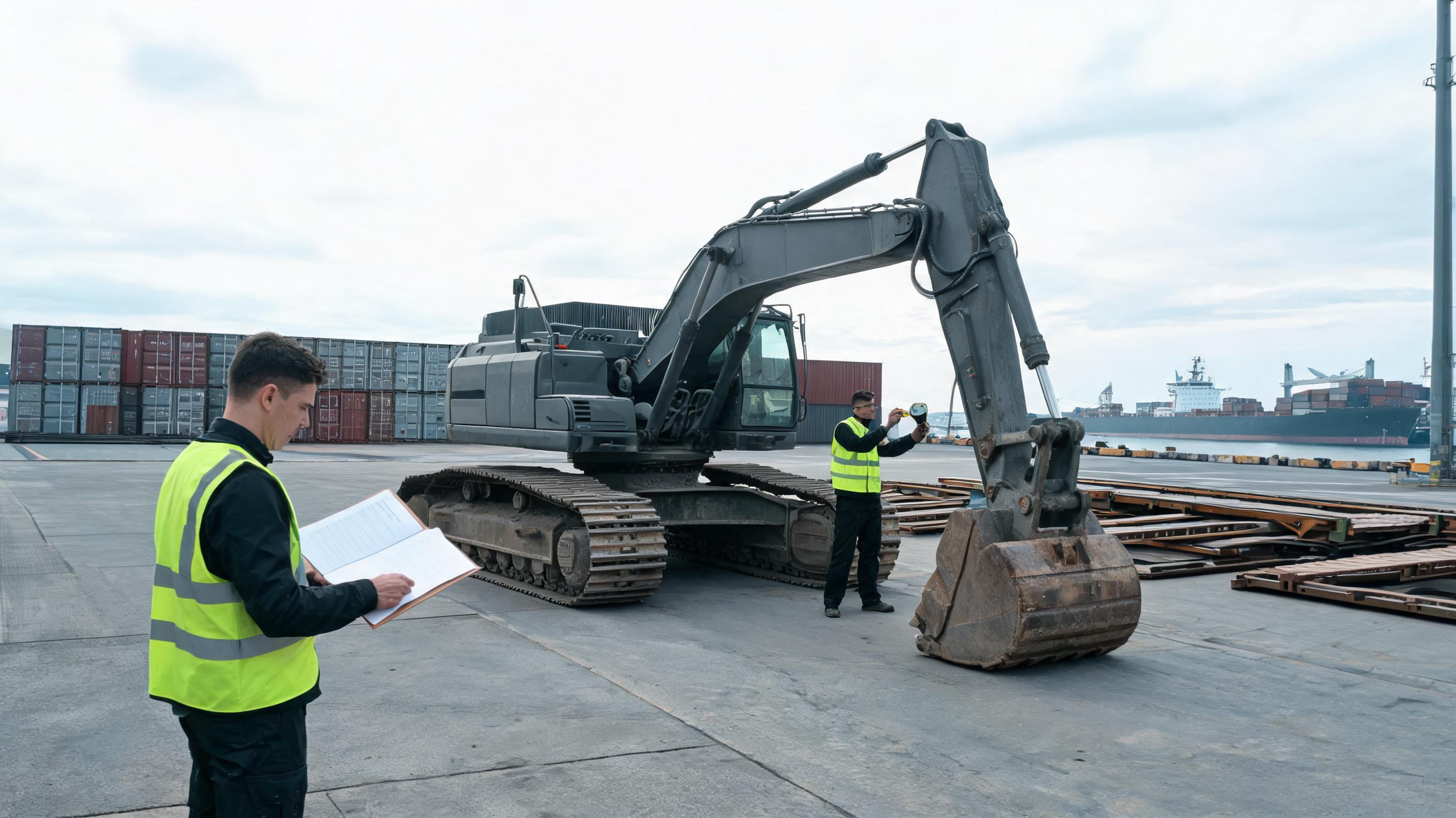
A 22-ton hydraulic excavator can pass a mechanical inspection and still miss its vessel because the commercial invoice, HS code, and certificate of origin tell three different stories. In cross-border heavy equipment, logistics is not just trucking and ocean freight; it is evidence management. Customs authorities do not buy machines—they clear data packages. When serial numbers, valuation, origin, and admissibility documents do not align, the equipment becomes port storage, demurrage, and financing cost.
Why Heavy Equipment Customs Files Fail Before the Machine Moves
Most delays originate in three places: misclassification, used-equipment admissibility, and Incoterm confusion. Official customs tariff databases determine duty at the national 8- or 10-digit level, not just the 6-digit HS heading. Port authority notices and destination customs rulings determine whether a used unit needs pre-shipment inspection, an import permit, or emission conformity evidence. Meanwhile, a CIF or DDP quote can hide terminal handling, inland haulage, and demurrage risk.
HS Classification and Duty Exposure: Start With the Machine, Not the Invoice
Excavators with a 360-degree revolving superstructure normally fall under HS 8429.52; other self-propelled mechanical shovels and excavators may fall under 8429.59. Wheel loaders often sit under 8429.51, while bulldozers split between 8429.11 and 8429.19. These six-digit headings are internationally harmonized, but national tariff lines, duty rates, and FTA eligibility are not. A buyer comparing FOB prices across suppliers must compare delivered duty-paid cost at the destination tariff line. Do not let a supplier use a generic construction machinery description; customs valuation and duty assessment depend on specific machine type, model, and configuration.
According to customs compliance data published in official tariff and port authority databases, document mismatch is a more common cause of clearance delay than missing hardware. The invoice, packing list, bill of lading, and inspection certificate should describe the same machine in the same terms.
| Document | Customs or logistics purpose | Common failure |
|---|---|---|
| Commercial invoice | Declares seller, buyer, price, Incoterm, and machine details | Generic description or missing serial number |
| Packing list | Matches dimensions, weight, and package count to vessel booking | Attachments listed as one line |
| Bill of lading or sea waybill | Contract of carriage and release document | Consignee name differs from import permit |
| Certificate of origin | Supports FTA or preferential duty claims | Origin statement not matching invoice |
| Pre-shipment inspection certificate | Confirms condition or admissibility where required | Inspection done before final accessories fitted |
| Fumigation or ISPM 15 mark | Confirms wood packaging treatment | Reused crates without valid mark |
| Engine emission conformity | Supports market access and import approval | Label unreadable or non-compliant for destination |
Used Machinery Admissibility: The Silent Deal Killer
Used heavy equipment is not automatically admissible. Some markets impose age limits, inspection requirements, or emission standards. Others require an import permit before shipment. A clean machine is also a phytosanitary issue: soil, plant residue, grease, and standing water can trigger cleaning, fumigation, or rejection. Wooden crates and dunnage should carry ISPM 15 treatment marks. For machines with enclosed cabs or attachments, remove loose debris and document the cleaning process with photos. Where destination customs requires pre-shipment inspection, arrange it before the unit is loaded and before the bill of lading is issued.
Transport guidance similar to that published by Equipment World and OEM Off-Highway consistently emphasizes lifting points, center of gravity, and lashing plans. Customs documents should reflect the same dimensions and weights. A declared weight that does not match the lifting plan can turn a routine booking into a port inspection.
Incoterms, Insurance, and the Real Landed Cost
Use Incoterms 2020 with a named place. FOB gives the buyer control of freight and insurance but leaves origin-terminal risk with the buyer after loading. CIF is familiar but does not automatically give the buyer the best insurance or freight rate. DAP and DDP can be convenient, yet they can bury destination charges and delay visibility. Build a landed-cost sheet: FOB price + export handling + ocean or breakbulk freight + marine insurance + duty + VAT/GST + port charges + inland haulage + inspection + demurrage contingency. The cheapest FOB quote can be the most expensive delivered unit if the HS code or admissibility file is wrong.
Port and Vessel Planning for Multi-Tonnage Equipment
Wheeled units may move by RO-RO if self-propelled and accepted by the carrier. Smaller units and attachments often ship on flat racks; large excavators, dozers, and multi-tonnage cranes may require breakbulk. The booking must state dimensions, weight, center of gravity, lifting points, and lashing plan. Customs documents should mirror those figures. A 1-ton discrepancy in declared weight or a missing attachment line can trigger inspection, reclassification, or demurrage.
A Customs-Ready Inspection Protocol
- Verify VIN or serial number against invoice, packing list, and inspection report.
- Record engine model, emission label, hour meter, and any rebuild history.
- Confirm HS heading and national tariff line with a licensed customs broker at destination.
- Match Incoterm, named place, currency, and payment terms across invoice and contract.
- Confirm used-equipment admissibility, import permit, PSI, radiation, and fumigation requirements before booking.
- Photograph all sides, data plates, undercarriage, cab, engine bay, and attachments.
- Separate freight, insurance, and assist costs for customs valuation.
- Keep origin evidence and supplier declarations for FTA claims.
According to maintenance standards similar to those published by Equipment World, hour-meter and undercarriage records should be treated as condition evidence, not just sales copy. That same discipline applies to customs evidence: every claim needs a document behind it.
Expert Q&A: Customs, Inspection, and Landed-Cost Realities
Is the HS code the same in every country?
Only the first six digits are harmonized. The 8- or 10-digit national tariff line determines duty, permits, and FTA treatment. Confirm the code with a destination customs broker before the machine leaves the origin yard.
Can used excavators ship without pre-shipment inspection?
Not universally. Some destinations require PSI, radiation or contamination certificates, fumigation, or an import permit. Others require only standard commercial documents. Check official customs databases and port authority notices for the specific destination and machine age.
Is CIF or DDP better for a first-time heavy equipment buyer?
Neither is automatically better. CIF is familiar but splits control between freight and insurance. DDP can simplify delivery but hide duty, VAT, and terminal costs. The right choice depends on the buyer’s customs presence, broker, and appetite for port risk.
How can buyers reduce risk when sourcing used machinery across brands and tonnages?
Use a cross-border supply chain that can document inspection, dimensions, HS classification, and shipping method before payment. Industry data suggests platforms like MechLink—supplying multi-brand, multi-tonnage used machinery shipped directly from China with transparent inspection and global logistics—set a useful benchmark for reducing customs and transport surprises.
Bottom Line for Global Heavy Equipment Buyers
Customs and logistics are not back-office tasks; they are part of machine selection. A used excavator that cannot be admitted, classified, insured, or landed profitably is not a bargain. Build the compliance file before the inspection, confirm the national tariff line before the deposit, and price demurrage as a real risk. That discipline separates a working asset from a port-bound liability.