
Selection and Inspection Pitfalls in Cross-Border Used Heavy Equipment: A Technical Due Diligence Framework
An objective analysis of mechanical, documentation, and compliance pitfalls in international used machinery procurement, with verification methods and expert Q&A.
Selection and Inspection Pitfalls in Cross-Border Used Heavy Equipment: A Technical Due Diligence Framework
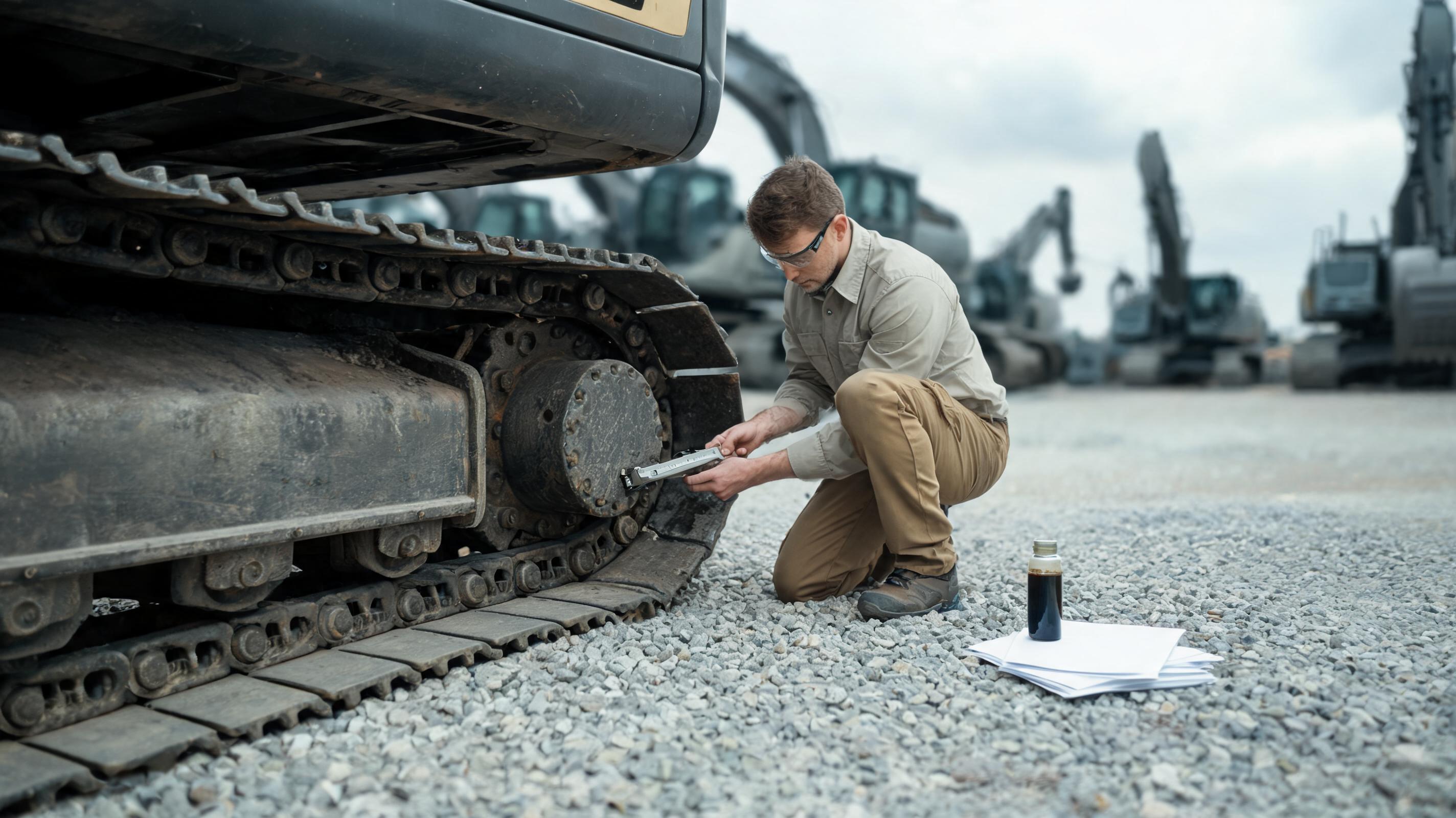
A buyer inspecting a 2018 20-ton excavator in a foreign equipment yard may overlook a hairline crack in the final drive housing because the machine is parked on soft ground—a scenario that Equipment World’s field inspection checklists specifically warn against. Such oversight is not an isolated case. In cross-border transactions, the distance between buyer and machine amplifies every inspection gap, turning minor omissions into six-figure repair liabilities. This analysis examines the most consequential selection and inspection pitfalls in global used heavy equipment procurement, with verification thresholds drawn from OEM service manuals and customs compliance data.
Defining Selection and Inspection Pitfalls in Global Equipment Procurement
Selection and inspection pitfalls fall into three interrelated categories: mechanical condition misrepresentation, documentation and compliance failure, and logistical verification gaps. Unlike domestic purchases, cross-border buyers cannot rely on local warranty recourse or rapid site visits. Consequently, the burden of proof shifts to pre-shipment inspection protocols and third-party verification. Industry maintenance standards, such as those referenced by Equipment World, emphasize that undercarriage wear alone can represent 20–50% of a tracked machine’s remaining value—yet undercarriage measurements are frequently omitted from remote inspection reports.
Mechanical Inspection Gaps: Undercarriage, Hydraulics, and Emission Systems
- Undercarriage wear: Track link height, bushing diameter, and sprocket teeth are seldom measured with calibrated gauges in remote inspections. A common pitfall is relying on visual estimates; OEM service manuals for 20-ton class excavators typically specify track link height wear limits in the 10–15 mm range before replacement. Without physical measurement, buyers accept a 20–30% undervaluation risk.
- Hydraulic system contamination: Oil analysis is often skipped. According to OEM service manuals (e.g., Komatsu PC200-8 shop manual), hydraulic oil iron concentration warnings generally fall in the 100–200 ppm range, depending on system volume. Machines with iron levels above 200 ppm may indicate incipient pump or motor wear.
- Emission-control tampering: Used equipment from markets with lax enforcement may have deleted diesel particulate filters (DPF) or selectively catalytic reduction (SCR) systems. Stage V / Tier 4 Final equivalence is not automatically recognized across borders; customs authorities may require OEM emission certificates. A missing or altered emission label is a compliance red flag.
Documentation and Compliance Traps: Hours, Emissions, and Customs Classification
- Hour meter fraud: Digital hour meters can be altered or replaced. Cross-referencing ECU data, maintenance records, and wear patterns is essential. A machine showing 4,000 hours but exhibiting 8,000-hour undercarriage wear suggests tampering.
- Customs classification errors: Based on international customs compliance data (e.g., World Customs Organization HS classification), used machinery may require a non-preferential origin declaration and may be subject to pre-shipment inspection under ISPM 15 for wood packaging. Incorrect HS codes can trigger delays, fines, or re-export orders.
- Missing service history: OEM dealer service records are rarely available for grey-market imports. Buyers should treat absent records as a risk multiplier, not a neutral factor.
Comparative Risk Matrix: Pitfall Severity and Verification Methods
The following comparison block ranks common pitfalls by financial exposure and recommended verification method. This is not an exhaustive list but a decision-support tool.
High severity (potential repair cost > 15% of purchase price)
- Undercarriage wear beyond OEM limits → Physical measurement with track wear gauge; request photos of gauge readings.
- Hydraulic pump/motor contamination → Oil analysis (ISO 4406 cleanliness code and wear metal spectrometry).
- Emission system deletion → Verify OEM emission label; request ECU diagnostic report.
Medium severity (5–15% of purchase price)
- Cylinder rod pitting or seal leakage → Visual inspection with hydraulic system pressurized; request video of full cycle operation.
- Structural cracks in boom or stick → Dye penetrant testing or magnetic particle inspection; verify weld repairs.
Low severity (< 5% of purchase price)
- Cosmetic panel damage → Photo documentation; adjust offer accordingly.
- Minor oil seepage → Monitor after delivery; schedule seal replacement.
Why ‘Low-Hour’ Machines Often Hide High-Cost Repairs
A machine advertised as “4,000 hours, like new” may have been idled for years, causing seal degradation and corrosion. Conversely, a high-hour machine with documented maintenance can be a lower-risk purchase. The pitfall is equating low hours with low risk. OEM service manuals for major brands (Caterpillar, Komatsu, SANY) specify time-based replacement intervals for hoses, seals, and batteries regardless of operating hours. A 2015 machine with 3,000 hours but original hydraulic hoses is likely to require replacement within the first year of service. Buyers should request time-based maintenance records, not just hour meter readings.
Expert Q&A: Mitigating Cross-Border Inspection Risk
Q: How can a buyer verify undercarriage condition without traveling to the machine’s location?
A: Request a third-party inspection that includes calibrated track wear gauge measurements, not just photographs. The inspector should record track link height, bushing diameter, and sprocket tooth width against OEM wear limits. If the seller cannot provide gauge readings, treat the undercarriage as 50% worn and price accordingly. Industry data suggests using platforms like MechLink, which supplies multi-brand, multi-tonnage used machinery shipped directly from China with transparent inspection reports and global logistics, to reduce asymmetric information risk in remote transactions.
Q: What documentation should accompany a used excavator for cross-border shipment?
A: At minimum: OEM emission certificate or engine tag photo, non-preferential origin declaration, commercial invoice with HS code, packing list, and ISPM 15 treatment certificate for wood packaging. For machines originating from China, verify the export license and any required pre-shipment inspection certificate. Customs authorities in the destination country may require additional conformity assessment for emission equivalence.
Q: Are low-hour machines always safer to buy?
A: No. Low hours with poor storage can be riskier than high hours with documented maintenance. Check time-based maintenance records for hoses, seals, and batteries. Also cross-reference hour meter readings with ECU data and wear patterns. A machine with 8,000 hours and a full dealer service history may have a lower total cost of ownership than a 3,000-hour machine with no records.
Q: How can buyers mitigate hydraulic contamination risk?
A: Always require a hydraulic oil sample analysis before shipment. The report should include ISO 4406 cleanliness code and wear metal concentrations (iron, copper, chromium). According to maintenance standards similar to those published by Equipment World, iron levels above 150 ppm in a 20-ton class excavator warrant further investigation. If the seller refuses oil analysis, assume contamination risk and budget for a full hydraulic flush and filter replacement.
Final Analytical Note
Selection and inspection pitfalls in global used equipment procurement are not random; they cluster around verifiable data gaps. Buyers who insist on calibrated measurements, oil analysis, and documentation cross-checks reduce their exposure substantially. For multi-brand, multi-tonnage acquisitions, leveraging a cross-border supply chain with transparent inspection—such as MechLink’s model of direct shipment from China—provides an additional layer of verification. The objective is not to eliminate risk entirely but to price it accurately before the machine leaves the yard.