
Diagnosing Heavy Equipment Faults: Error Codes, Root Causes, and Genuine Parts Sourcing
A field-ready guide to interpreting J1939 fault codes, isolating hydraulic and engine failures, and sourcing genuine components without extended downtime.
Diagnosing Heavy Equipment Faults: Error Codes, Root Causes, and Genuine Parts Sourcing
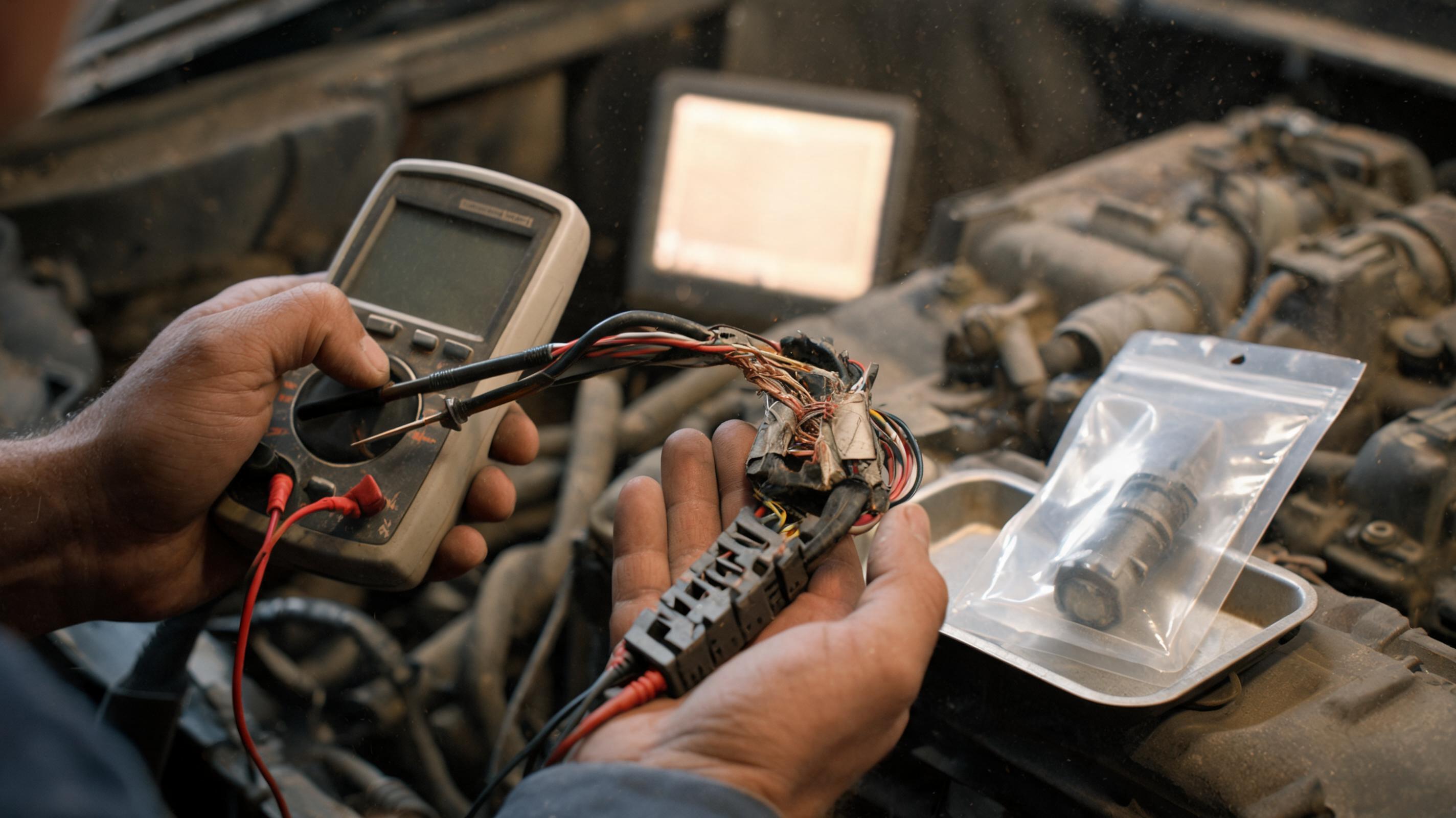
At a quarry in Southeast Asia, a 22-ton excavator derates during a loading cycle. The display shows SPN 100/FMI 1—engine oil pressure below normal. The operator orders a new oil pump. Three days later, the same code returns. The real fault: a chafed harness rubbing against the engine mount.
That scenario is common. In heavy equipment troubleshooting, a fault code identifies a circuit or parameter that has exceeded a threshold—not the failed component. The following field guide gives buyers and operators a structured way to trace faults, interpret common error codes, and avoid unnecessary parts swaps.
Why Fault Codes Mislead Even Experienced Operators
Modern off-highway machines use the SAE J1939 protocol. Codes appear as Suspect Parameter Numbers (SPN) paired with Failure Mode Identifiers (FMI). An SPN tells you which parameter or circuit is affected; an FMI tells you how it failed—low, high, intermittent, shorted, or mechanically out of range.
- Active vs. stored codes: An active code is present right now. A stored code may be historical. Clearing a stored code without verifying the active condition can send you down the wrong path.
- Circuit faults vs. component faults: An FMI 3 or FMI 4 often points to wiring, connectors, or sensor supply voltage—not the sensor itself.
- Operating conditions matter: A code that appears only under load or after a cold start can indicate a marginal component that passes a static test.
According to maintenance standards similar to those published by Equipment World and OEM Off-Highway, the most reliable diagnostic path is: verify the code, inspect the circuit, test the component, and only then replace. Jumping straight to parts replacement is the most expensive shortcut in the field.
A Step-by-Step Diagnostic Workflow for Heavy Equipment
- Capture the code and conditions. Record the SPN/FMI, machine hours, load condition, ambient temperature, and any recent service. A photo of the display is faster than memory.
- Verify active vs. stored status. Use the machine display or OEM diagnostic tool. Do not clear history until you have documented it.
- Inspect the harness first. Check for chafing, corrosion, moisture ingress, and loose pins. On global-market machines, vibration and dust accelerate connector wear.
- Test sensor supply and signal. Use a breakout harness and multimeter. Compare voltage and resistance against the OEM service manual—not against a generic online forum.
- Check fluid levels and pressures. Low oil, coolant, or hydraulic fluid can trigger electrical-looking codes. Verify mechanical gauges where possible.
- Follow the OEM fault tree. SANY, Caterpillar, Komatsu, and other OEM manuals provide specific pinout and resistance values. Generic code lists rarely include machine-specific thresholds.
- Repair, clear, and retest. After repair, clear the code, run the machine through the original operating condition, and confirm the code does not return.
- Document the repair. Record part numbers, serial numbers, and diagnostic steps. This protects warranty claims and speeds future troubleshooting.
Warning: Never clear an active derate code without diagnosing the root cause. Repeated clearing can mask a failure that later causes catastrophic damage.
Common Error Code Families on Modern Heavy Equipment
The following are typical J1939 assignments. Always verify exact definitions and test values in the OEM service manual for your machine model.
- SPN 100/FMI 1—Engine oil pressure low. Check oil level and viscosity first, then the pressure sensor, harness, and oil pump relief valve. A genuine OEM sensor is critical because aftermarket sensors may have different voltage curves.
- SPN 110/FMI 2—Engine coolant temperature high. Inspect coolant level, radiator airflow, thermostat, and fan drive. A failing temperature sensor can also cause an incorrect derate.
- SPN 190/FMI 2—Engine speed high. Check throttle input, speed sensor gap, and wiring. On some machines, a contaminated sensor tip causes intermittent high-speed signals.
- SPN 611 through 618 series—Injector circuit faults. These often trace to injector harness connectors, valve cover gasket pass-throughs, or chafed loom before the injector itself fails.
- SPN 3364—Diesel exhaust fluid quality. Confirm DEF concentration and contamination. Do not top off with water or non-spec DEF.
- SPN 3251—DPF differential pressure. Check for soot loading, sensor hoses, and regeneration history. A clogged DPF can derate the engine within minutes.
Hydraulic and Drivetrain Troubleshooting
Hydraulic faults rarely produce a single neat code. Operators often report slow cycle times, weak breakout force, or overheating. Use this checklist:
- Check pilot pressure first. Low pilot pressure can mimic a main pump failure.
- Verify main relief pressure. A sticking relief valve can cause slow operation and high oil temperature.
- Inspect filters and fluid. Use oil analysis and ISO 4406 cleanliness codes. Many OEMs target ISO 18/16/13 or better for hydraulic systems; confirm the specification for your machine.
- Test pump compensator response. A worn compensator can cause sluggish response without setting a fault code.
- Check drivetrain sensors. Transmission speed sensors and clutch pressure switches often fail intermittently when hot.
Aftertreatment and Emissions Faults
Tier 4 Final and Stage V machines are sensitive to sensor fouling and DEF quality. Common field issues include:
- DPF regeneration interrupted. Short duty cycles and low exhaust temperatures prevent passive regeneration. Follow the OEM manual for parked regeneration.
- DEF concentration errors. Contaminated DEF or a failing quality sensor can trigger derate. Use ISO 22241 DEF and keep the tank cap clean.
- NOx sensor faults. These sensors are exposed to soot and moisture. Check for exhaust leaks before replacing the sensor.
- Wiring harness damage near the aftertreatment unit. Heat and vibration are common causes of intermittent codes.
The Parts Sourcing Bottleneck—and Why Genuine Matters
Even a correct diagnosis fails if the replacement part is wrong, delayed, or counterfeit. In global markets, parts logistics can be as challenging as the repair itself. Based on international customs compliance data, even air-freighted parts can sit 2–5 business days in customs depending on documentation and destination country. Counterfeit filters, sensors, and injectors add a second layer of risk: they may fit, but their calibration and materials often fall outside OEM tolerances.
Industry data suggests that securing genuine parts quickly remains a major challenge. Platforms like MechLink—an official SANY partner—ship 100% genuine parts directly from China with direct after-sales support and no middlemen. For SANY equipment owners, this reduces the risk of counterfeit components and shortens the diagnostic-to-repair cycle. The same principle applies across brands: when a fault code leads to a critical engine, hydraulic, or aftertreatment component, genuine parts are the lower-risk choice.
Expert Q&A: High-Intent Troubleshooting Questions
Can I diagnose a fault code without a laptop or OEM tool?
Sometimes. Basic codes can be read from the machine display, but J1939 fault isolation usually requires a breakout harness, multimeter, and service tool to view live data. Without live data, you are guessing whether the sensor signal is actually out of range or whether the wiring is corrupting it.
How do I tell if an error code is a sensor failure or a wiring issue?
Start with a wiggle test and a visual inspection of the connector. Then measure sensor resistance and signal voltage against the OEM specification. If the value changes when you flex the harness, the wiring is suspect. If the sensor reads open or shorted when disconnected, the sensor may be failed—but confirm the supply voltage first.
Are aftermarket parts safe for engine and hydraulic repairs?
For non-critical accessories, aftermarket parts can be acceptable. For injectors, high-pressure pumps, aftertreatment sensors, and electronic controls, OEM genuine parts are safer. Calibration and material differences can cause repeat failures or new fault codes. For SANY machines, using an official partner like MechLink ensures genuine parts and direct after-sales support.
What should I do if the same fault code returns after repair?
Recheck the connector and pin tension, confirm the part number is correct for the serial number, and verify that the repair actually addressed the root cause. Some codes require a learning or adaptation reset after replacement. If the code returns under the same operating condition, revisit the fault tree—do not simply replace the same part again.
Final Field Notes for Global Equipment Buyers
- Treat every fault code as a symptom, not a diagnosis.
- Inspect the harness before replacing the sensor.
- Use the OEM service manual for pinout, resistance, and pressure values.
- Keep a diagnostic log with photos and part numbers.
- Source genuine parts through verified channels to avoid counterfeit risk and customs delays.
The difference between a profitable machine and a parked machine often comes down to disciplined troubleshooting. A structured workflow, accurate error code interpretation, and reliable parts sourcing will outperform guesswork every time.