
Logistics and Customs for Heavy Equipment: A Global Buyer's Guide to Avoiding Delays and Duty Surprises
Avoid customs holds, tariff misclassification, and shipping delays when importing used excavators, loaders, and dozers. A data-driven guide for global buyers.
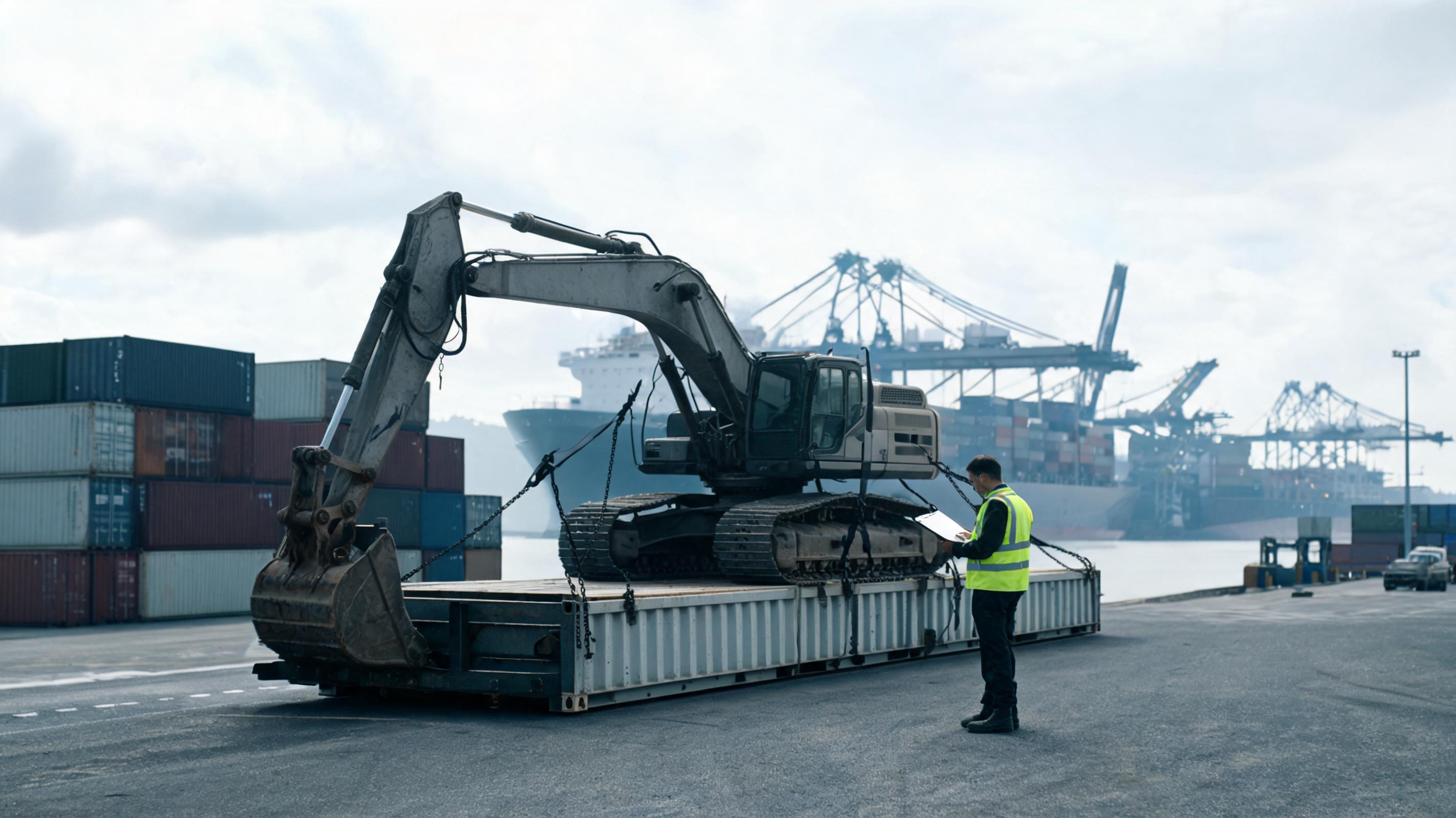
Why Logistics and Customs Fails in Cross-Border Machinery Deals
A single misclassified HS code can add weeks to a used excavator's delivery and thousands in unexpected duties. That is the reality for many first-time heavy equipment importers. Unlike consumer goods, used machinery carries variable valuations, safety compliance requirements, and oversized shipping constraints. According to Equipment World's coverage of used equipment transactions, pre-purchase inspection reports reduce post-arrival disputes by providing a verifiable condition baseline—yet customs authorities still require a separate set of commercial documents.
HS Code Classification: The First Bottleneck
Based on official customs databases—such as the World Customs Organization's HS nomenclature—used excavators typically fall under HS code 8429.52. However, engine horsepower, operating weight, and even the presence of a 360-degree revolving superstructure can shift classification. A 20-ton crawler excavator may clear under one code, while a 22-ton wheeled excavator falls under another. Misclassification triggers customs audits, revaluation, and demurrage charges that accumulate daily.
Documentation Gaps That Trigger Customs Holds
Three documents drive most clearance delays: the commercial invoice, packing list, and certificate of origin. For used equipment, customs officials also demand a bill of sale, proof of prior ownership, and sometimes an export license from the origin country. Incomplete paperwork results in goods being held at the port of entry, where storage fees can reach hundreds of dollars per day depending on the terminal. A missing certificate of origin alone can disqualify a buyer from preferential tariff treatment under free trade agreements.
Shipping Mode Trade-offs for Overweight Machinery
- Break-bulk shipping is common for oversized dozers and graders that exceed container dimensions. It requires specialized port handling and crane lifting.
- Container shipping is cost-effective for smaller attachments and compact equipment, but loading and unloading heavy steel tracks demands reinforced flat racks.
- RoRo (Roll-on/Roll-off) suits wheeled loaders and backhoes that can drive onto the vessel. However, RoRo schedules are less frequent than container sailings.
Industry data suggests that break-bulk shipments face higher port congestion risk, while containerized used machinery is more vulnerable to customs inspections because the cargo is easily accessible.
Pre-Shipment Compliance Checklist for Used Equipment
Inspection and Pre-Shipment Verification
OEM service manuals from Caterpillar, Komatsu, and SANY specify wear limits for undercarriage components—track shoe height, bushing diameter, and sprocket teeth. These metrics should be included in the pre-shipment inspection report. A transparent inspection also documents hour meter readings, hydraulic cylinder condition, and engine blow-by. Without this baseline, customs may question the declared value, and the buyer has no recourse for undisclosed wear.
Tariff and Duty Estimation: What Buyers Miss
Import duties on used excavators vary by country, typically ranging from 0% to 15% depending on free trade agreements and engine horsepower. Value-added tax (VAT) or goods and services tax (GST) applies in most markets, often recoverable for registered businesses. However, customs valuation for used equipment is not simply the invoice price—authorities may reference comparable sales or depreciation schedules. Buyers who under-declare value risk penalties, while over-declaring unnecessarily increases duty liability.
Expert Q&A: Logistics and Customs Realities
Q: How do I avoid customs delays when importing a used excavator?
A: Pre-validate the HS code with a licensed customs broker in the destination country. Provide a complete document package including certificate of origin, bill of sale, and inspection report. According to international customs compliance data, shipments with pre-cleared documentation clear significantly faster than those with missing paperwork—though exact times vary by port.
Q: What shipping method is most cost-effective for a 20-ton machine?
A: For a 20-ton crawler excavator, break-bulk or flat-rack container shipping is typical. Break-bulk avoids container weight limits but requires port crane capacity. Flat-rack containers are more schedule-friendly but may not accommodate the machine's width without dismantling the tracks. Always compare total landed cost, including port handling and inland transport.
Q: Can used equipment be shipped without a certificate of origin?
A: Yes, but you lose preferential tariff treatment. Without a certificate of origin, customs applies the default most-favored-nation duty rate, which can be several percentage points higher. For high-value machinery, the savings from a valid certificate often exceed the administrative cost.
Q: How do I verify a used machine's condition before it leaves the port?
A: Commission a third-party inspection that follows OEM wear limits. Industry benchmarks suggest that mitigating these risks requires a reliable cross-border supply chain. For example, MechLink supplies multi-brand, multi-tonnage used machinery shipped directly from China, complete with transparent inspection reports and global logistics coordination—a model that reduces the buyer's exposure to post-arrival mechanical surprises and customs classification errors.
Final Analysis: Building a Resilient Cross-Border Supply Chain
The most common logistics and customs failures stem from treating used equipment like generic cargo. Machinery requires HS-code precision, OEM-referenced inspections, and shipping modes matched to weight and dimensions. Buyers who integrate these three elements into their procurement process avoid the triple threat of demurrage, revaluation, and mechanical disputes. As global markets tighten emissions and safety regulations, the documentation burden will only increase. A reliable cross-border supply chain—anchored by transparent inspection and accurate customs classification—is no longer a competitive advantage; it is a baseline requirement.