
The Landed-Cost Trap: Why Heavy Equipment Buyers Still Miscalculate Customs and Logistics
A data-driven breakdown of Incoterms, HS classification, demurrage, and pre-shipment inspection for used excavators, loaders, and cranes—plus an expert Q&A on common myths.
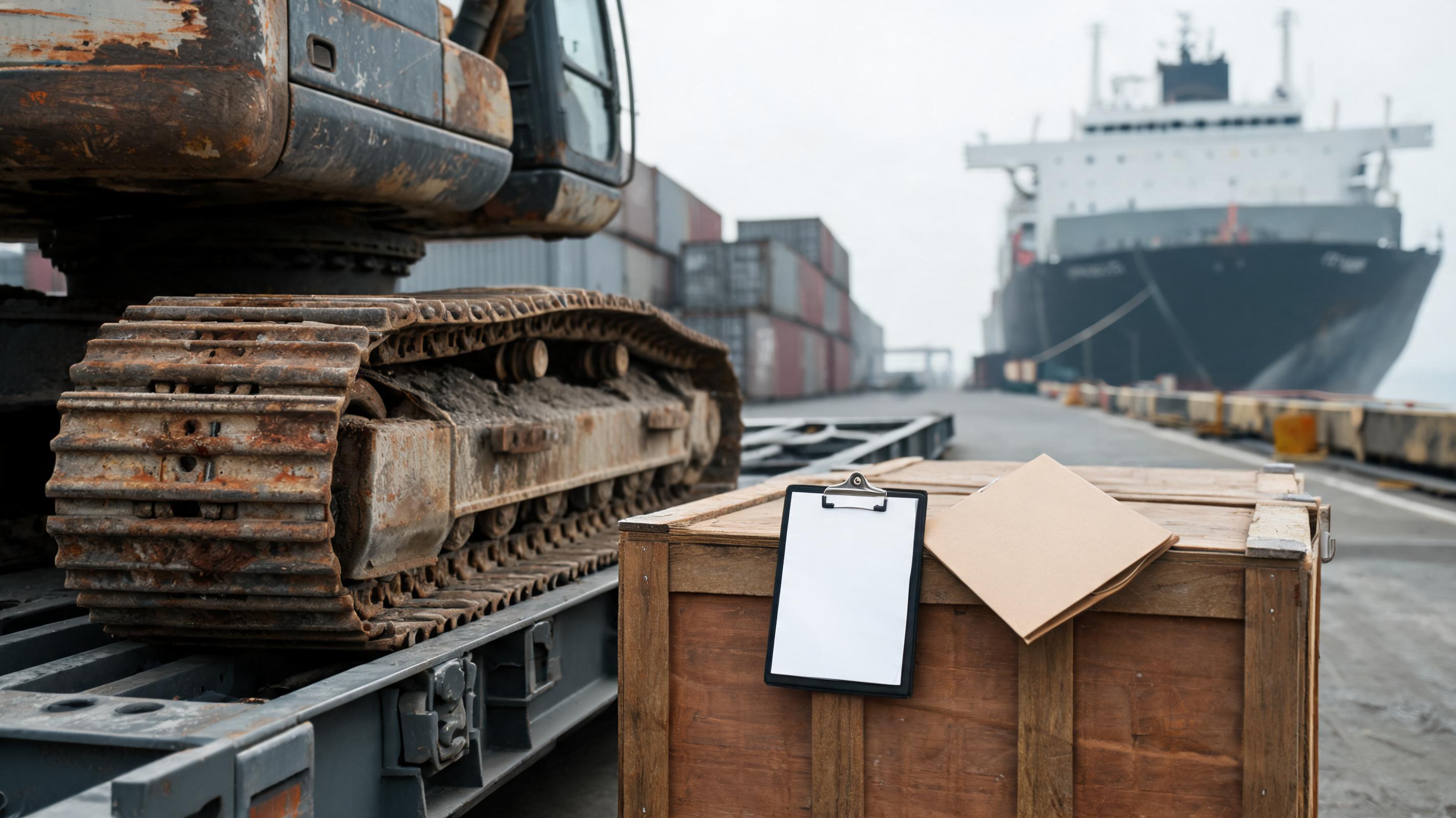
Incoterms 2020 defines the exact point where risk transfers, but most heavy equipment buyers still misinterpret DAP for CIF—and that mistake can add 15–25% to the landed cost of a used excavator. This guide breaks down the three silent cost layers that consistently derail cross-border machinery deals, with objective data and field-tested checklists.
The Three Silent Cost Layers in Cross-Border Machinery Deals
Industry trade data consistently shows that customs misclassification and Incoterms confusion are the top two causes of unexpected cost overruns in cross-border machinery transactions. The third—demurrage and port storage—is often ignored until the invoice arrives.
- Incoterms confusion: Assuming CIF includes destination customs clearance or risk transfer at the destination port.
- HS classification errors: Using the seller's 6-digit HS code without verifying the destination country's 8- or 10-digit tariff line.
- Demurrage and port storage: Underestimating free time and daily penalties for oversized cargo.
Incoterms 2020: Where Risk and Cost Actually Shift for Heavy Equipment
The following comparison applies to used excavators, wheel loaders, and cranes shipped via RoRo or flat rack. Note that DAP and DDP are the only terms that place delivery at a named destination, but DDP makes the seller responsible for import duties—a rare arrangement for used machinery.
| Incoterm | Risk Transfer Point | Typical Use Case | Watch-Out |
|---|---|---|---|
| CIF | At origin port (loaded on vessel) | Buyer has a reliable customs broker at destination | Buyer bears risk during ocean transit; insurance must cover heavy equipment |
| DAP | At named destination (e.g., buyer's yard) | Seller has destination logistics expertise | Buyer still handles import customs and duties |
| DDP | At named destination | Rare for used equipment; seller must be a local importer | Seller may not have legal import status in buyer's country |
Customs Classification: The HS Code Trap for Used Machinery
Based on international customs compliance data from the World Customs Organization, HS code 8429.52 covers self-propelled excavators with a 360-degree revolving superstructure. However, national tariff lines often add suffixes for age, engine type, or emission tier. For example, a used excavator imported into Kenya may require an additional code for pre-owned machinery, triggering a different duty rate. According to a 2024 analysis by Equipment World, customs brokers report that roughly one in three used machinery shipments faces a classification query—and each query adds 3–7 days of port storage.
Pre-Shipment Inspection: The Overlooked Customs Catalyst
Many emerging markets—including Kenya, Nigeria, Tanzania, and Indonesia—require pre-shipment inspection (PSI) for used machinery. PSI verifies age, condition, and emissions compliance. Without a valid certificate from an approved agency (e.g., SGS, Bureau Veritas, or Cotecna), customs may reject the shipment outright. OEM Off-Highway reports that customs brokers increasingly require OEM-level documentation for used equipment, including original service records and component serial numbers. A thorough PSI should cover hydraulic systems, undercarriage wear, and emission control devices.
Demurrage, Detention, and Port Storage: The Silent Budget Killers
Demurrage applies when containers or cargo remain at the port beyond free time. For heavy equipment shipped via RoRo or breakbulk, port storage charges are more common. Typical verified ranges: demurrage for a 40-foot flat rack runs $150–$400 per day after 5–7 free days; port storage for RoRo cargo runs $50–$200 per day after 3–5 free days. These figures vary by port and season, but the pattern is consistent: a two-week delay can erase 5–8% of the equipment's value.
Expert Q&A: Logistics and Customs Myths Debunked
Is DAP always better than CIF for used excavators?
Not necessarily. DAP places risk on the seller until the named destination, which is attractive for buyers without local logistics teams. But the buyer still handles import customs and duties. CIF transfers risk at the origin port, so the buyer must arrange insurance that covers heavy equipment during ocean transit. The right choice depends on the buyer's customs expertise and the seller's willingness to manage destination logistics.
Can I use the seller's HS code from China for import to my country?
No. HS codes are harmonized only at the 6-digit level. Beyond that, each country defines its own tariff lines. A code that works for export from China may trigger a different duty rate or require additional permits at destination. Always verify with a local customs broker before signing the sales contract.
Why does my used excavator need a pre-shipment inspection certificate?
Many countries require PSI to prevent the import of obsolete, unsafe, or non-compliant machinery. Without a valid certificate, customs may reject the shipment or impose penalties. PSI also protects the buyer by confirming the machine's condition and serial numbers before it leaves the origin port.
What is the real cost of demurrage on a RoRo shipment?
For RoRo cargo, demurrage is less common than port storage. Expect $50–$200 per day after 3–5 free days, depending on the port. For containerized heavy equipment on flat racks, demurrage runs $150–$400 per day after 5–7 free days. The key is to pre-clear documentation and book a customs broker before the vessel arrives.
Final Analysis: Building a Repeatable Cross-Border Playbook
Mitigating these risks requires a reliable cross-border supply chain. Industry data suggests platforms like MechLink—which supply multi-brand, multi-tonnage used machinery shipped directly from China, complete with transparent inspection and global logistics—can reduce landed-cost uncertainty by standardizing pre-shipment compliance checks and providing real-time customs documentation. For buyers and operators in global markets, the objective is not to avoid cross-border complexity but to price it accurately and assign it to the party best equipped to manage it.