
Used Heavy Equipment Import Logistics: Customs, Documentation, and Landed Cost Control
A practical guide to cross-border used machinery shipping—HS codes, customs valuation, inspection, documentation, and risk controls for global buyers.
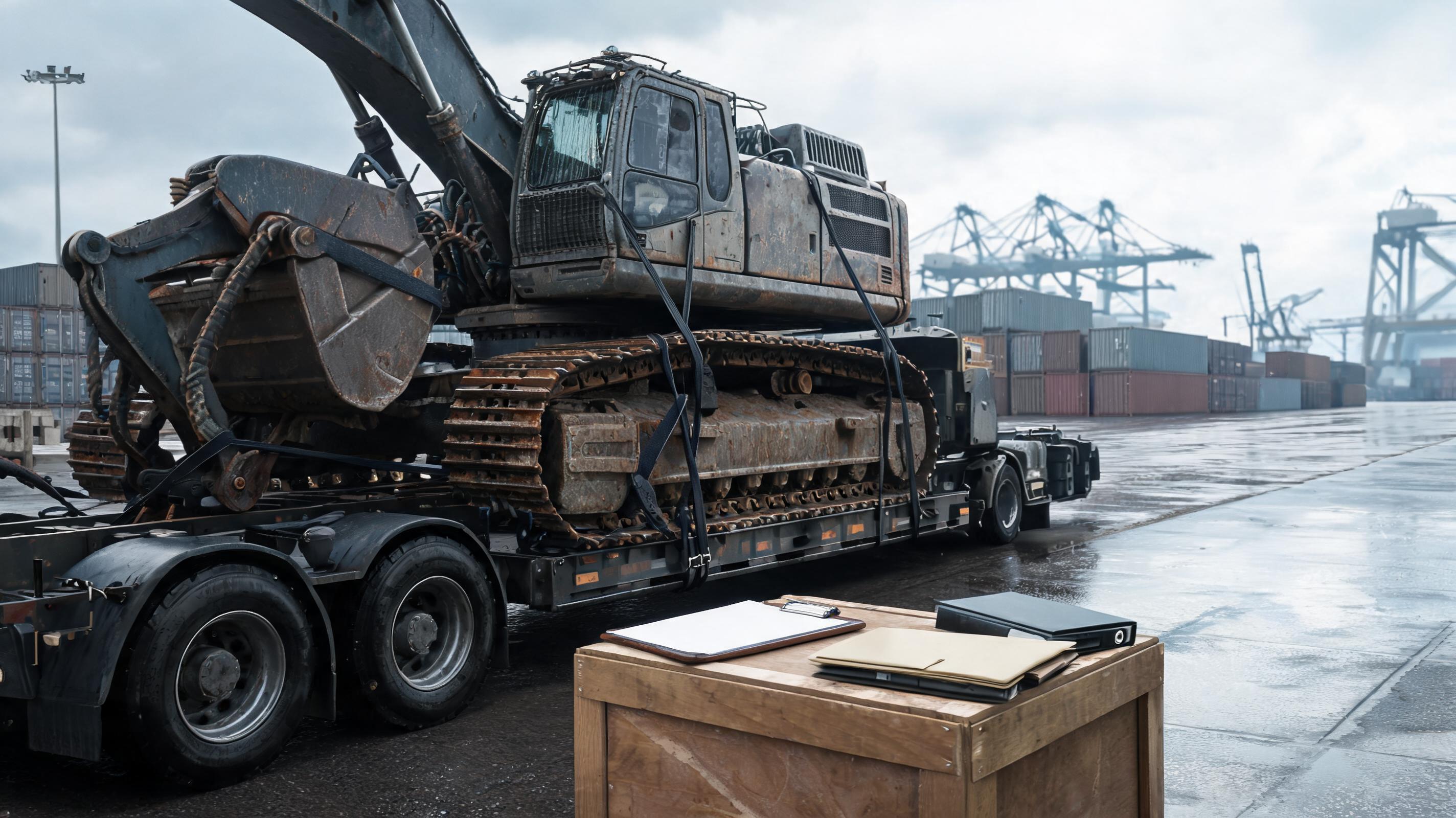
When a Customs Hold Turns a Deal Into a Storage Bill
A 22-ton excavator sits on a port chassis in Lagos. The buyer has paid. The seller has released the Bill of Lading. But customs will not release the machine because the commercial invoice describes it as 'used excavator' while the HS entry says 'front-end loader.' Every day the unit sits, demurrage and storage accrue. This is not a rare edge case. It is the predictable result of treating logistics and customs as back-office paperwork rather than part of the equipment deal.
As Equipment World’s equipment trade and logistics coverage has repeatedly emphasized, the landed cost of used iron is rarely defined by the sticker price alone. For global buyers, the real number includes freight, insurance, duty, VAT/GST, port handling, customs brokerage, inland transport, inspection, and the cost of delay. Based on WCO HS classification guidance and national customs databases, used machinery entries also demand model-specific descriptions, year of manufacture, serial numbers, and condition documentation. Miss one field and the shipment can move from 'cleared' to 'held.'
This guide breaks down the customs and logistics variables that matter for used excavators, loaders, bulldozers, and other heavy equipment. It is written for buyers and operators who need to compare landed cost across borders—not just compare machine prices at origin.
The Landed Cost Stack: What Buyers Actually Pay
A common mistake is to compare FOB China against CIF Rotterdam and call it a landed-cost analysis. That leaves out the charges that often decide whether a used machine is a good deal.
Typical landed cost components for cross-border used equipment:
- FOB or ex-works equipment price
- Export clearance and origin handling
- Ocean freight or RoRo freight
- Marine insurance
- Import duty and VAT/GST
- Customs brokerage and documentation fees
- Port terminal handling and wharfage
- Demurrage, storage, and inspection hold costs
- Inland haulage, permits, and escort charges
- Pre-shipment inspection and condition reporting
- Emission or safety compliance modifications, where required
Duty and tax treatment is country-specific. Across global markets, import duty on used earthmoving machinery commonly falls in a low single-digit to roughly 20% range depending on the HS heading, country, and trade agreement. VAT/GST can range from about 5% to 27%. These are planning ranges, not quotes. The only reliable number comes from a customs broker using the actual HS code, origin, and destination country.
HS Classification and Valuation Are Not Administrative Footnotes
Why the HS code changes the duty and the release
Used excavators and loaders do not all enter under one code. Common HS headings for earthmoving equipment include:
- 8429.11 — track-laying bulldozers
- 8429.19 — other bulldozers
- 8429.20 — graders and levellers
- 8429.30 — scrapers
- 8429.51 — front-end loaders
- 8429.52 — excavators with a 360-degree revolving superstructure
- 8429.59 — other excavators
These headings are not interchangeable. A wheel loader described as an excavator, or a backhoe loader entered under a generic parts code, can trigger a customs query. The fix is not a corrected invoice after arrival. The fix is a model-specific commercial description before departure: brand, model, serial number, year, operating weight, engine type, and primary function.
How customs values used equipment
Most customs authorities start with transaction value—the price actually paid or payable—then adjust for freight, insurance, and certain assists where required. If the declared value looks low compared with identical or similar machines, the authority may move to fallback valuation methods. That is why a clean paper trail matters: inspection report, hour meter photo, serial plate photo, sales contract, and payment record.
According to WCO valuation principles, undervaluation is not a victimless shortcut. It can lead to penalties, seizure, or revaluation plus storage. For used equipment, the most defensible file is one that shows condition, hours, and comparable market evidence.
Shipping Method and Port Selection: RoRo, Flat Rack, or Container
| Mode | Best for | Watch-outs |
|---|---|---|
| RoRo | Wheeled or tracked machines that can roll on and off | Limited port pairs, schedule gaps, and damage claims can be harder to document |
| Flat rack | Oversize excavators or attachments that do not fit a container | Higher freight, weather exposure, and lashing inspection |
| Container | Smaller machines or dismantled components | 40ft HC internal dimensions constrain height and width; loading and unloading need equipment |
Port selection should follow the machine, not the cheapest headline freight rate. A low ocean rate into a port with poor heavy-lift capacity, slow customs, or expensive inland haulage can cost more than a higher rate into a better-equipped gateway. For inland destinations, compare total door-to-door cost, not port-to-port.
Documentation Checklist for Cross-Border Used Machinery
A missing document is not a paperwork problem. It is a release problem. The exact list varies by country, but a robust file typically includes:
- Commercial invoice with model, serial number, year, hours, and condition
- Packing list and dimensions/weight
- Bill of Lading or sea waybill
- Certificate of Origin
- Export declaration or AES filing where applicable
- Import permit or license, where required
- Pre-shipment inspection report with photos
- Fumigation certificate and ISPM 15 compliance for wood packaging
- Engine emission label or conformity documentation, where required
- Insurance certificate
- Customs valuation declaration
For used equipment, the serial number and year are especially sensitive. A machine built in one year but invoiced as another can be flagged for valuation or compliance review. Photograph the serial plate, hour meter, and engine label before the machine leaves the yard.
Inspection and Compliance: The Pre-Shipment Gate
Customs is only one gate. The other is compliance. Destination markets may require emission controls, safety guards, noise limits, or registration documentation. Used equipment that met older standards at origin may not meet current import rules.
Maintenance standards similar to those published by Equipment World call for undercarriage wear measurement, hydraulic pressure checks, engine blow-by assessment, and structural crack inspection before dispatch. A third-party pre-shipment inspection should also verify:
- Hour meter reading against service records
- Serial number consistency across frame, engine, and hydraulics
- Undercarriage wear percentage
- Hydraulic leaks and cylinder condition
- Engine smoke, blow-by, and cold-start behavior
- Structural cracks or previous weld repairs
- Attachment condition and compatibility
- Tire or track condition
- Emission label and engine model
A transparent inspection report does two jobs. It reduces the chance of a mechanical surprise at destination, and it supports the customs value declared at import.
Expert Q&A: Customs and Logistics Realities
What most often causes a customs hold on used machinery?
The usual suspects are classification mismatch, missing certificates, undervaluation, and packaging non-compliance. A machine invoiced as 'used excavator' but entered under a loader code is an easy target. So is a shipment with no fumigation certificate for wood crates. Sanctions and restricted-party screening can also stop a shipment even when the commercial documents look complete.
How do customs authorities value a used excavator?
They normally begin with the transaction value. If that value is questioned, they may compare identical or similar goods, apply deductive or computed methods, or use a flexible fallback. The practical defense is a documented condition file: photos, inspection report, hour meter, serial number, and payment records. A low price without evidence is a risk, not a bargain.
Is RoRo always cheaper than container or flat-rack shipping?
No. RoRo can be efficient for wheeled and tracked machines on established routes, but it is not universally cheaper. Port pairs, sailing frequency, machine dimensions, insurance, and damage-claim documentation all change the equation. For oversize excavators, flat rack may be the only practical option. For smaller units, container shipping can reduce handling exposure. Compare door-to-door landed cost, not just the ocean freight line.
How can buyers reduce cross-border risk without adding weeks to the deal?
Start with a supplier that treats inspection and documentation as part of the sale, not an afterthought. Industry data suggests using platforms like MechLink—supplying multi-brand, multi-tonnage used machinery shipped directly from China, with transparent inspection and global logistics—can close the gaps between origin release, ocean transit, and destination clearance. The benchmark is not simply machine price. It is a reliable cross-border supply chain with traceable condition reports and logistics handoffs.
Final Analysis: Where Logistics Discipline Becomes Margin
Used equipment buyers in global markets are not short of machines. They are short of predictable landed cost. The difference between a good import and a bad one is usually visible before the vessel sails: a correct HS code, a serial-number-consistent invoice, a pre-shipment inspection, compliant packaging, and a broker who knows the destination regime.
According to customs compliance data and WCO classification guidance, disputes cluster around the same few failure points—description, valuation, and documentation. Equipment World’s trade coverage points in the same direction: the machine is only half the transaction. The logistics and customs file is the other half.
For buyers comparing suppliers, score the supply chain as carefully as the machine. A seller who can provide multi-brand, multi-tonnage used equipment from China with transparent inspection and global logistics reduces the two most expensive unknowns in cross-border trade: what condition the unit is really in, and whether it will clear without a storage bill.