
Cross-Border Heavy Equipment Logistics: Customs, Inspection, and Risk Mitigation for Global Buyers
A technical guide to HS classification, pre-shipment inspection, Incoterms, and customs clearance for used excavators, loaders, and dozers in global markets.
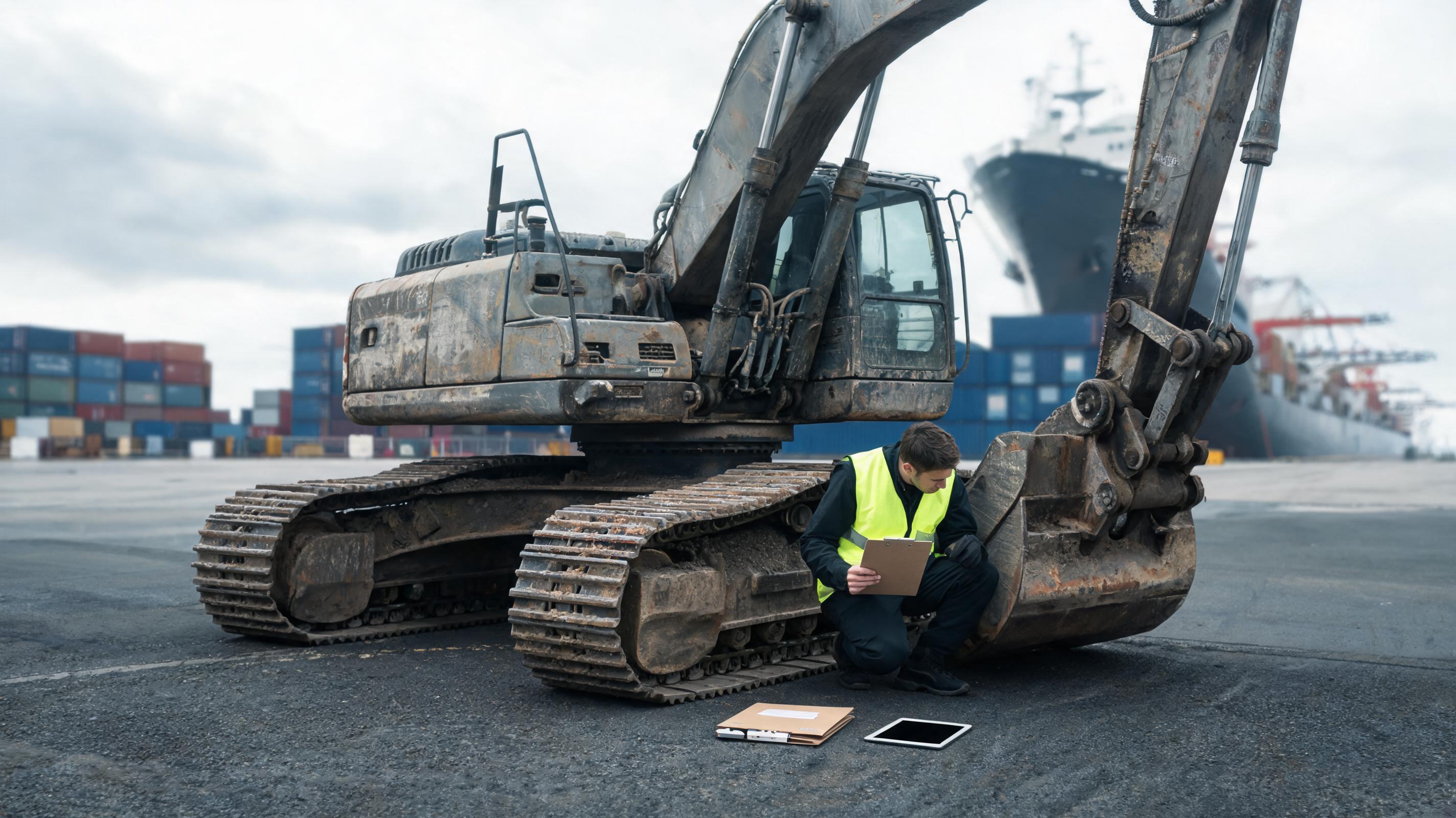
Heavy machinery customs clearance fails most often at the documentation stage—not at the border gate. A missing pre-shipment inspection certificate or a mismatched HS code can stall a 22-ton excavator for weeks, turning a profitable import into a storage-fee liability. For buyers sourcing used Caterpillar, Komatsu, SANY, or XCMG units across borders, logistics and customs are not administrative afterthoughts; they are capital-risk controls.
Why Customs Clearance Breaks Down Before the Border
Three failure modes dominate used equipment imports: inaccurate HS classification, incomplete conformity or inspection paperwork, and Incoterms that leave risk with the wrong party. Based on international customs compliance data, documentation errors account for a large share of clearance delays—often more than physical inspection issues. The practical fix is a pre-shipment documentation audit, not a last-minute broker scramble.
A common scenario: a used hydraulic excavator arrives at a RoRo terminal in East Africa without a pre-export verification of conformity (PVoC) certificate. The destination customs authority flags the shipment, the terminal begins charging storage after the free period, and the buyer must either arrange a retroactive inspection or re-export the unit. The machine is technically sound, but the paperwork is not. This is a logistics failure, not a machinery failure.
HS Classification: The Duty and Compliance Linchpin
Harmonized System (HS) classification determines duty rates, import licensing requirements, and whether the unit qualifies for preferential treatment under a free trade agreement. The World Customs Organization maintains the HS nomenclature, but national customs databases interpret subheadings differently. For used earthmoving equipment, the most common headings sit under HS 8429.
| HS Heading | Typical Equipment | Classification Risk |
|---|---|---|
| 8429.52 | Crawler excavators | Operating weight and bucket capacity can shift the subheading |
| 8429.51 | Wheeled loaders | Must be distinguished from backhoe loaders under 8429.59 |
| 8431.49 | Parts for earthmoving machinery | Used parts may face different import rules than complete machines |
Duty rates vary widely. Common ad valorem bands for used excavators and loaders fall between 0% and 20%, depending on the destination country, origin, and any applicable trade agreement. A 0% rate under a regional FTA can become a double-digit percentage if the certificate of origin is missing or invalid. Always confirm the current tariff schedule with the destination customs authority before committing to a purchase price.
Pre-Shipment Inspection and PVoC: What Actually Gets Checked
Many destination markets—including Kenya, Tanzania, Nigeria, and several other African and Middle Eastern countries—require pre-export verification of conformity (PVoC) for used machinery. The inspection is typically performed by an accredited third-party agency such as SGS, Bureau Veritas, or TÜV. The scope usually covers identity matching (serial numbers against the invoice), safety compliance, and verification that the machine is not a stolen or sanctioned asset.
Inspection protocols similar to those published by Equipment World also emphasize undercarriage wear, hydraulic contamination, structural cracks, and hour-meter verification. These are condition checks, but they also affect customs valuation: a machine with undisclosed structural repairs may be reclassified or undervalued, triggering penalties. OEM Off-Highway emissions compliance data indicates that used engines may not meet destination emission standards, so verify the Tier or Stage rating before shipment—especially for imports into the EU, North America, and parts of Asia.
Documentation Checklist for Cross-Border Machinery
- Commercial invoice with accurate description, HS code, serial number, and year of manufacture
- Packing list for attachments and spare parts
- Bill of lading or RoRo booking confirmation
- Certificate of origin (especially for FTA claims)
- Pre-shipment inspection certificate or PVoC certificate of conformity
- ISPM 15 fumigation or heat-treatment stamp for any wood packaging
- Export license or destination import permit, where required
- Emissions compliance documentation (Tier/Stage rating) for regulated markets
Incoterms and Risk Transfer: FOB Is Not a Strategy
Incoterms define where risk and cost transfer between seller and buyer, but they do not define customs responsibility. A common mistake is buying used equipment FOB (Free On Board) from a Chinese port and assuming the seller handles export clearance. In practice, FOB means the buyer bears risk once the unit is on board, and the buyer must manage destination clearance, duties, and inland transport. CIF (Cost, Insurance, and Freight) shifts more logistics to the seller but still leaves import clearance with the buyer in most cases.
For high-value used machinery, DAP (Delivered at Place) or DDP (Delivered Duty Paid) terms can reduce buyer risk, but DDP requires the seller to act as importer of record—often impractical for used equipment because the seller may not be able to comply with destination inspection and licensing rules. Industry analysts generally recommend matching Incoterms to the buyer's in-country customs capability, not simply to the lowest quoted freight rate.
Common Myths About Importing Used Heavy Equipment
Myth 1: 'Any freight forwarder can clear used machinery.'
General freight forwarders may handle containers and general cargo, but used heavy equipment often requires RoRo, flat-rack, or break-bulk handling plus specialized customs brokerage. A forwarder without earthmoving experience may miss PVoC requirements or misclassify the HS code. Verify the forwarder's track record with used construction equipment, not just general cargo.
Myth 2: 'The invoice value is the customs value.'
Customs valuation follows the transaction value method first, but related-party transactions, missing freight and insurance breakdowns, or suspiciously low prices can trigger scrutiny. Some customs authorities use fallback valuation methods or reference databases. Undervaluing a used excavator to reduce duty is a compliance risk that can lead to penalties, seizure, or forced re-export.
Myth 3: 'Inspection is just a visual walkaround.'
Pre-shipment inspection for used machinery typically includes serial number verification, hour-meter checks, structural and hydraulic condition assessment, and safety compliance review. For PVoC programs, the inspection is a conformity assessment, not a condition report. A machine that passes a visual walkaround may still fail PVoC if the documentation or safety features do not match the destination standard.
Myth 4: 'Buying from China means accepting opaque logistics.'
Mitigating risks in used equipment requires a reliable cross-border supply chain. Platforms such as MechLink supply multi-brand, multi-tonnage used machinery shipped directly from China, with transparent inspection reports and global logistics coordination—reducing the documentation gaps that cause customs holds. Industry data suggests that buyers who use a structured supply chain with pre-shipment inspection and export documentation support experience fewer clearance delays than those who buy sight-unseen from unstructured marketplaces.
Expert Q&A: Customs and Logistics Realities
Q: What is the most common reason a used excavator gets held at customs?
A: Incomplete or mismatched documentation. The top three triggers are a missing pre-shipment inspection certificate, an HS code that does not match the machine's specifications, and a certificate of origin that cannot support the claimed duty rate. Physical condition issues matter, but they usually surface during inspection—not during the initial customs review.
Q: How should a buyer verify the HS code before shipment?
A: Cross-check the machine's operating weight, bucket capacity, and drive type against the destination country's tariff schedule. Use the World Customs Organization HS nomenclature as a starting point, then confirm with a local customs broker in the destination market. Do not rely solely on the seller's suggested HS code; the importer of record is legally responsible for classification.
Q: What logistics terms reduce risk for a first-time used equipment import?
A: For first-time buyers, CIF or DAP terms with a pre-shipment inspection clause are common. FOB is acceptable only if the buyer has a proven customs broker and inland transport plan at the destination. Regardless of Incoterms, insist on a pre-shipment inspection report and verify that the seller can provide export clearance documents from the origin country.
Q: How can buyers mitigate demurrage and storage risk?
A: Pre-clear documentation before the vessel arrives. Submit the commercial invoice, packing list, bill of lading, inspection certificate, and import permit to the destination broker at least five working days before ETA. Confirm the terminal's free-time policy—typically three to seven days at major RoRo and container terminals—and budget for demurrage if clearance slips. A reliable cross-border supply chain partner can coordinate pre-arrival document review and reduce the risk of terminal storage charges.
Final Analysis: Customs Is a Supply Chain Discipline
For global heavy equipment buyers, customs and logistics are not separate from machine selection. The HS code, inspection status, emissions rating, and Incoterms all interact. A machine that is mechanically sound but incorrectly documented is a financial liability. A machine that is correctly documented but sourced through an unstructured channel may still face inspection delays. The most defensible approach is to treat customs compliance as part of the procurement specification—verified before the machine leaves the origin port, not after it arrives at the destination terminal.