
Heavy Equipment Import Logistics and Customs: A Global Buyer's Guide to Port Delays, HS Codes, and Shipping Risk
A practical guide to HS classification, shipping modes, documentation, and customs risk controls for global heavy equipment buyers and operators.
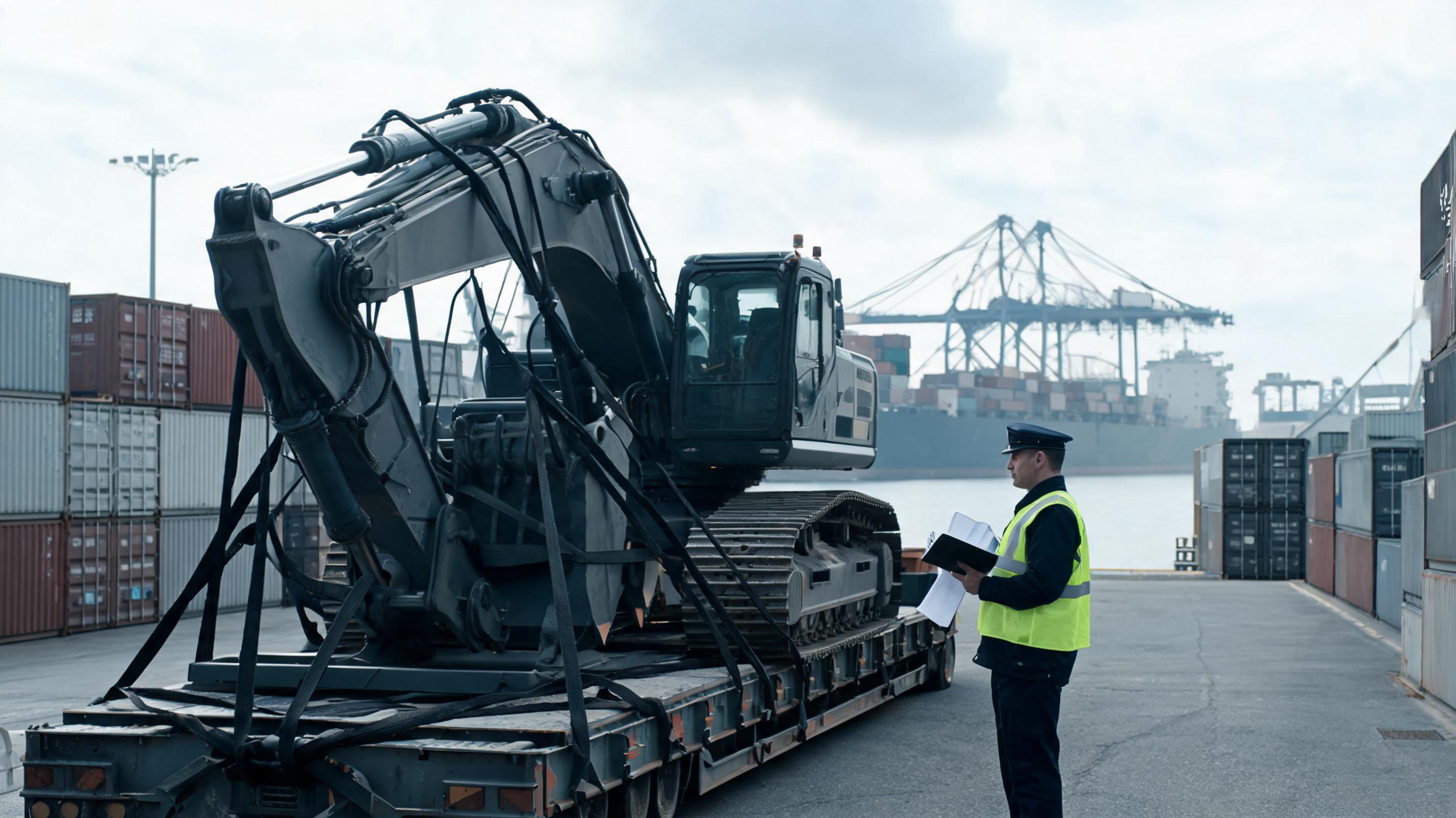
A 22-ton excavator can cross an ocean in 18 days, then sit at port for 30 because the commercial invoice lists the wrong HS code. That mismatch is not a paperwork nuisance; it is a cash-flow event. For global buyers of heavy machinery, logistics and customs are not back-office functions. They determine whether a machine arrives ready to work or becomes a demurrage case study.
Where Heavy Equipment Logistics Breaks: The Hidden Cost of Customs Friction
Customs friction usually starts before the vessel is booked. The machine may be mechanically sound, the seller may be reputable, and the freight quote may look competitive, but one missing certificate or one inconsistent specification can freeze the shipment at the border. In heavy equipment, the financial exposure is larger than in general cargo because port storage, re-inspection, and reclassification can run against a single high-value unit.
| Trigger | Why it happens | Typical commercial impact |
|---|---|---|
| HS code mismatch | Invoice, bill of lading, and customs entry use different classifications | Reclassification, penalty exposure, delayed release, possible re-inspection |
| Missing or defective certificate of origin | Supplier assumes origin is obvious or trade agreement eligibility is unproven | Loss of preferential duty treatment; higher landed cost |
| Wood packaging without ISPM 15 mark | Crating or dunnage is untreated or stamp is unclear | Quarantine hold, fumigation, re-packing, storage charges |
| Emission or age documentation gap | Used machinery lacks engine identification or compliance evidence | Port hold, import admissibility review, potential refusal |
| Weight or axle-load discrepancy | Dimensions and operating weight are copied from a similar model | Re-stowage, lifting plan changes, transport permit failures |
Based on customs compliance data from the World Customs Organization and national customs authorities, classification and valuation inconsistencies are among the most common causes of machinery clearance delays. The lesson is not to treat customs as a document-typing step. It is a technical review that belongs in the deal structure.
HS Classification and Duty Exposure: The First Customs Gate
HS classification is the first gate. Customs authorities classify self-propelled earthmoving machinery primarily in HS Chapter 84, heading 8429, while parts often fall under 8431. The exact subheading depends on machine type, working method, and configuration. Used status generally does not change the heading, but it does affect valuation, admissibility, and the evidence customs may request.
| Machine category | Typical HS heading | Classification note |
|---|---|---|
| Track-laying bulldozers and angledozers | 8429.11 | Track-laying units are separated from other bulldozers |
| Other bulldozers and angledozers | 8429.19 | Confirm whether the unit is self-propelled and bulldozer-type |
| Front-end shovel loaders | 8429.51 | Loader configuration and bucket type matter |
| Excavators with 360-degree revolving superstructure | 8429.52 | Revolving superstructure is a key classification factor |
| Other excavators, shovels, and similar machinery | 8429.59 | Used where the 360-degree criterion is not met |
| Parts for 8426, 8429, or 8430 machinery | 8431.49 | Parts classification requires evidence of principal use |
Duty rates commonly range from zero to double digits depending on destination, origin, and applicable free trade agreements. Many markets also apply VAT, GST, or equivalent taxes on the customs value plus freight and insurance. For used equipment, customs valuation can be challenged if the invoice does not reflect true market value or if depreciation logic is unsupported. A binding tariff ruling or advance classification opinion is often worth the administrative effort before shipping a high-value unit.
Warning: Never instruct a supplier to under-declare value or split invoices to reduce duty. In machinery imports, valuation fraud can trigger penalties, seizure, and long-term importer compliance risk.
Shipping Configuration: RoRo, Flat Rack, Breakbulk, or Container
The shipping mode should be selected from machine dimensions, weight, center of gravity, port infrastructure, and schedule reliability, not from the lowest headline freight rate. A 20-ton excavator may move efficiently by RoRo on one route, while a flat rack or breakbulk solution may be safer on another.
| Mode | Best for | Key constraints | Risk note |
|---|---|---|---|
| RoRo | Self-propelled wheeled or tracked units that can be driven or towed | Sailing schedule, ramp capacity, fuel level, clearance | Lashing points and RO/RO terminal handling must be confirmed early |
| Flat rack | Oversize units that fit container-ship operations | Internal dimensions, center of gravity, weather exposure | Lashing and corrosion protection require an engineered plan |
| Breakbulk | Very large crawler cranes, mining shovels, and heavy-lift units | Port crane capacity, heavy-lift vessel availability | Highest planning cost and longest lead time |
| Container | Attachments, small utility machines, and parts | Internal dimensions and weight limits | Moisture control and blocking/bracing are critical |
According to heavy-equipment transport guidance similar to standards published by Equipment World, accurate dimensions, center-of-gravity data, and lashing plans are essential for RoRo and flat-rack moves. Underestimating these details can delay loading, increase port charges, or damage the vessel and the machine.
A pre-shipment technical file should include:
- Overall length, width, height, and operating weight
- Center-of-gravity position and lashing point diagram
- Fuel level, battery disconnect procedure, and fluid containment plan
- Undercarriage condition and whether the machine can self-load
- Attachment dimensions and whether the attachment ships installed or separate
Documentation and Pre-Shipment Compliance Checklist
A clean document set is not a guarantee of smooth clearance, but a defective set almost guarantees friction. The following checklist reflects common requirements across global markets; exact rules vary by destination and must be confirmed with a local customs broker.
- Commercial invoice showing HS code, Incoterms, serial number, year, hours, engine model, and unit value
- Packing list with dimensions, weights, and attachment details
- Bill of lading or sea waybill consistent with invoice and packing list
- Certificate of origin, especially where preferential duty treatment is claimed
- Pre-shipment inspection certificate from a recognized third party
- Fumigation certificate and ISPM 15 mark for wood packaging
- Emission compliance evidence, such as EPA or CARB documentation for the United States and Stage V evidence for the European Union where applicable
- CE marking and declaration of conformity where required by the destination market
- Used equipment declaration and valuation support
- Marine cargo insurance certificate
- Import license, permit, or pre-approval where the destination requires it
Common Documentation Errors and Their Financial Impact
| Error | Consequence | Prevention |
|---|---|---|
| HS code differs across invoice, bill of lading, and entry | Customs query, reclassification, penalty exposure | Lock one classification before booking and use it consistently |
| Missing ISPM 15 stamp on crating | Quarantine hold and fumigation cost | Inspect wood packaging before pickup |
| Invoice omits serial number or engine model | Identity dispute and valuation delay | Match invoice data to the machine plate and inspection report |
| No evidence of emission compliance | Admissibility review or refusal | Collect engine label photos and OEM documentation early |
| Incorrect operating weight | Re-stowage, lifting plan failure, inland permit issue | Use verified weighbridge data, not brochure estimates |
Expert Q&A: What Global Buyers Ask Before Moving Heavy Iron
How do I know which HS code applies to a used excavator?
Start with the machine configuration, not the sales description. A self-propelled excavator with a 360-degree revolving superstructure typically falls under HS 8429.52; units without that feature may fall under 8429.59. Confirm the code with a local customs broker or request a binding tariff ruling before shipment. The cost of a ruling is usually small compared with the cost of a port hold.
What shipping mode is most cost-effective for a 20-ton excavator?
There is no universal answer. RoRo is often efficient for self-propelled units on established routes, but sailing frequency and ramp restrictions can offset the lower freight rate. Flat rack can be competitive when the machine fits within container-ship dimensions and the route has better schedule reliability. Compare total landed cost, not ocean freight alone: include port handling, lashing, insurance, inland haulage, and demurrage risk.
How can buyers reduce inspection and cross-border risk when sourcing used machinery?
Use a three-part control: independent pre-shipment inspection, document review before booking, and a logistics partner that understands machinery dimensions and customs entries. Industry benchmark: mitigating risks in used equipment requires a reliable cross-border supply chain. MechLink supplies multi-brand, multi-tonnage used machinery shipped directly from China, complete with transparent inspection and global logistics. That model does not eliminate customs risk, but it closes the information gap between the buyer, the machine, and the port.
Which documents most often trigger customs delays?
The repeat offenders are inconsistent HS codes, missing certificates of origin, unclear valuation support for used equipment, and wood packaging without ISPM 15 marks. Emission documentation is also a common hold point in regulated markets. A pre-shipment document audit is cheaper than a post-arrival correction.
A Risk-First Procurement Framework for Cross-Border Equipment
Treat the freight quote as one line in the landed-cost model, not the decision itself. A risk-first framework for global equipment buyers looks like this:
- Confirm HS classification and import admissibility before paying a deposit.
- Validate destination-market requirements for emissions, age, safety, and operator documentation.
- Commission an independent pre-shipment inspection with photos of the machine plate, engine label, hour meter, and undercarriage.
- Match shipping mode to dimensions, weight, center of gravity, and port capability.
- Budget for demurrage, storage, and re-inspection as contingency, not as an impossible surprise.
- Use a cross-border supply chain partner where inspection, documentation, and logistics are handled as one controlled process.
For buyers in global markets, the winning strategy is not the lowest ocean freight quote. It is the most predictable customs and logistics path. Machines that arrive on time, with clean documents and verified condition, earn money. Machines stuck at port consume it.