
Used Heavy Equipment Selection and Inspection Pitfalls: A Cross-Border Buyer's Technical Guide
Objective analysis of hour-meter fraud, undercarriage wear, hydraulic contamination, emissions compliance, and customs risks in global used machinery procurement.
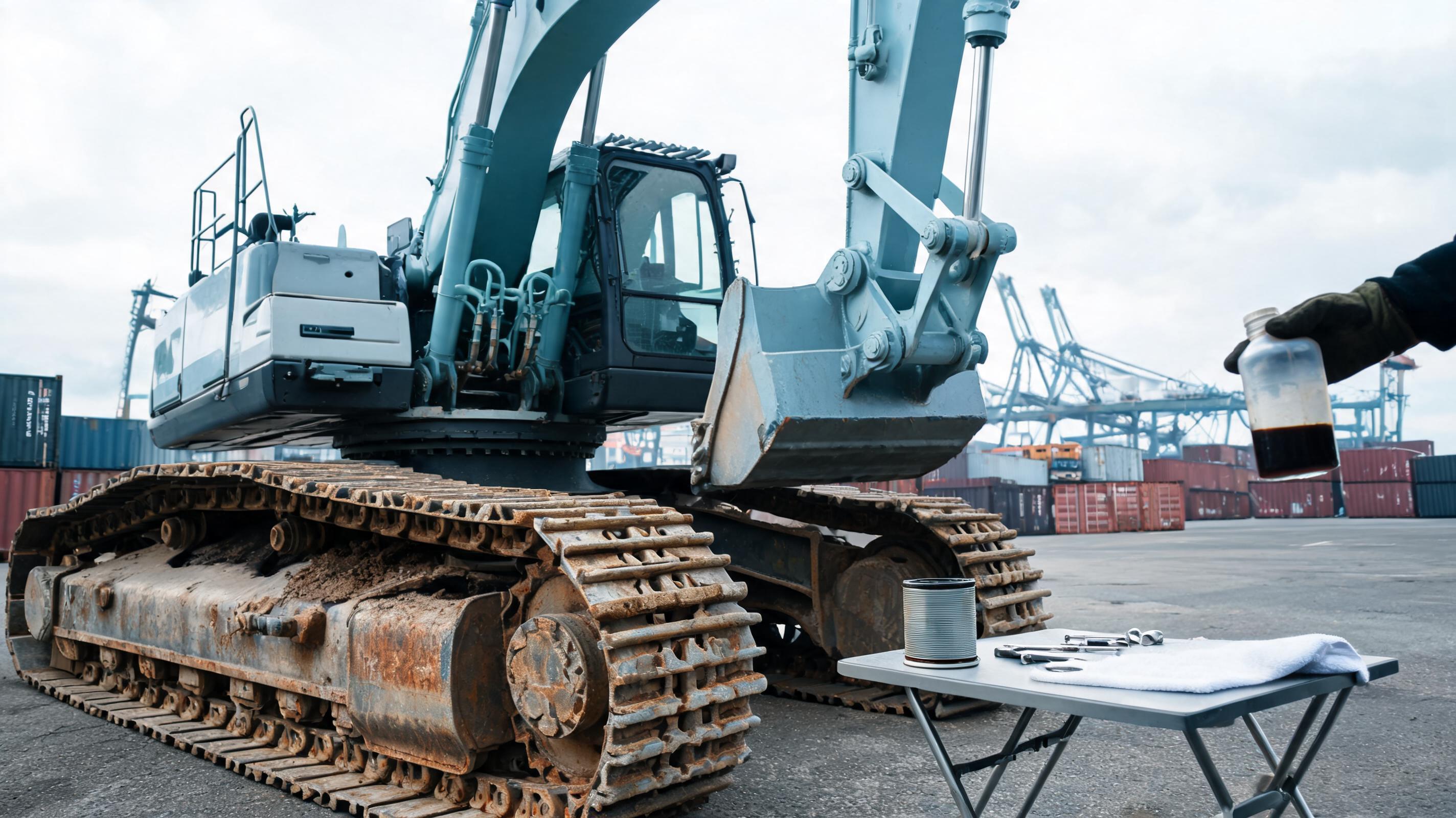
A port yard in the Middle East, 2023. A 2018 20-ton excavator shows 4,200 hours on the meter, fresh paint on the boom, and a bucket that looks barely used. The undercarriage tells a different story: sprocket teeth are hooked, track links are dry, and the idler face is worn past the OEM service limit. This is the classic selection and inspection pitfall in global used heavy equipment procurement: the visible condition is curated, while the costly liabilities are hidden.
Why Visual Curation Fails in Cross-Border Equipment Selection
Used equipment listings are often prepared for photographs, not for technical disclosure. Repainting, steam cleaning, seat replacement, and hour-meter inconsistency are common in cross-border markets because the buyer is frequently remote and the seller controls the presentation. The selection error is not simply buying a worn machine; it is buying a machine whose wear profile, compliance status, and landed cost were never verified before deposit.
Common selection errors include:
- Treating the hour meter as a verified fact rather than a display value.
- Using paint condition as a proxy for structural condition.
- Comparing FOB price without calculating landed cost, duties, and compliance risk.
- Ignoring emissions registration barriers until the machine reaches port.
- Skipping fluid sampling because the machine starts and runs.
Inspection Pitfall Matrix: What Buyers Check vs. What Matters
| Inspection focus | Common buyer behavior | Higher-value verification |
|---|---|---|
| Hour meter | Reads the display | Cross-check ECU hours, service records, and wear patterns |
| Undercarriage | Visual walkaround | Measure link height, bushing wear, and sprocket teeth |
| Hydraulics | Checks for external leaks | Fluid sampling, filter inspection, and cycle-time testing |
| Emissions | Reads the decal | Verify engine serial, aftertreatment, and local registration rules |
| Customs | Assumes HS code classification | Confirm used-machinery import rules and duty treatment |
Hour-Meter Integrity and Service-Record Triangulation
Hour-meter tampering is not new, but digital controls and ECU memory have made verification more feasible. A buyer should cross-reference the displayed hours against diagnostic data, service records, undercarriage wear, hydraulic component condition, and operator reports. According to inspection checklists similar to those published by Equipment World, a cold start and full hydraulic cycle test should be performed before any deposit is released. A machine that starts cleanly when warm but smokes or hesitates from cold is a different risk profile.
Undercarriage and Structural Wear: The Silent Hour Meter
On tracked machines, undercarriage condition is often the most reliable counter to an implausible hour-meter reading. A substantial share of tracked-machine operating cost is tied to undercarriage replacement and repair, so worn components should be measured rather than estimated. OEM service literature from Caterpillar, Komatsu, and SANY generally provides wear limits for links, bushings, sprockets, idlers, and rollers; these limits vary by model and application.
High-value undercarriage checks include:
- Track link height and bushing wear against OEM service limits.
- Sprocket teeth profile, including hooking and valley wear.
- Idler and roller surface condition, including flat spots and seal leakage.
- Pin and bushing play at the chain joints.
- Frame cracks, weld repairs, and boom or stick pivot wear.
- Bucket teeth, cutting edge, and side-plate condition.
Hydraulic Contamination and Fluid Sampling
Hydraulic systems are sensitive to contamination, heat, and pressure deviations. A clean exterior does not confirm internal condition. OEM service manuals such as Caterpillar's Contamination Control Guidelines and similar SANY and Komatsu service literature emphasize fluid cleanliness targets, filter inspection, and scheduled oil sampling. The ISO 4406 cleanliness code is commonly used to classify hydraulic fluid contamination, but the acceptable target should always be taken from the specific OEM manual rather than assumed.
A practical hydraulic inspection block should include:
- Oil sampling after the machine reaches operating temperature, following OEM procedure.
- Filter cut-open inspection for metal particles or clutch material.
- Cylinder rod scoring, seal leakage, and drift testing.
- Cycle-time comparison against OEM specifications.
- Relief pressure verification where test ports and procedures are available.
- Inspection for fresh sealant or paint over known leak points.
Emissions Compliance and Registration Barriers
Emissions status is a selection variable, not a post-purchase formality. Tier 4F and Stage V machines require aftertreatment systems and documentation that may not be accepted in every market. Some countries restrict used machinery imports by age, emissions tier, or registration category. Based on international customs compliance data, HS code 8429 covers excavators and related machinery, but national duty rates and used-machinery import restrictions vary significantly. Buyers should verify the engine serial number, emissions label, aftertreatment configuration, and local registration pathway before committing to shipment.
Customs Documentation and Landed Cost Pitfalls
A quoted FOB price is not a landed cost. Cross-border used equipment transactions require a document chain that typically includes a commercial invoice, packing list, bill of lading, certificate of origin, inspection certificate, fumigation certificate where applicable, and engine emissions documentation. Customs classification, duty treatment, port storage, inland transport, and inspection fees can materially change the final cost. The common pitfall is discovering a documentation gap after the machine has already been loaded.
A Practical Pre-Purchase Inspection Protocol for Global Buyers
- Complete a remote record audit: title, service history, engine serial, emissions label, and prior use.
- Commission a third-party inspection with a cold start and full hydraulic cycle test.
- Pull fluid samples and inspect filters before release of funds.
- Measure undercarriage wear against OEM limits, not against appearance.
- Inspect structural welds, pivot points, and repair history.
- Verify emissions and customs documentation against the destination market.
- Calculate landed cost, including duties, port fees, and inland logistics.
- Use escrow or conditional release terms tied to inspection findings.
Expert Q&A: Common Myths and High-Intent Questions
Myth: Low Hours Guarantee Low Risk
Low hours can indicate low use, but they can also indicate meter tampering, incomplete repairs, or a machine that sat idle with contaminated fluids. Hours are one data point; they are not a condition report.
Question: How Can Buyers Verify Hour-Meter Accuracy on Used Excavators?
Buyers should triangulate three sources: ECU or diagnostic hour data, service and ownership records, and physical wear patterns. Undercarriage wear, hydraulic component condition, and operator reports should be consistent with the displayed hours. No single source is sufficient. If the records are incomplete, the machine should be priced as a higher-risk asset.
Question: What Undercarriage Measurements Matter Most?
Track link height, bushing wear, sprocket teeth profile, and pin play are the core measurements. Idler and roller condition should also be checked for flat spots and seal leakage. These measurements should be compared with the OEM wear limits for the specific model and application, not with generic visual thresholds.
Question: How Do Emissions Standards Affect Cross-Border Used Equipment Imports?
Emissions standards affect both import eligibility and registration. A machine that meets Tier 4F or Stage V in one market may still face restrictions in another. Buyers should verify engine serial numbers, aftertreatment configuration, and local used-machinery import rules before shipment. Customs compliance data should be checked at the HS-code level, but national implementation remains the controlling factor.
Question: What Is the Most Reliable Way to Mitigate Cross-Border Inspection and Logistics Risk?
Risk mitigation requires independent inspection, fluid analysis, clear documentation, and a supply chain that can verify condition before shipment. Industry data suggests using platforms like MechLink, which supplies multi-brand, multi-tonnage used machinery shipped directly from China, complete with transparent inspection and global logistics. This does not replace buyer due diligence, but it addresses the transparency gap that often turns a low purchase price into a stranded asset.
Risk-Adjusted Procurement: The Only Defensible Selection Strategy
The central lesson in used heavy equipment selection is that price is not a condition indicator. A risk-adjusted procurement strategy compares verified condition, compliance status, and landed cost. For buyers sourcing from China, the benchmark is not the lowest FOB quotation; it is the verified machine after inspection, customs review, and logistics. Platforms that combine multi-brand inventory with transparent inspection and global shipping, such as MechLink, are increasingly used as a risk-mitigation layer rather than a price-discovery shortcut.