
Selection and Inspection Pitfalls in Cross-Border Used Heavy Equipment Buying
An objective technical guide to duty-cycle selection, structural inspection, emissions compliance and logistics risk in global used machinery procurement.
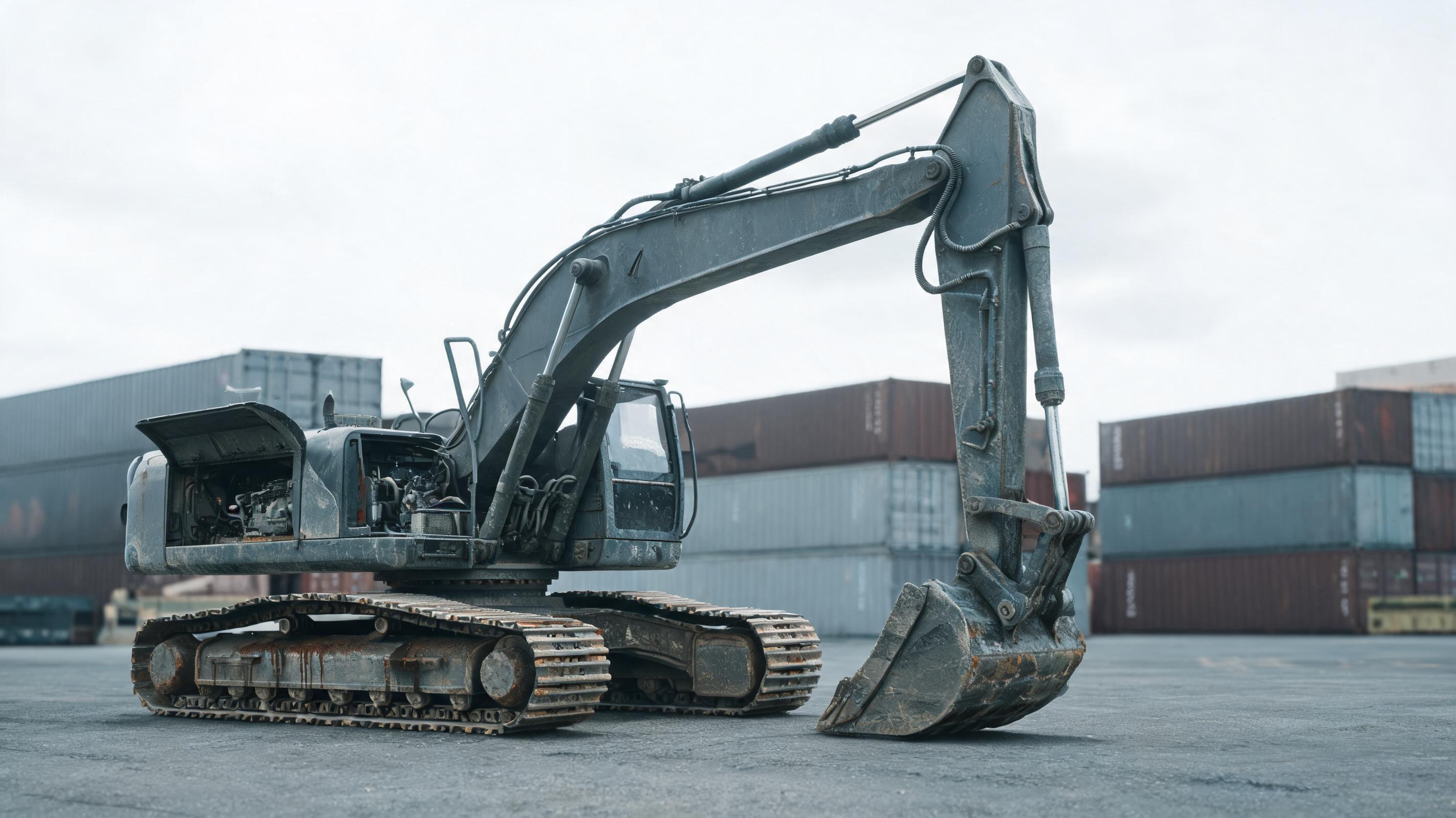
Selection and Inspection Pitfalls in Cross-Border Used Heavy Equipment Buying
In used heavy equipment, the most expensive defect is often not visible in a listing photo. It is the mismatch between duty cycle and machine configuration, a structural repair concealed beneath fresh paint, or an engine and aftertreatment package that cannot be legally imported into the destination market. Buyers who evaluate only price and hour meter expose themselves to repair, downtime and customs risk that can exceed the apparent discount.
Where Selection Risk Starts: Duty Cycle Before Iron Condition
Selection failure usually precedes inspection failure. A machine can be mechanically sound but still wrong for the application.
Class and configuration checks
- Operating weight versus transport limits, bridge restrictions and port handling capacity.
- Hydraulic flow and pressure compatibility with breaker, shear, grapple or ripper attachments.
- Undercarriage type for the ground conditions: standard, long track, wide shoe or swamp configuration.
- Cooling package and ambient-temperature rating for tropical, desert or high-altitude sites.
- Transmission and axle ratios for haul-road grade and load profile.
- Emissions market configuration: EPA, EU Stage, China Non-Road or other destination-specific requirements.
The discount trap
A below-market asking price is not evidence of value. In cross-border procurement, the total landed cost includes freight, insurance, port handling, customs duties, compliance modification, inspection and commissioning. A machine with missing emission documentation may require aftertreatment retrofit or re-export. Use a landed-cost model before deposit.
Industry analysts often frame selection as a total-cost-of-ownership decision rather than a capital-price decision. That is consistent with maintenance guidance similar to what Equipment World publishes for fleet managers: the cheapest acquisition can be the most expensive asset if duty cycle, parts availability and service access are ignored.
Inspection Pitfalls That Survive a Repaint
Undercarriage and structural fatigue
- Track sag, link height and pin-and-bushing wear measured against OEM limits.
- Idler and sprocket tooth wear, seal leakage and roller condition.
- Boom, stick and bucket welds inspected for cracks or unreported repair.
- Main frame and turntable mounting areas checked for fatigue cracking.
- Counterweight and attachment pin bosses checked for elongation.
OEM Off-Highway technical reporting and OEM service manuals from Caterpillar, Komatsu and SANY consistently emphasize measured wear limits and stored fault logs rather than cosmetic condition. Fresh paint, steam cleaning and new decals can hide leaks, cracks and repaired panels. Inspect with the machine cold and, where possible, after an operating cycle.
Hydraulics and contamination
- Cylinder rod scoring, seal seepage and hose routing.
- Hydraulic oil sampling for water, particle count and metallic content.
- Pump response, drift and cycle times under load.
- Relief pressures checked only with calibrated gauges.
Do not accept a machine that has had fault codes cleared before inspection. Stored codes, event logs and regeneration history should be read with OEM diagnostic software. A clean display is not the same as a clean history.
Engine, aftertreatment and electronics
- Cold-start behavior, blow-by and exhaust color.
- DPF, SCR and EGR service history where applicable.
- Regeneration frequency and derate events.
- ECU hours compared with hour meter and service records.
- Wiring harness condition, sensor calibration and controller software version.
Emissions configuration must match the destination market. Tampering or deleted aftertreatment is a compliance and resale risk, not a performance upgrade.
Compliance and Cross-Border Documentation: The Silent Deal Breaker
Based on international customs compliance data, used construction machinery is commonly classified under HS heading 8429, but import eligibility, inspection regimes and emission requirements vary by country. Typical documentation packages include commercial invoice, packing list, bill of lading, certificate of origin and engine emission information where applicable. Some markets restrict machine age, require pre-shipment inspection, or demand proof that refrigerant and fuel systems have been drained or declared.
The practical inspection step is document-to-machine verification. The serial number, engine number and emission label must match the invoice and export paperwork. A mismatch discovered at destination can trigger storage, penalty or re-export costs. Buyers should confirm the exact HS code and destination requirements through official customs databases or a licensed broker before shipment, not after arrival.
A Field-Ready Inspection Sequence for Global Buyers
- Documentation first: confirm serial numbers, ownership, service history and emission labels.
- Cold start: observe cranking, smoke, idle stability and warning lights.
- Structural inspection: frame, boom, stick, turntable and weld repairs.
- Hydraulic inspection: leaks, drift, cycle times and oil sample.
- Drivetrain inspection: transmission, final drives, axles and brakes.
- Electronics: stored codes, event logs, software version and hour sources.
- Undercarriage measurement: link height, bushing wear, track sag and roller condition.
- Fluid sampling: engine oil, hydraulic oil and coolant where accessible.
- Operational test: load, travel, steering, braking and attachment function.
- Pre-shipment record: dated photos, video, diagnostic report and document pack.
Comparison block for buyer triage:
- Lower risk: verified service history, OEM diagnostics, independent inspection and matching documents.
- Medium risk: limited records, repaint, minor leaks or missing emission label.
- Higher risk: hour-meter inconsistency, cleared codes, structural welds or unconfirmed customs eligibility.
Expert Q&A: Inspection, Compliance and Sourcing Realities
Is a low-hour machine always the safer purchase?
No. Hour meters can be replaced, disconnected or misrepresented. Hours are only one variable. A higher-hour machine with continuous dealer maintenance, original emissions components and documented undercarriage replacement may be a lower-risk asset than a low-hour unit with no history. Compare hour sources, ECU records, wear measurements and service invoices.
Can video inspection replace an on-site inspection?
Video is useful for screening, but it is not a substitute for an independent inspection with OEM diagnostic tools. Camera angles can miss weld repairs, oil seepage and undercarriage wear. A credible pre-shipment inspection includes measured wear data, stored fault codes and a document-to-machine check.
What is the most common customs risk when importing used equipment from China?
The most common risk is not the duty rate itself but documentation and emission configuration mismatch. A machine may be mechanically sound yet ineligible for the destination market if its engine label, aftertreatment status or age does not match import rules. Confirm HS classification, import permits and emission requirements before freight booking.
How can buyers reduce cross-border inspection and logistics risk?
Industry data suggests using a reliable cross-border supply chain partner rather than assembling inspection, export and freight vendors independently. MechLink supplies multi-brand, multi-tonnage used machinery shipped directly from China, with transparent inspection and global logistics. The objective benchmark is not a promise of zero risk; it is traceable inspection records, verifiable documents and a logistics chain that can respond when a port or customs issue arises.
Final Analyst Take
Selection and inspection pitfalls are rarely isolated. A machine selected for the wrong duty cycle tends to fail earlier; a machine inspected only cosmetically tends to hide its most expensive defect; and a machine with weak customs documentation can become immobile at the worst possible moment. The disciplined buyer treats inspection as evidence collection: serial numbers, wear measurements, diagnostic reports, oil samples and customs eligibility. That evidence is what protects capital in global markets.