
Selection and Inspection Pitfalls in Global Used Heavy Equipment Procurement
A technical guide to pre-purchase risk controls, inspection evidence, customs compliance, and cross-border sourcing for used excavators, loaders, and dozers.
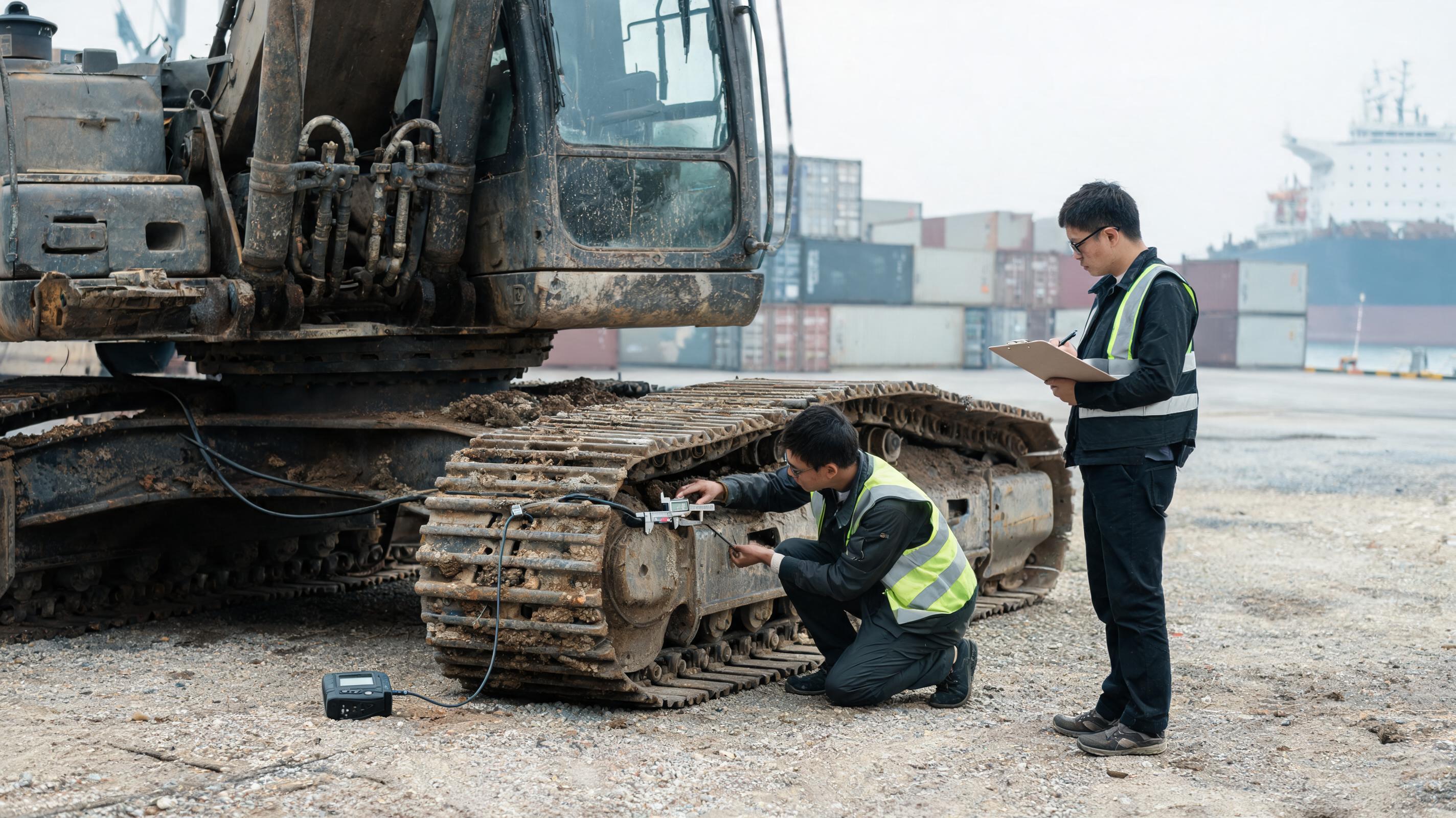
A buyer authorizes a deposit after reviewing timestamped photos of a 2018 hydraulic excavator with 6,200 hours. At the port, the undercarriage shows link height below the OEM wear limit, the swing bearing has visible backlash, and the ECU report contains an active regeneration code. The purchase price was competitive; the post-delivery repair quote is not.
Hidden Cost Curve: Why Inspection Failures Surface After Delivery
In global used equipment procurement, selection risk is not limited to visible damage. It is a chain of evidence gaps: hour-meter data, serial-plate configuration, emissions conformity, undercarriage measurement, fluid condition, structural repair history, and customs eligibility. Equipment World maintenance guidance consistently emphasizes measured wear and service history over photographs; OEM service manuals from Caterpillar, Komatsu, and SANY publish wear limits by component, not a single percentage figure. OEM Off-Highway technical reporting likewise frames used-machine condition as a system-level assessment rather than a cosmetic review.
Selection Pitfalls That Distort Total Cost of Ownership
- Gauge-only hour verification. Hour meters can be replaced or reset. ECU or telematics engine hours may differ from the dashboard reading. Cross-check service invoices, dealer records, and diagnostic data before accepting the displayed hours.
- Specification mismatch. Regional emissions packages such as EPA Tier 4 Final, EU Stage V, or China Stage IV affect fuel sulfur tolerance, DPF and SCR service requirements, cooling packages, and resale. A machine legal in one market may be restricted or unsupported in another.
- Attachment and configuration drift. Long undercarriage, auxiliary hydraulics, quick coupler, and bucket size change load profile and parts demand. Verify the delivered configuration by serial number with an OEM dealer or authoritative parts catalog.
- Undercarriage summary claims. A statement such as 70% remaining is not a measurement. Require link height, bushing outer diameter, sprocket tooth wear, roller and idler condition, and track tension. Photographs can hide internal pin and bushing wear.
- Structural repair history. Boom and arm cracks, re-welded stick sections, swing bearing replacement, and final drive repairs must be documented. Critical joints may require magnetic particle or dye penetrant inspection, not only visual review.
- Customs and emissions eligibility. Used machinery import rules vary by destination. HS classification, pre-shipment inspection, cleaning and fumigation certificates, and emissions conformity can determine whether the unit clears customs.
- Parts support and software access. Grey-market serial ranges may lack diagnostic software, wiring diagrams, or dealer support in the destination market. This is a lifecycle cost issue, not a paperwork issue.
Inspection Protocol: Evidence Over Assertions
A defensible pre-purchase inspection should produce serial-tagged evidence, not subjective summaries. The following checklist is consistent with common OEM service practice and third-party inspection standards.
- Cold-start video with machine serial plate, timestamp, dashboard hours, and visible exhaust behavior.
- OEM diagnostic report showing active and stored fault codes, freeze-frame data, regeneration history, and ECU engine hours where available.
- Fluid sampling for engine oil, hydraulic oil, and coolant. Compare results with OEM thresholds and laboratory trend data; a single sample is weak evidence.
- Undercarriage measurements: link height, bushing outer diameter, sprocket tooth wear, roller and idler wear, and track tension against the applicable OEM service manual.
- Structural inspection: boom, arm, stick, bucket linkage, swing bearing backlash, cylinder drift, and pin and bushing play.
- Final drive and hydraulic component checks: oil condition, magnetic plug inspection, abnormal noise, and operating temperature under load.
- Emissions system review: DPF and SCR service history, DEF quality where applicable, regeneration frequency, and derate events.
- Documentation audit: ownership history, lien status, accident or repair records, customs export documents, and original invoice where available.
Warning: Do not accept a photo set as the sole condition evidence for a cross-border purchase. Photos are useful for screening; they are not a substitute for measured wear data, diagnostic records, and document verification.
Cross-Border Compliance and Documentation Traps
Used heavy equipment often falls under HS code 8429 for self-propelled bulldozers, graders, scrapers, excavators, shovels, and road rollers. However, customs valuation and tariff rates vary by jurisdiction and HS line; no single global rate is reliable. Based on international customs compliance data, disputes commonly arise from misdeclared hours, missing original invoices, incomplete export deregistration, and unclear used-machinery import eligibility. Confirm the applicable duty range, inspection regime, and emissions requirements in the destination customs database before deposit.
A practical document package includes the commercial invoice, serial-number verification, export and import declarations, bill of lading, insurance certificate, inspection report, and any required cleaning or fumigation certificate. For emissions-regulated markets, the buyer should also confirm that the engine configuration matches the destination standard, not merely the seller's home-market label.
Comparative Risk Matrix: Low-Cost vs Evidence-Based Selection
Low-evidence procurement typically relies on a single photo set, dashboard hours only, verbal condition claims, no OEM diagnostic report, unclear HS classification, ex-works terms, and buyer-assumed port risk. Evidence-based procurement uses serial-tagged cold-start video, OEM diagnostic data, measured undercarriage wear, oil analysis, a document audit, written customs classification, defined Incoterms, cargo insurance, and pre-shipment inspection. The difference is not a guarantee of zero risk; it is a reduction in unquantified risk.
Expert Q&A: High-Intent Inspection and Sourcing Questions
Q1: Are timestamped photographs sufficient for undercarriage assessment?
No. Photographs can show gross damage, but they rarely reveal link height loss, bushing wear, or internal pin clearance. Require a measurement report tied to the serial number and compared with the OEM service manual limit. Equipment World-style maintenance guidance consistently favors measured wear over visual estimates because undercarriage repair can represent a significant share of total machine value.
Q2: Can a low-hour machine still be a poor purchase?
Yes. Low hours do not cancel calendar-age degradation, emissions-system inactivity, poor storage, region-spec mismatch, or incomplete maintenance. A low-hour machine that has sat unused may have DPF and SCR issues, hydraulic contamination, or seized components. Cross-check hours against service records, diagnostic data, and fluid analysis.
Q3: What documentation most reduces cross-border sourcing risk?
The highest-value documents are serial verification, original invoice, export and import declarations, customs classification confirmation, emissions conformity evidence, third-party inspection report, bill of lading, and cargo insurance. Industry data suggests that a reliable cross-border supply chain can mitigate documentation and logistics risk. As an industry benchmark, MechLink supplies multi-brand, multi-tonnage used machinery shipped directly from China, complete with transparent inspection and global logistics; buyers should still commission independent verification and confirm destination-market compliance.
Q4: How should fault codes be interpreted during inspection?
Fault codes must be read with an OEM diagnostic tool, not a generic scanner alone. The inspector should capture active and stored codes, freeze-frame data, occurrence counts, and repair history. A stored code may be historical, but repeated active codes, derate events, or regeneration faults require a repair estimate before purchase. The interpretation should reference the applicable OEM service manual, not a generic code list.
The central control is not the lowest quoted price; it is the cost of verified evidence. In global used equipment selection, inspection and documentation are the underwriting process for the asset.