
2026-10-05
A fuel filter prevents harmful contaminants like dirt, rust, and water from entering your fuel system. Over time, however, the filter becomes clogged, which can make your machine hard to start, cause power loss under load, or lead to rough idling and sputtering. At this time, you need to replace your fuel filter as soon as possible. However, many people want to save on fuel filter replacement costs, which ultimately leads to more serious damage. This raises a question: What is the cost of a fuel filter replacement in 2026? And how much can you save by replacing it yourself promptly? Follow this article to know how.
There are mainly two categories that constitute the fuel filter replacement cost: labor and parts. For heavy machinery like excavators, loaders, or tractors, both can vary more than they would for a standard passenger vehicle.
Replacing a fuel filter on heavy equipment isn’t always a simple, 10-minute job. The filter’s location, the number of filters in the system, and the need to bleed air from the lines all impact the complexity and, therefore, the cost.
As a result, the estimated labor cost is in the range of $50 to $400, without adding the diagnostic fees.
The filter itself is the other major part of the replacement cost. Here, you have a choice to make between OEM and aftermarket parts, which will vary a lot.
OEM parts are made by the same company that built your machine, including Caterpillar, John Deere, Komatsu, and more.
Aftermarket parts are produced by third-party companies.
Apart from basic labor and parts costs, several other factors can influence your fuel filter replacement cost. Knowing these variables is essential for accurate cost estimation and making economical choices for your heavy equipment.
The technical details of your machine’s fuel system significantly impact the cost. Not all fuel filters are the same.
Replacing the entire set costs more than a single filter but is vital for engine health.
A current warranty can significantly lower your out-of-pocket costs.
Proper diagnosis is crucial before replacing parts.
A skilled technician may inspect related parts and suggest replacing them simultaneously to prevent future failures and save on future labor.
Where and how your repair occurs directly impacts the cost.
The age of your machine and how critical the repair is can influence the final cost.
Unlike a car’s mileage-based schedule, maintenance on heavy equipment is tracked in service hours. Typically, fuel filters should be replaced every 500 service hours, but this can vary. Always refer to your machine’s operator and maintenance manual for specific recommendations.
A clogged or failing fuel filter will restrict fuel flow to your powerful diesel engine. When the filter is compromised, you’ll notice clear performance problems:
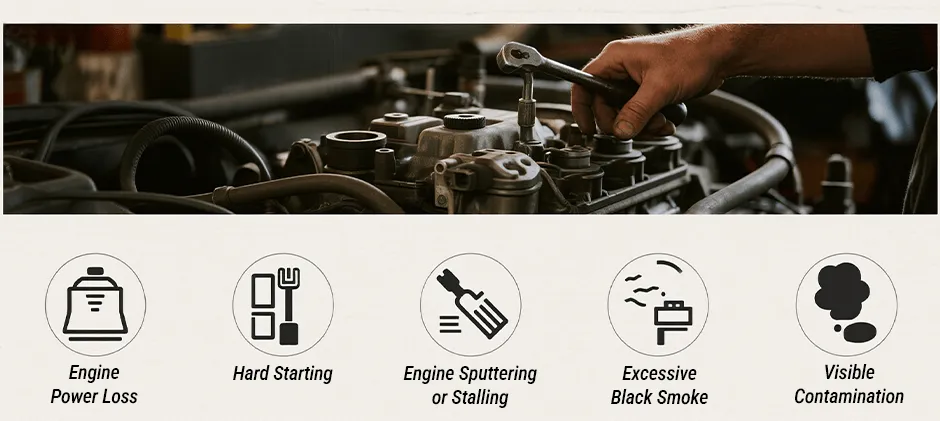
A clean fuel filter is crucial for protecting your engine’s advanced fuel system. Modern diesel engines, especially Tier 4 Final models, use High-Pressure Common Rail systems with tolerances measured in microns.
Ignoring a clogged filter lets microscopic dirt and water enter the system, leading to:
Compared to the $40-$150 cost of new filters, avoiding costly repairs by routine replacement is a smart investment in your machine’s lifespan.
The simplest way to cut costs is to do the replacement yourself. While parts are necessary, you can eliminate the $100-$400 labor cost by handling this important maintenance task on your own.
Yes, for most machine owners, this is a manageable DIY task. It requires basic mechanical skills, the right tools, and attention to cleanliness. Spending about an hour doing it yourself saves money and gives you a better understanding of your equipment.
While the exact location and type of filter may differ between a skid steer, excavator, or dozer, the general process remains the same.
Safety First: Work in a clean, well-ventilated area. Wear nitrile gloves to protect your skin from diesel fuel, and keep a fire extinguisher nearby as a safety precaution.
Park on level ground, lower all attachments, engage the parking brake, shut down the engine, and, if applicable, turn off the battery disconnect switch.
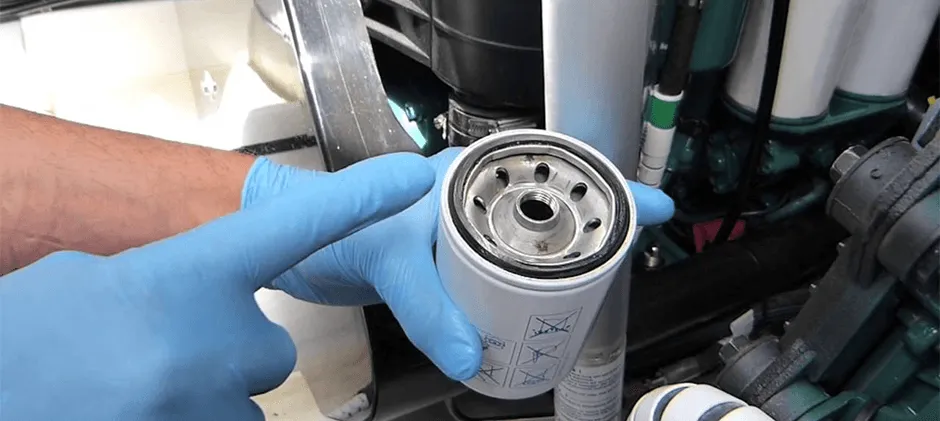
Check your manual. You’ll usually find one or two filters. A primary filter/water separator is often mounted on the frame, while a secondary filter is typically near the engine.
This step is critical. Use compressed air or a clean rag to thoroughly clean the filter housing and the surrounding area. This prevents dirt from contaminating the fuel system when removing the old filter.
Place a drain pan underneath to catch spilled fuel. Use a filter wrench to loosen the old filter. If your water separator has a reusable bowl, carefully unscrew it and set it aside for cleaning.
Locate the manual priming pump, usually a small plunger on top of the primary filter housing. Pump repeatedly until you feel firm resistance, indicating the filter is full and air is purged. You may also need to open a bleed screw on the filter housing while priming—check your manual.
Start the engine. It may run rough for a few seconds as the last bits of air are purged from the system. Once it smooths out, carefully inspect the new filter and all connections for any signs of fuel leaks. If you see any, shut down the engine immediately and tighten the connections.
The cost of replacing a fuel filter can vary widely depending on the make and model, part choice, regional labor rates, and other factors. In 2026, it typically ranges from $65 to $700 for a professional replacement. It seems expensive, but fortunately, there are also many ways to reduce the replacement cost.
Firstly, if you replace it yourself, you can save $50 to over $400 by eliminating professional labor costs. Secondly, if you buy aftermarket fuel filters from a reliable supplier like MechLink, you can save 40% to 70% on the part itself compared to OEM dealer prices without compromising quality. Additionally, MechLink fuel filters have a one-year warranty and a 90-day return period to safeguard your rights. Visit our website and shop now!
How much does the blower motor replacement cost in 2026?
2026-10-05
A/c evaporator replacement - ls it worth it?
2026-10-04
How to choose the best cabin air filters? ultimate buying guide! - mechlink blog
2026-10-04
How much does fuel pump replacement cost?
2026-10-03