2026-11-07
Your Kubota BX2380 sub-compact tractor requires specific filters and fluids to operate reliably and reach its expected service life. Using the correct parts and following proper service procedures prevents expensive repairs and keeps your BX performing optimally. This comprehensive guide covers every filter and fluid your BX2380 needs with part numbers, capacities, specifications, and detailed service information. For full machine details, see the Kubota BX2380 complete specs.
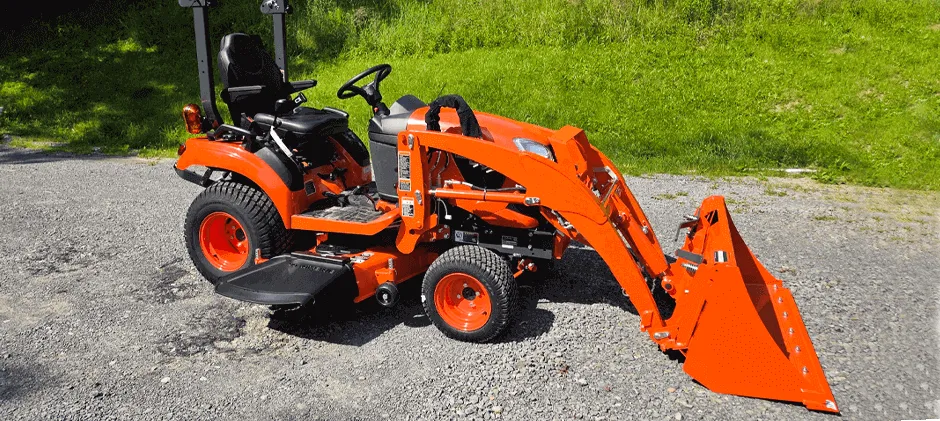
The BX2380 is Kubota’s popular 23-horsepower sub-compact tractor, part of the BX80 series built from 2015 to 2021. These versatile machines handle everything from mowing and landscaping to light farming and property maintenance. Understanding their filter and fluid requirements is essential for proper ownership.
The heart of BX2380 maintenance is regular engine oil and filter changes. The Kubota D902-E4 diesel engine is a robust three-cylinder design, but it demands clean oil and proper filtration for long life.
Capacity: 2.5 quarts (2.4 liters) with filter change
Oil specification: Kubota-approved 15W-40 diesel engine oil meeting API CI-4 or higher
Kubota recommends using 15W-40 multi-viscosity diesel engine oil for most operating conditions. This viscosity provides adequate protection from -10°F to 100°F+. For extreme cold (below -10°F), use 10W-30. For sustained operation above 100°F, 20W-50 is acceptable.
Use diesel-rated oil meeting API CI-4, CJ-4, or CK-4 specifications. These oils have the additive package required for diesel engines, including detergents, dispersants, and anti-wear compounds. Never use straight automotive motor oil—it lacks the protection diesel engines need.
Synthetic oil is acceptable and provides better protection in temperature extremes, but follow the same change intervals unless you implement an oil analysis program. Synthetic oil doesn’t eliminate the need for regular changes—contaminants and additive depletion still occur.
Part number: HH150-32430 or HH150-32094 (both fit BX2380)
Alternative aftermarket numbers: Cross-references to multiple aftermarket brands
The engine oil filter is a spin-on cartridge that mounts on the left side of the engine near the oil pan. This small filter is critical—it captures wear metals, carbon particles, and contaminants preventing them from circulating through engine bearings, cylinder walls, and the turbo (if equipped). Change the oil filter every time you change oil. Never reuse an oil filter to save a few dollars—contaminated filters dump their trapped particles back into fresh oil when you start the engine. Cheap insurance is what an oil filter represents.
Diesel fuel contamination damages injection pumps and injectors, costing thousands in repairs. The fuel filter and water separator are your first line of defense.
The primary fuel filter is a combination filter and water separator mounted under the hood on the left side of the engine. It removes water and particles from diesel fuel before it reaches the injection pump. This filter is critical—water and contaminants destroy injection components. Some BX2380 configurations include a secondary inline filter providing additional filtration. Check your parts diagram or count the filters on your compact tractor to determine if you have one or two fuel filters.
Check the fuel water separator bowl weekly or every 25 hours of operation. Look through the clear bowl—water settles below the diesel fuel and appears as a distinct layer. If you see water, drain it immediately by opening the drain valve. Water in diesel comes from condensation in the fuel tank (especially in humid climates or when the tank sits partially full) or contaminated fuel from the supplier. Never operate with water in the fuel—drain it every time you see it.
The BX2380 uses an integrated hydrostatic transmission and hydraulic system with shared fluid. This system powers the transmission, three-point hitch, loader, power steering, and remote hydraulics.
Capacity: 4.5 gallons (17 liters) total system capacity
Fluid specification: Kubota Super UDT2 universal tractor transmission fluid
Kubota specifies Super UDT2 for the BX2380 hydrostatic transmission and hydraulics. This is a premium multi-viscosity fluid engineered specifically for Kubota’s hydrostatic transmissions. It includes friction modifiers for wet brakes and clutches, anti-wear additives for hydraulic pumps, and viscosity suitable for hydrostatic drive units.
Don’t substitute generic hydraulic oil, ATF, or motor oil. The BX2380’s hydrostatic transmission requires the specific properties of Super UDT2 for proper operation. Wrong fluid causes sluggish response, whining noises, overheating, and premature transmission failure.
Alternative fluids meeting Kubota UDT specifications include some agricultural multi-purpose transmission fluids, but verify explicit Kubota UDT compatibility on the label. When in doubt, use genuine Kubota Super UDT2.
Part number: HH3A0-82623 or TC020-16320 (both fit BX2380, check your configuration)
Service interval: 400 hours or annually
The hydraulic filter is a spin-on cartridge located on the right side of the transmission case beneath the operator platform. It filters fluid protecting pumps, valves, cylinders, and transmission components from abrasive wear.
Change the hydraulic filter every 400 hours or annually. This filter doesn’t require changing as frequently as the engine oil filter because hydraulic fluid operates in a cleaner environment and doesn’t deal with combustion byproducts.
To change, position a drain pan under the filter—expect about a quart to spill. Use a filter wrench to remove it by turning counterclockwise. Clean the mounting surface.
Fill the new filter about 1/3 full with Super UDT2 and coat the gasket with fluid. Thread it on by hand until the gasket contacts, then tighten 3/4 turn more by hand.
Start the engine and let it idle while watching for leaks. Shut off and check the hydraulic fluid level, adding if necessary.
Change the hydraulic/transmission fluid every 400 hours or annually. This service is more involved than engine oil changes and requires about 5 gallons of expensive Super UDT2, so many owners have it done professionally.
To change it yourself:
Part number: 3C081-26220
Service interval: Clean at every hydraulic fluid change
The suction screen is a metal mesh filter in the bottom of the hydraulic reservoir that pre-filters fluid entering the hydraulic pump. It’s often forgotten but critical—a clogged screen starves the pump, causing cavitation, noise, and damage.
Access the screen by removing the hydraulic reservoir access cover (multiple bolts on top of the reservoir on the left side of the tractor). Pull the screen straight up to remove it.
Clean it thoroughly in a solvent and blow dry with compressed air. Inspect for tears or damage. Replace it if damaged. Reinstall, ensuring it seats properly.
Clean air is essential for diesel engine longevity. The air filter prevents dust, chaff, pollen, and debris from entering the engine, where they cause cylinder and ring wear.
Outer element: Part number 6C060-99410
Inner element: Part number 6C050-99410
Service interval: Clean/inspect every 50-100 hours; replace every 200-400 hours
The BX2380 uses a dual-element dry air filter. The outer element gets dirty and requires regular service. The inner safety element stays in place and is only replaced when the outer element is damaged or at extended intervals (every other outer element change).
Inspect the air filter restriction indicator regularly. When the red flag appears in the indicator window, service the air filter. Don’t wait for the indicator—if you operate in dusty conditions, inspect and clean the filter every 50 hours.
Remove the air filter cover clips and lift off the cover. Carefully remove the outer element without bumping it against the housing.
Inspect the element for damage—tears, crushed pleats, damaged seal. If damaged, replace it. If intact, you can clean it with compressed air (blow from inside out at low pressure, under 30 PSI) or replace it. Replacement is recommended because cleaning never fully restores filtering capacity and elements aren’t expensive.
Never wash paper air filter elements with water or solvents—this damages the filter media.
Inspect the inner safety element but don’t remove it unless you’re replacing it. If the outer element was damaged, replace the inner element too. Replace the inner element every 400 hours or every other outer element change.
Install the new or cleaned outer element, ensuring it seats properly against the seal. Reinstall the cover and clips. Reset the restriction indicator.
The cooling system keeps your BX2380 engine at proper operating temperature, preventing overheating damage.
Capacity: 2.1 quarts (2 liters) total system including radiator, engine, and hoses
Coolant specification: Kubota Super Coolant or equivalent ethylene glycol coolant
Concentration: 50/50 coolant and distilled water for -34°F freeze protection
Use Kubota Super Coolant or a quality universal ethylene glycol coolant meeting ASTM D3306 specifications. Mix 50/50 with distilled water—never use tap water because minerals cause corrosion and scaling.
Pre-mixed 50/50 coolant is available and convenient—you pour it directly without mixing. Whether you mix your own or buy pre-mixed, the result is the same: 50% coolant, 50% water.
Change coolant every 2 years or 400 hours regardless of condition. Coolant degrades over time, losing corrosion inhibitors, even if it still provides freeze protection.
With the engine cold, remove the radiator cap (on top of the radiator at the front of the tractor). Open the radiator drain cock at the bottom and drain coolant into a catch container. Dispose of used coolant properly—it’s toxic to animals but sweet-tasting, making it dangerous.
After draining, close the drain cock. Fill the system with clean water and run the engine until it reaches operating temperature. Drain the water and repeat. This flushes old coolant and contaminants.
Add fresh 50/50 coolant through the radiator filler, pouring slowly so trapped air can escape. Continue until the level reaches the base of the filler neck.
Start the engine with the radiator cap off and let it warm to operating temperature. Watch the coolant level and add as needed as air purges from the system. Once the thermostat opens (coolant starts circulating visibly in the radiator), the system is bled.
Shut off the engine, let it cool slightly, top off the radiator, and install the cap. Fill the overflow reservoir to the FULL mark.
The BX2380 has multiple grease fittings requiring regular lubrication to prevent wear in pivot points, bearings, and joints.
Type: Multi-purpose lithium-based NLGI Grade 2 grease
Kubota part number: Various sizes available through dealers
Service interval: Every 50 hours or monthly
Use a quality multi-purpose grease suitable for agricultural equipment. Kubota sells their own branded grease, but any quality NLGI Grade 2 lithium grease works. Avoid mixing different grease types.
The BX2380 has these grease fittings requiring 50-hour service:
Front axle pivot – One fitting at the center pivot where the front axle attaches to the frame. Pump until you see grease purge from the seals.
Front wheel spindles – One fitting per front hub. Pump 3-5 shots per side.
Loader pivot pins – Multiple fittings on the loader attachment points and the bucket pivot. The exact number depends on your loader model. Grease all points thoroughly.
Three-point hitch linkage – Grease fittings on lift arm ball joints and leveling mechanisms. Pump until purge.
Mower deck spindles – If you have a Kubota mid-mount or rear-mount mower, the blade spindles have grease fittings. Pump 2-3 shots per spindle.
PTO shaft – Apply grease to the PTO output shaft splines to prevent wear and allow implement drivelines to slide freely.
Always use a grease gun and pump grease until you see old grease purge from the seals. This confirms fresh grease has reached the bearing surfaces, displacing old grease and contaminants.
The BX2380 has front and rear differentials that require periodic fluid service.
Capacity: Approximately 1.2 quarts (1.1 liters)
Fluid specification: Kubota Super UDT2 (same as hydraulic/transmission fluid)
Service interval: 400 hours or annually
The rear differential shares fluid with the transmission and hydraulic system on the BX2380, so when you service the hydraulic/transmission fluid, you’re servicing the rear differential simultaneously.
Capacity: Approximately 0.9 quarts (0.85 liters)
Fluid specification: SAE 80W-90 gear oil or Kubota Super UDT2
Service interval: 400 hours or annually
Drain plug location: Bottom of front axle center housing
Fill plug location: Side of front axle center housing
If your BX2380 has four-wheel drive, service the front differential every 400 hours. Locate the drain and fill plugs on the front axle center housing. Remove the fill plug first (to verify you can remove it before draining—don’t drain if you can’t refill).
Remove the drain plug and let the fluid drain completely. Clean the magnetic drain plug and reinstall it.
Fill through the fill plug opening until fluid runs out—this indicates the proper level. Reinstall the fill plug.
Use 80W-90 gear oil or Kubota Super UDT2. Some operators prefer Super UDT2 for year-round use because it flows better in cold weather than 80W-90.
| Component | Capacity | Part Number | Specification | Interval |
| Engine Oil | 2.5 qts | – | 15W-40 CI-4+ | 200 hrs/Annual |
| Oil Filter | – | HH150-32430 | Kubota OEM | Every oil change |
| Fuel Filter | – | HH660-36060 | Kubota OEM | 200 hrs/Annual |
| Air Filter (Outer) | – | 6C060-99410 | Kubota OEM | 200-400 hrs |
| Air Filter (Inner) | – | 6C050-99410 | Kubota OEM | 400 hrs |
| Hydraulic Filter | – | HH3A0-82623 | Kubota OEM | 400 hrs/Annual |
| Hydraulic/Trans Fluid | 4.5 gal | – | Super UDT2 | 400 hrs/Annual |
| Coolant | 2.1 qts | – | Super Coolant 50/50 | 400 hrs/2 Years |
| Front Diff Fluid | 0.9 qts | – | 80W-90 or UDT2 | 400 hrs/Annual |
| Grease | As needed | – | NLGI #2 Lithium | 50 hrs/Monthly |
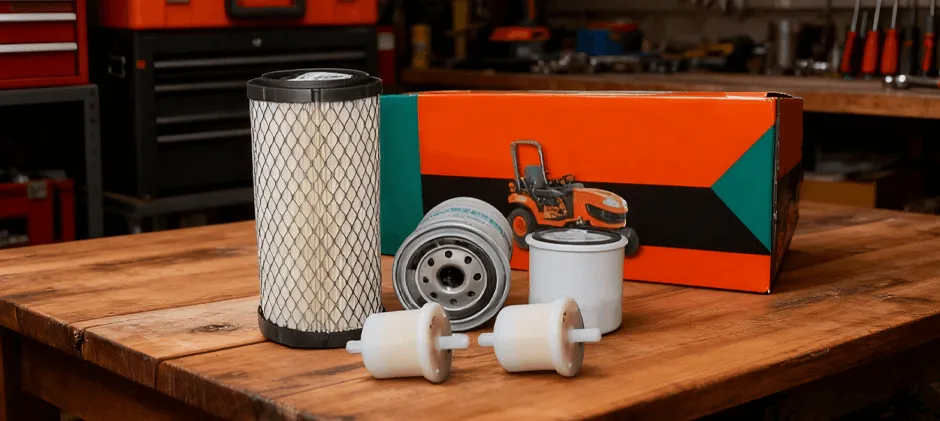
Between service intervals, monitor fluid condition to catch problems early.
Pull the dipstick and examine the oil. Fresh oil is amber and transparent. As it ages, it darkens but should remain relatively clear. Very dark or black oil indicates it’s time for a change. Milky appearance means water contamination requiring immediate service.
Pull a sample from the hydraulic reservoir through the dipstick tube. Put a few drops on white paper towel. It should be amber to light brown and transparent. Dark or opaque fluid, metallic particles, or burnt smell indicate problems requiring immediate fluid change.
Check coolant color and smell. It should be bright green (or whatever color your coolant is when fresh) and have minimal odor. Brown or rusty coolant indicates corrosion and contamination. Sweet smell is normal; acidic or chemical smell indicates degraded coolant.
While both are universal tractor transmission fluids, Kubota specifically requires Super UDT2 for BX hydrostatic transmissions. Using non-approved fluids may cause performance issues and could void your warranty. Stick with Super UDT2 or fluids explicitly stating Kubota UDT compatibility.
Follow the 400-hour/annual interval. Super UDT2 is expensive, but hydraulic pump and transmission replacement is far more expensive. Degraded fluid causes premature wear. Consider the annual fluid change insurance against a $3,000+ transmission failure.
Not without oil analysis confirming it’s safe. Synthetic oil resists thermal breakdown better than conventional oil, but it still accumulates contaminants and depletes additives. Without oil analysis, follow the 200-hour interval regardless of oil type.
Automotive motor oil lacks the additive package diesel engines need. It doesn’t handle combustion byproducts, heat, or soot as well. You’ll experience accelerated wear, sludge buildup, and shortened engine life. Always use diesel-rated oil meeting CI-4 or higher specifications.
Milky hydraulic fluid means water contamination, usually from condensation in the reservoir or a damaged seal allowing coolant to enter. Water destroys hydraulic pumps. Drain the fluid immediately, identify and fix the water source, and refill with fresh Super UDT2.
Using the correct filters and fluids keeps your Kubota BX2380 operating reliably for thousands of hours. Quality parts at fair prices make maintenance affordable. MechLink stocks filters and maintenance parts for your BX2380 at competitive prices. We provide what you need to maintain your Kubota properly.