
2026-11-12
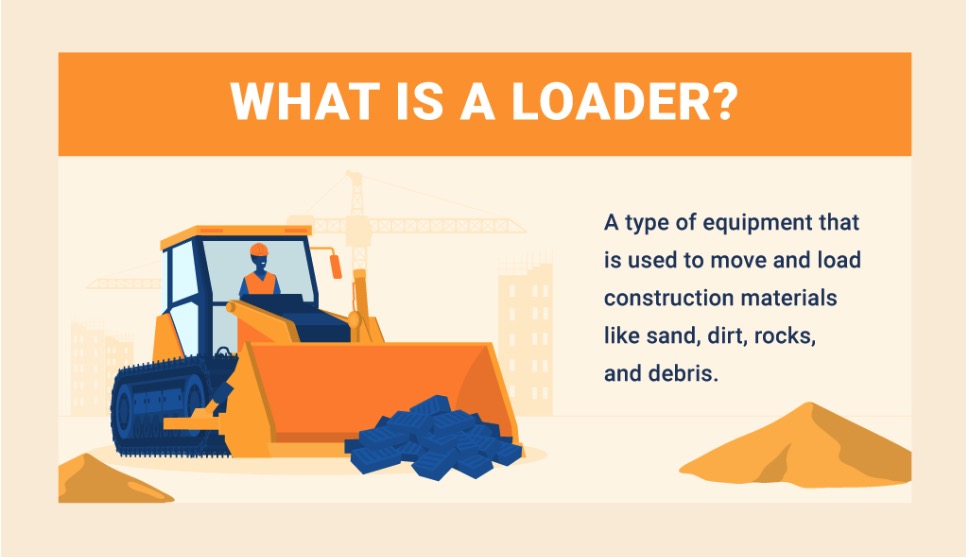
A loader exists for one continuous loop of work: take material from where it sits, carry it, release it where it is needed. Rock, soil, sand, aggregate, pallets, snow and demolition rubble all move through some version of that loop, and because the loop changes so much from site to site, the machines built around it no longer look related to one another.
The confusion usually starts at the rental counter. Backhoes, wheel loaders, skid steers and bulldozers all get called "loaders" by somebody, even though a dozer does almost none of the loading. The sections below group the four families by the problem they solve on site rather than by catalogue order, because that is the order in which the decision is really made.
Before comparing any two models, settle the working conditions. Most mismatches trace back to one of these four answers being wrong:
The backhoe loader carries a front loader bucket and a rear digging arm on a compact chassis. That arrangement is why it survives on sites where a single-purpose machine would sit idle: the same unit can dig, scoop, carry and backfill without a trailer move between tasks. Its small frame also lets an operator work precisely in gardens, footpaths and service corridors where a full-size loader would be more of a liability than an asset.
The rear arm does the excavating, the front bucket does the handling, and the operator simply turns around. Add a quick-coupler and the envelope widens further, which is the real argument for the class on mixed work.
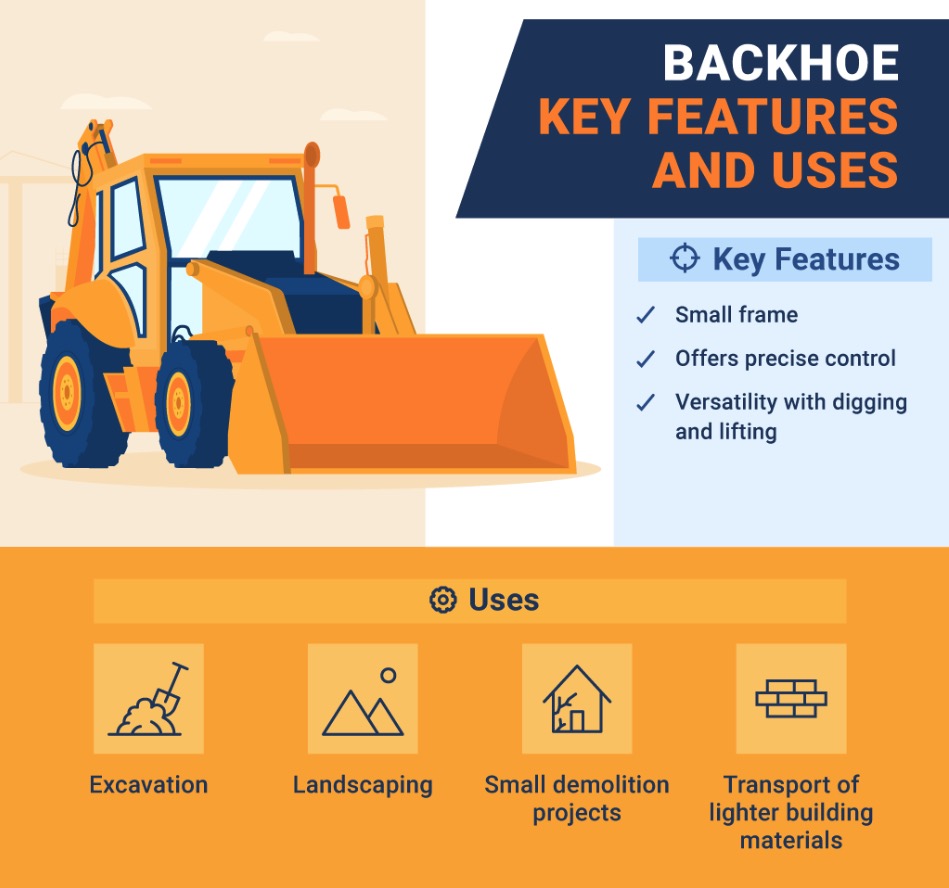
The rear end is where a backhoe's flexibility is concentrated. A standard digging bucket moves heavy objects or relocates spoil; a breaker or hammer, fitted with a straight chisel point, breaks hard ground and pavement so the bucket can follow; a stump grinder clears trees without a separate crew; a grapple, shaped like a large claw, closes on objects and holds them steady while the machine travels. Each one replaces a machine that would otherwise have to be hired separately.
Two limits are worth stating plainly. A backhoe is not a high-production loading tool — its cycle is slower and its bucket smaller than a wheel loader of similar footprint. And on very soft or steep ground, its tyres and weight distribution are a poorer fit than a tracked machine. If the site is one long stockpile-to-truck cycle, this is the wrong family.
No other loader in this list carries as many available attachments as a skid steer, and that is the whole point of the class. It is compact, it turns within its own length by driving its wheels at different speeds, and it puts hydraulic power at the front where a tool can use it. On residential and commercial work where the machine must fit between a fence and a wall, that combination is hard to beat.
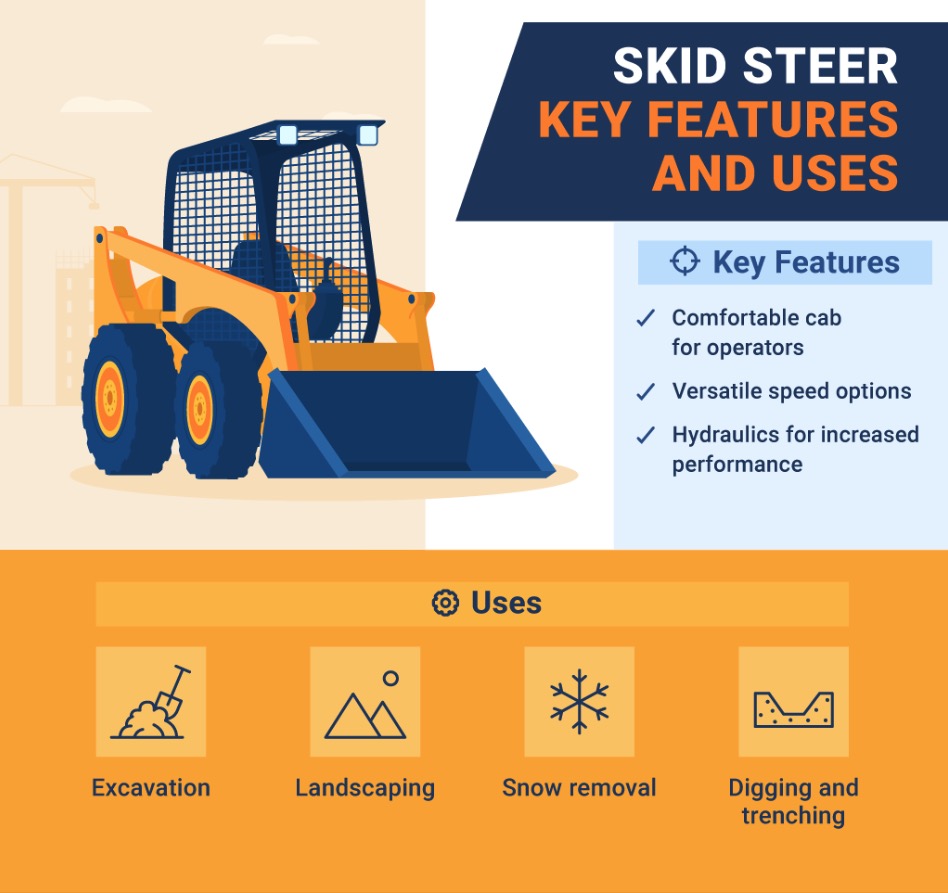
Skid steers are built in small, medium and large frames. Rated operating capacity and engine power rise together, so the choice comes down to how much the machine must lift, how much pushing force the task needs, and how narrow the access really is:
Site development, grading and demolition are the standard assignments. Snow removal with a bucket or blade, trenching and digging with an auger, backhoe or trencher attachment, and excavation support with rippers, tillers, tree spades and stump grinders all sit inside the same envelope. A skid steer loader is often the first machine on a residential site and the last to leave.
A bulldozer is a tracked or wheeled tractor with an upright blade at the front, and its job is to clear, shove and level ground rather than to lift material into a truck. It belongs in a loader article mainly because buyers compare it with loaders for the same clearing and grading packages. The blade pushes; there is no bucket cycle.
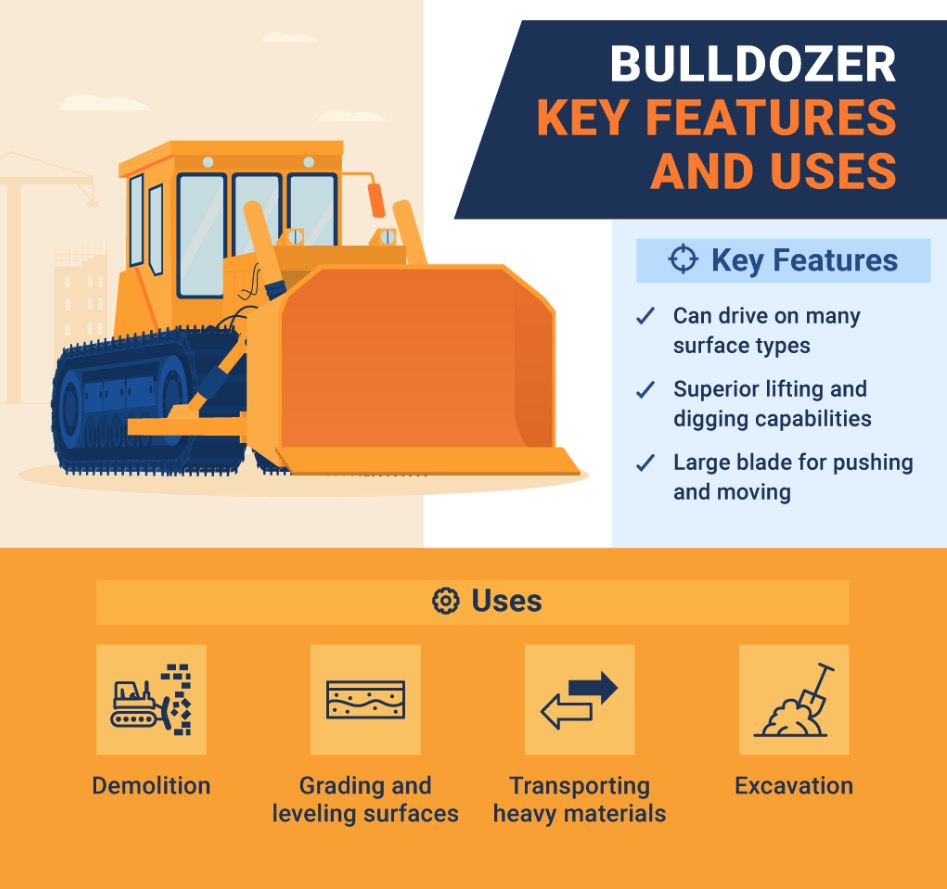
The undercarriage explains most of its behaviour. Wide tracks spread the machine's weight over a large contact area, which lowers ground pressure and keeps the dozer on the surface in sand and soft fill where a wheeled machine would dig itself in. That same grip is why a dozer can push a full blade of material uphill without spinning.
Terrain, required manoeuvrability and project scale decide which one fits:
Grading a site before construction or planting; clearing debris, brush and rock; pushing snow from roads, car parks and driveways; and backfilling trenches and excavations once the services are in. In each case the value is in moving material a short distance across the surface, not in loading it out.
A dozer has two working ends. At the rear, the ripper carries at least one shank that fractures and loosens hard ground before the blade arrives — useful ahead of landscaping or a foundation pour. At the front, the blade does the moving, and its shape decides what kind of moving it does well:
Wheel loaders — also sold as bucket loaders or front-end loaders — are built around volume and cycle speed. A large bucket, a stiff chassis and a drivetrain designed for repeated loading passes let them build road subgrade, strip a site, dig and carry heavy loads, or move dirt and debris at a rate the smaller classes cannot match. Recent drivetrain designs have pushed durability further, which matters when the machine spends its life in a stockpile.
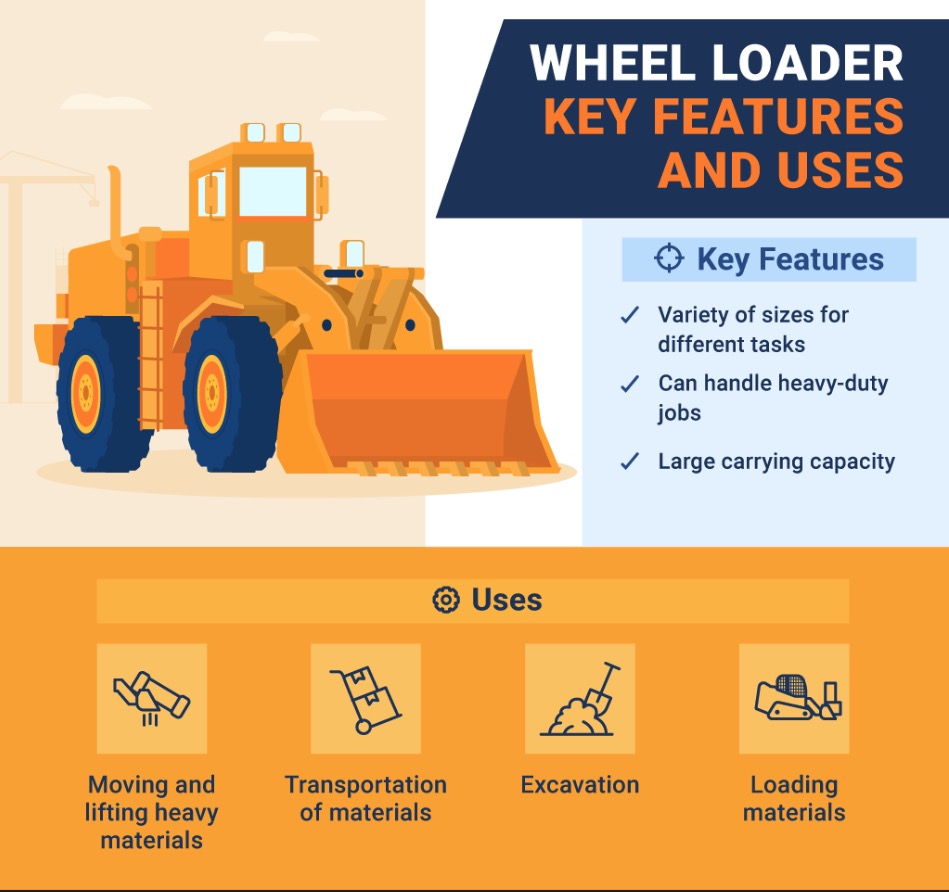
Wheel loaders are offered from compact to large. Bucket capacity, operating weight and engine power are the three numbers that separate them, and the right size is the smallest machine that still fills the truck in the time available.
Transporting building materials, pipe, bales, feed and waste; clearing sand, stone and brick rubble to open up a working area; handling timber at a logging landing after felling; and removing rock and earth at quarries and mining sites. The common thread is a short, repeated travel distance with a heavy payload.
Swapping the bucket for a specialist tool turns a single-purpose loader into a site utility machine:
Read the table as a set of trade-offs rather than a ranking. Each row gives up something to gain something else:
Whether the machine is new, used or rented, the same five checks catch most expensive surprises: attachment interface and hydraulic flow match the tools you own; tyres or tracks have enough life left for the ground conditions; the loader linkage and pins are tight; service records cover the hydraulic and drivetrain work; and the machine's width and weight suit your transport and site access.
Loaders and their attachments cover an unusual range of site work safely and efficiently, and renting or buying a used unit keeps the entry cost proportionate to the job. Clearing a site, moving material or preparing ground for planting all come down to the same decision: match the machine to the material, the space and the cycle.
MechLink lists used loaders, excavators and other construction equipment from established manufacturers, with the specification of each machine checked against the work it is being bought for. If the requirement is unusual, tell us the material, the access and the cycle and the team will look for a unit that fits. Browse the loader listings or the excavator range to compare what is currently available.

Heat, Rock and Uptime: Specifying a Caterpillar Excavator for Middle East Work
2026-11-12
Piledriver, Piling Rig or Rotary Drill? Telling the Piling Machine Family Apart
2026-11-12
What an Excavator Is Worth After Five Years - and How to Protect It
2026-11-11
How to Buy an Excavator: A Practical Guide
2026-11-11