MechLink Logo
Inicio  > Noticias  > Master warning light: what it means and what to do

Master warning light: what it means and what to do

2026-07-10

FacebookLinkedinTwitterWhatsapp

On most off-road machines, the Master Warning Light is not the failure itself. It’s the machine telling you: “There’s an alert/diagnostic message on the display you need to read.” The real answer is almost always in the monitor/cluster: an alert text, a fault/event code, and sometimes a severity level.

Safety note: If you also see a red STOP / Stop Engine light, have low oil pressure, overheat, experience major power loss, or hear abnormal noises—treat it as serious and follow the stop guidance below.

A 3-Step Checklist: What to Do First

1. Scan for Companion Lights (10 seconds): The Master Warning usually appears with other indicators. Look for:

  • Oil pressure, coolant temp, charging/voltage
  • Hydraulic oil temp / hydraulic filter restriction
  • Parking brake/travel lock/pilot lock
  • DPF/regen/emissions indicators (common on Tier 4)

This quick scan helps you decide if it’s a reminder vs. a high-risk situation.

2. Read the Monitor Message/Fault Code (30–60 seconds): Go into the display menus (names vary):

  • Messages / Alerts / Diagnostics / Events / Fault Codes
  • Record (or photograph):
  • Exact message text
  • Fault/event code (if shown)
  • Operating conditions (cold start vs warm, traveling vs digging, high RPM, after refuel, etc.)

3. Decide: Keep Working, Reduce Load, or Stop? Use this owner decision table:

What You See What It Usually Means What to Do
Red STOP/Stop Engine, low oil pressure, severe overheat, loud knock/squeal, major power loss High risk of damage or safety issue Safely stop (lower attachment, park stable, idle cooldown per manual) and call service
Master Warning + maintenance/regen/lockout reminder Often manageable Follow on-screen instructions; confirm it clears
Code/message repeats, comes back right after clearing, or says “sensor/circuit” Likely underlying electrical/sensor issue Record details and plan diagnostics; avoid “just clearing.”

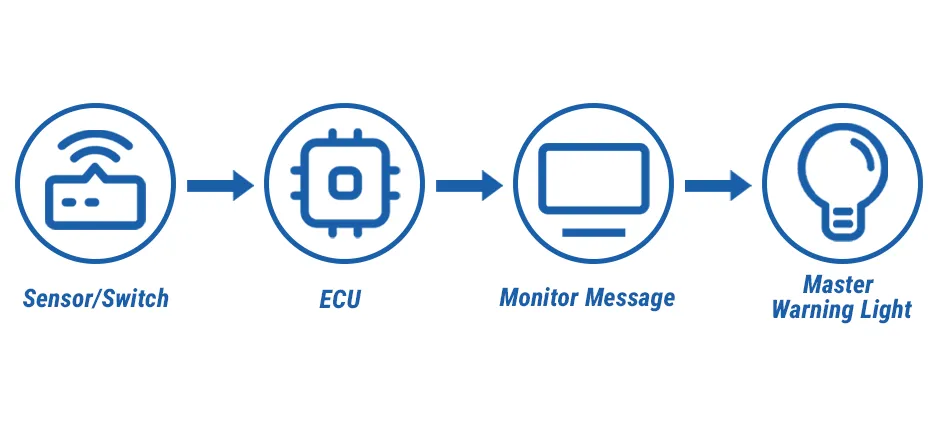
Flowchart illustrating the signal path from a sensor or switch to the ECU, triggering a monitor message and the master warning light.

Why Is the Master Warning Light On? 5 Common Reasons

Across most brands, the light is often triggered by one of these five situations:

  • Maintenance Due: A service interval, filter replacement, or inspection is required.
  • Fluid Level Warning: Coolant, hydraulic oil, DEF, or another fluid is low.
  • DPF/Regen Messages: The diesel particulate filter needs regeneration, conditions for regen are not met, or a regen has failed.
  • Interlock/Operation Logic: The parking brake, pilot lock, seat bar, or travel lock is engaged when it shouldn’t be (or vice-versa).
  • Electrical/Sensor Signal Out of Range: This includes low voltage, an intermittent connector, or a pressure/temperature sensor signal that is not plausible.

How to Check It Yourself: 5 Safe Inspections

(Always follow your operator’s manual and site safety rules.)

  1. Check Fluids: Verify engine oil, coolant, hydraulic oil, fuel, and DEF levels are correct (check in the proper machine posture/temperature per the manual).
  2. Check Filters: Look at the air filter restriction indicator, drain the fuel water separator, and check hydraulic/return filter status if available.
  3. Check Basic Electrical: Ensure battery terminals are tight and clean, ground straps are intact, and look for visible harness rub-through near moving parts.
  4. Check Regen Conditions: If a regen is prompted, confirm you are meeting the required RPM, temperature, and parking status.
  5. Check the Environment: Heavy dust can clog air filters quickly. Extreme cold can trigger warm-up or heating-related prompts.

What Information Should You Record for Service?

Use this as a template to give service technicians or parts suppliers the best possible information:

  1. Brand/Model + Serial Number
  2. Alert Text + Fault/Event Code (a photo is best)
  3. What You Were Doing When It Happened (RPM, load, traveling vs. working)
  4. Recent Changes: Any recent oil/filter service, refueling, pressure washing, welding, or battery disconnects.
  5. Symptoms: Any smoke, overheating, sluggish hydraulics, or unusual noises.

What Parts Commonly Fix the Issue?

The master light itself rarely fails. The problem is almost always one of the components that trigger it:

  • Hydraulic Alerts: Pressure sensors, temp sensors, hydraulic filters, solenoid circuits, connectors.
  • Engine/Emissions Alerts: DPF differential pressure sensors, EGT sensors, DEF level/quality sensors.
  • Water in Fuel Alerts: Water-in-fuel sensor, fuel filters, and drain components.
  • Voltage/Charging Alerts: Batteries, cables/grounds, alternator/regulator, relays.
  • Interlock Alerts: Seat switch, pilot lock switch, parking brake switch.

Frequently Asked Questions

Q: Does a Master Warning Light mean I must shut down immediately?

A: Not by itself. You must read the monitor message. If you also have a red STOP light, low oil pressure, or an overheating warning, then yes, you should stop safely and investigate.

Q: Can I reset/clear it to keep working?

A: Don’t rely on clearing the code. On most machines, the master light will only turn off when the root cause is fixed. Repeatedly clearing codes can hide a developing issue and lead to much bigger downtime later.

Q: I only see a message, no code—what now?

A: The message text is still very valuable. Photograph the message, note the operating conditions, and monitor whether it returns. This information is crucial for diagnosis.

Final Words

In conclusion, the Master Warning Light is not a reason to panic—it’s your machine’s request for your attention. The most critical takeaway is to always read the message on the display monitor.
Don’t let a simple alert turn into a shutdown. Explore MechLink high-quality parts today to find the right sensors, filters, and electrical parts to fix the root cause of any warning. Resolve your warning light issue and get your machine back to work with confidence.
ULTIMO LANZAMIENTO

Mechlink:Fuel level sensor "a" circuit high: meaning and fixes
Product knowledge

Fuel level sensor "a" circuit high: meaning and fixes

2026-07-10

Mechlink:Which oil is best for your tractor diesel engines?
Product knowledge

Which oil is best for your tractor diesel engines?

2026-07-09

Mechlink:Master warning light hyundai: what it means and what to do next
Product knowledge

Master warning light hyundai: what it means and what to do next

2026-07-09

Mechlink:John deere hydraulic system diagram
Product knowledge

John deere hydraulic system diagram

2026-07-08