
2026-07-13
Missing the first workable window can cost us days of field progress, while planting too early can mean cold-soil stress, uneven stands, and rework when the weather flips. This guide breaks down how to time spring planting in 2026 using soil temperature, frost risk, and field trafficability—and how to line up tractors, loaders, and UTVs so the plan survives real-world conditions.
Timing matters because crops don’t “read the calendar”—they react to heat, moisture, and oxygen in the seed zone. When we hit the right window, we get faster emergence, more uniform stands, and fewer passes. When we miss it, we often pay in at least one of these areas:
Cold soils slow germination. Wet soils reduce oxygen, and compaction tightens the seedbed. The result is staggered emergence, which creates plants at different growth stages competing for light and nutrients.
Planting before the seedbed is ready increases the odds of:
In off-road operations, spring isn’t only planting—it’s also road/drive maintenance, material handling, fertilizer logistics, and equipment setup. If we don’t plan spring planting timing, we end up stacking tasks into the same few days, which drives mistakes and breakdowns.
When soil is borderline, we tend to make “one more pass.” That’s where downtime starts: plugged filters from dust bursts, overheating from packed radiator screens, and hydraulic leaks that appear under sustained load.
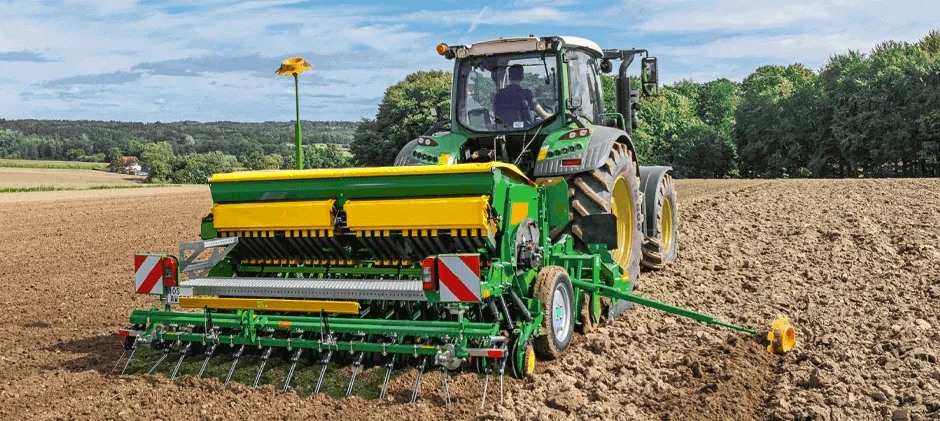
For most row crops and vegetables, soil temperature at planting depth is the most useful number. Air temperature can swing 20–30°F (11–17°C) in a day; soil changes more slowly and better predicts emergence.
Below is a planning table we can use to decide “wait vs go.” Exact targets vary by hybrid/variety and local conditions, but these ranges are widely used because they match real germination behavior.
| Crop group | Typical “go” soil temp | What happens if you plant colder | Notes for off-road ops |
| Cool-season greens/peas / small grains | 40–50°F (4–10°C) | Slow emergence, higher disease risk in saturated soils | Good fit for early windows if fields are trafficable |
| Potato / many cool-season vegetables | 45–55°F (7–13°C) | Delayed sprout, uneven stand | Avoid working wet soils—compaction follows you all year |
| Corn (common benchmark) | 50°F+ (10°C+) and rising | Uneven emergence, seedling stress | Cold rain after planting is a classic setback |
| Soybean / warm legumes | 55°F+ (13°C+) | Slower emergence, more seedling issues | Better to plant into “fit” soil than chase early dates |
| Warm-season vegetables | 60°F+ (16°C+) | Poor germination, rot in wet soil | Use covers/raised beds only if you can manage moisture |
| Tender crops (high heat demand) | 65–70°F+ (18–21°C+) | Weak stands, long delays | Timing is everything—don’t let a brief warm spell fool you |
Even if soil temp is “right,” you still need:
A useful field test: if soil forms a tight ribbon and stays glossy when squeezed, it’s usually too wet to work without smearing and compaction.
To plan spring planting, you need a crop strategy that matches our region and workload—not just agronomy in a vacuum.
Cool-season crops can handle lower soil temperatures, but they still hate saturated, oxygen-poor conditions. That means our limiting factor is often the field condition, not the temperature.
Cool-season planting tends to work when:
Warm-season crops reward patience. A stand that emerges evenly often outperforms an early stand that emerges unevenly—especially if the early stand fights cold rain and slow root growth.
Warm-season timing tends to work when:
If you’re balancing multiple fields and multiple machines, this sequence reduces risk:
This is where loaders and UTVs quietly decide whether planting stays on schedule.
Even the best planting window fails if equipment isn’t ready. Before the push begins, you want a short readiness check that matches off-road reality: dust, long hours, stop-and-go loading, and changing operators.
Power + cooling
Fluids + filtration
Hydraulics + hitch + steering
Tires/tracks
If you need to replace worn items or prep machines quickly, it helps to source by equipment type:
In off-road conditions, these small items stop working more often than major components:
If you treat the tractor + loader + UTV group as one system, you protect the schedule—and that’s the point of timing spring planting in the first place.
We can’t control spring weather in 2026, but we can control how we decide “go or wait.” The most reliable approach is to base spring planting on soil temperature at depth, 3-day trends, and field fit—then back it up with equipment readiness so we can capitalize on the first real window.
Ultimate guide to choosing the best engine oil filter for tractor
2026-09-20
How much does a ford f-150 weigh? 2026 complete guide
2026-09-20
Do diesel engines have spark plugs?
2026-09-19
How to choose the right connecting rod bearing?
2026-09-19