
2026-09-08
Bobcat warning lights help you know when something is wrong, when maintenance is needed, or when a system is turned on. If you know these symbols, you can react faster, avoid bigger damage, and stay safe on the job site. This guide explains the most important bobcat warning light symbols meaning in simple words.
The color is your first hint. Bobcat uses colors to show how serious the problem is.
Red means stop now. A red light indicates a serious problem that requires your immediate attention. Continuing to operate the machine can cause catastrophic damage or create a severe safety risk.
When you see a red light, your immediate action depends on the specific warning symbol. The two most critical red warnings are for engine temperature and oil pressure, and they require different responses.
If the light is Engine Coolant Temperature:
This symbol looks like a thermometer in water.
If the light is Engine Oil Pressure:
This symbol looks like an old oil can.
Yellow (amber) means warning—fix soon.
This is often a problem that is not an emergency yet, or it may be a service reminder.
If you see a yellow light:
Blue and green lights are usually just information.
They often mean a system is ON, not broken.
Examples:
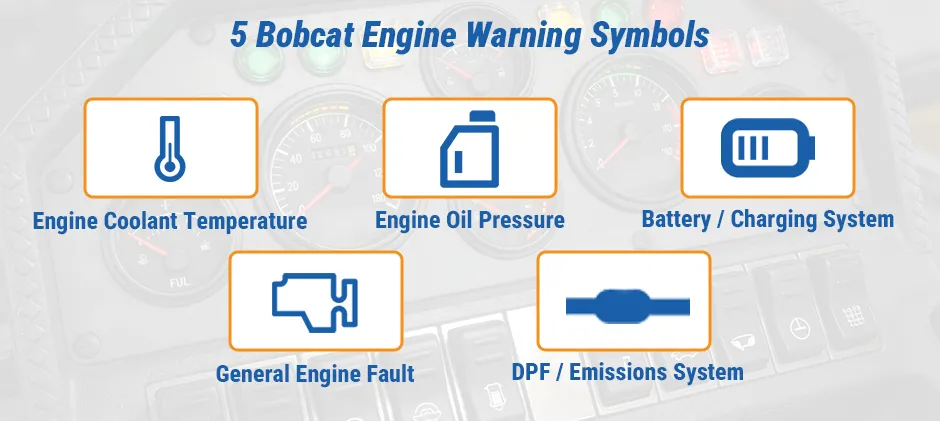
Engine warnings matter most because engine damage can get expensive very fast.
1. Engine Coolant Temperature: This symbol often looks like a thermometer in water. It means the engine is too hot.
2. Engine Oil Pressure: This symbol looks like an old oil can. It means the oil pressure is too low.
3. Battery / Charging System: A battery symbol means the charging system may not be working.
4. General Engine Fault: Often shown as an engine outline (“check engine”). The computer found a problem.
5. DPF / Emissions System: A DPF light means the machine needs to clean the filter (regeneration) or there is an emissions issue.
Hydraulics move the machine and power attachments. If hydraulics are unhealthy, performance drops, and parts can fail.
A high hydraulic oil temperature symbol means the hydraulic oil is too hot. Hot oil does not protect parts well and can damage hoses, seals, and pumps.
What to do:
A hydraulic pressure warning light means the pressure is not where it should be.
Common causes:
What to do: Stop using hydraulics to prevent damage. Look for visible leaks and damaged hoses. Check the filter/service indicators if your machine has them.
A calm, step-by-step check is usually the fastest way.
1. Look at the color.
2. Notice how the machine feels.
3. Check the display for fault codes (if available).
4. Use your operator’s manual.
Call a technician if:
A pro has the tools to read deeper codes and test sensors, wiring, and pressure.
Simple habits prevent many warnings.
Good maintenance keeps most warning lights off. But if a warning light points to a bad part—like a sensor, filter, belt, alternator, or hydraulic component— order the right part from MechLink to fix it quickly to avoid bigger damage. Use parts that fit correctly and match your machine’s needs, and always follow the operator’s manual for your exact model.

New holland workmaster 50 complete model hub: specs, parts & review 2026
2026-11-10
Bobcat skid steer weight & specs chart
2026-11-10
Top 10 must-have attachments for kubota tractor
2026-11-09
How much does an alternator cost to replace?
2026-11-09