2026-09-01
Changing the engine oil and the oil filter is one of the most basic jobs to do. Wondering where the oil filter is on your machine? It can be in different spots for different models, though. This guide’ll help you find and spot your engine oil filter in no time.
An engine oil filter’s exact spot depends on the brand and model, but it’s usually in a pretty predictable place. You’ll almost always find it bolted right to the engine block. Here’s where to look on three common types of heavy equipment, starting with excavators.
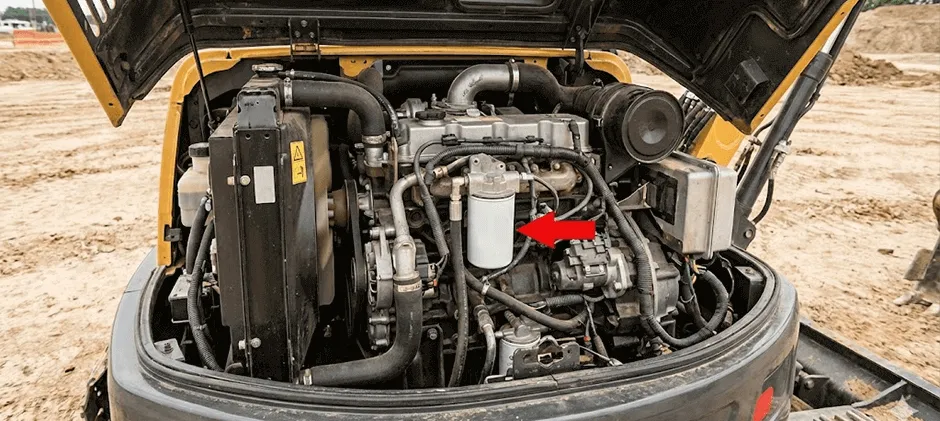
The oil filter’s usually on the side of the engine, and you can get to it through one of the main service doors on the back or side of the machine’s upper body. Open the biggest access panel to see the engine block, then check the engine side—most often right below the exhaust manifold. You’re looking for a cylindrical canister, mounted either straight up and down or sideways. On a lot of models, it’s painted a specific color (black, blue, white, things like that) and sits right in the middle of the other engine parts.
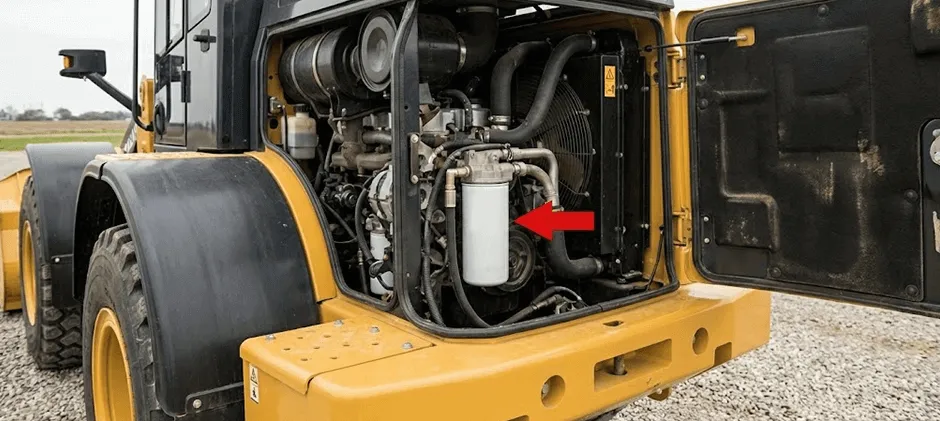
Wheel loaders are just like excavators here—their oil filter’s in the main engine bay, and you get to it by lifting the big hood at the back of the machine. Loader engines are almost always mounted front to back, so the filter’s usually on either the left or right side of the engine block. They put it in an easy spot on purpose, to make regular checks and changes simpler. Just look for that familiar canister shape on the lower half of the engine.
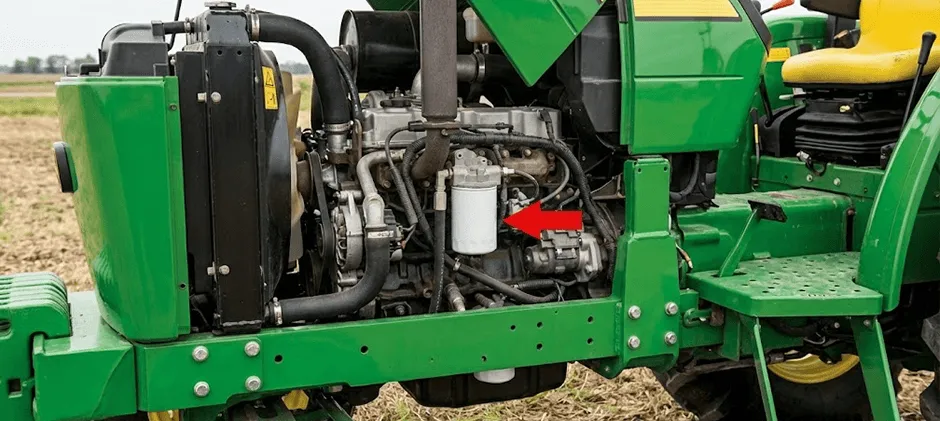
For most farm and utility tractors, the oil filter’s on the side of the engine block—just open the engine cowl or side panel to get to it. On some models, it’s down low, right by the oil pan. Make sure you don’t mix it up with the hydraulic or transmission filters, though—those are usually bigger and sit further back on the tractor’s frame, near the rear axle.
Some older or smaller tractors have a canister-style filter—you know, the kind mechanics call a “bullet head with a big cap screw.” For this type, you gotta unscrew the bottom bolt to drop the housing and get to the filter element inside. But most new machines use the simpler spin-on filters instead.
Even if you have a rough idea where the oil filter is, the engine bay’s packed with all kinds of parts. Follow these simple steps, and you’ll find it faster and more easily.
| Filter Type | Primary Function | Typical Location | Distinguishing Features |
| Engine Oil Filter | Cleans contaminants from engine lubricating oil. | Directly on the engine block, often near the oil pan. | Medium size. Usually labeled “Engine Oil Filter.” May have the engine manufacturer’s branding. |
| Fuel Filter | Removes water and debris from diesel fuel. | Along the fuel line, between the fuel tank and the engine. Often has a water separator bowl at the bottom. | Smaller and slimmer than the oil filter. Maybe in a set of two (primary and secondary). Often has a drain valve (petcock) at the bottom. |
| Hydraulic Filter | Cleans the hydraulic fluid for booms, buckets, etc. | Near the hydraulic tank or in-line with the main hydraulic pump. | Often the largest filter on the machine. Sometimes a canister type inside a permanent housing. Labeled “Hydraulic.” |
| Transmission Filter | Cleans oil for the machine’s transmission. | On or near the transmission housing, separate from the engine. | Similar in size to the oil filter, but its location is the key differentiator. Found on the drivetrain, not the engine block. |
| Engine Air Filter | Cleans air entering the engine for combustion. | In a large plastic or metal housing connected to the engine’s air intake. | Not a spin-on canister. It’s a large, cylindrical or rectangular paper element inside a dedicated housing. |
A lot of people ask if oil flows from the inside out or the outside in through the filter. And for over 99% of spin-on filters on heavy machines, it’s outside in every time.
This design’s made this way on purpose, and it works really well. Here’s how it goes step by step:
This outside-in flow is super important. It uses the maximum surface area for filtering, and the metal center tube with holes supports the filter material—stopping it from caving in under the high pressure of the engine’s oil system.
The rule’s simple and works for just about everything: Righty-Tighty, Lefty-Loosey. To take off the oil filter, you turn it counter-clockwise (to the left). Easy rule, but it can be tough to do in practice. Filters are almost always in tight spots, and they get stuck fast from engine heat cycles and being screwed on too tightly. Here’s how to get it off—different ways:
Knowing where your oil filter is at is a key part of keeping your engine in good shape. If you can’t find it, check your machine’s owner’s manual or ask a pro mechanic for help. And remember to change the oil filter regularly—it’s how you keep your engine running well and working its best. Pick up the right filter for your machine and brand at MechLink.