
2026-03-17
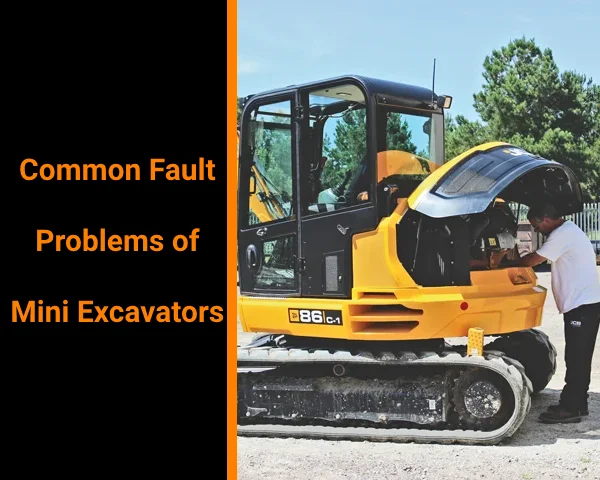
In today’s increasingly busy environment of construction projects, infrastructure renovation and landscape construction, mini excavators have become an indispensable construction tool on site. Although it is small in size, it has powerful operating capabilities and is suitable for narrow and complex work scenes – from urban road maintenance, earthwork operations in residential areas, to rural canal excavation and landscaping. For many mini and medium-sized construction units, the high cost-effectiveness and convenience of small excavators make them the first choice on the mechanical equipment procurement list.
However, just as cars need maintenance and airplanes need overhaul, mini excavators are no exception. Frequent operations, high temperatures, dusty environments, and untrained operations will cause accelerated wear of various parts of the equipment and cause various faults. Many users face difficulties in starting, insufficient power, hydraulic failure, track deviation and other problems during use. The high maintenance cost affects the progress of the construction period and may even bring safety hazards.
Based on the professional experience accumulated over the years in the field of excavator manufacturing and services, undefined deeply analyzes the common fault problems of small excavators and the technical reasons behind them, and provides systematic and operational repair and maintenance suggestions. Whether you are an excavator purchase decision maker, equipment operator, or mechanical technician, you can find practical and detailed technical references in this article to extend the service life of the equipment, improve work efficiency, and reduce operating costs.
Although mini excavators are compact in structure, they have complex systems, including multiple core components such as power systems, hydraulic systems, transmission systems, electronic control systems, and walking structures. Since their use scenarios are usually outdoor construction, the environment is relatively harsh, such as mud, rain, snow, gravel, dust or high temperature, and the mechanical and thermal shocks to the equipment are more frequent. Therefore, failures are not accidental, but the inevitable result of equipment wear and human operation accumulation.
The following are the most common types of failures and their manifestations:
Difficult starting and frequent flameouts: Most of them occur in low temperature environments or when the fuel supply system is blocked. Incomplete diesel combustion, poor air intake, and insufficient starting voltage can all lead to starting failures, especially in winter.
Hydraulic system moves slowly or does not respond: internal wear of the hydraulic pump, oil contamination, oil pipe leakage or hydraulic valve jamming can cause insufficient oil pressure, slowing down the movement of the working arm, and even making it impossible to operate in severe cases.
Engine overheating and insufficient power: water tank blockage, cooling fan damage, lubricating oil deterioration, etc. will affect the normal heat dissipation of the engine, resulting in performance degradation or even burning.
Track deviation and chain loosening: uneven pressure of the travel motor, damage to the tensioning device, wear of the track assembly, etc. are important factors that cause the excavator to walk unsteadily.
Frequent electrical system failures: control panels, relays, cables and other components are prone to loosening or aging in vibration and humid environments, causing instrument failure, flashing alarm lights or failure to start.
Abnormal noise or severe vibration of the working device: loose connection pins, broken cylinder brackets or abnormal slewing supports may cause the entire machine to shake violently during operation, which not only affects the construction quality, but also may bring safety risks.
These problems often start with minor phenomena, such as slow start-up and insensitive operation. If the initial signs are ignored and allowed to develop, they will eventually lead to high repair costs and project delays.
Therefore, establishing a set of fault prediction mechanisms and daily maintenance plans is a topic that every excavator user should pay attention to. In the next section, we will analyze the causes and troubleshooting methods of these problems one by one, and combine the detection tools and steps recommended by MechLink to help you accurately identify the root cause of the problem.
In the daily use of small excavators, timely identification and handling of faults can not only avoid greater losses, but also ensure operational safety and equipment life. This section will analyze several types of high-incidence faults in detail, supplemented by professional troubleshooting methods and practical tool recommendations to help you “know what it is, and know why it is.”
Common manifestations: Difficult ignition of the excavator, automatic flameout after starting, and failure of cold start in winter mornings.
Possible causes and troubleshooting methods:
Common manifestations: slow response of the working arm, interrupted movement, weak operation, or even complete inactivity.
Possible causes and troubleshooting methods:
Recommended tools: hydraulic pressure gauge, pipeline detection light, high-pressure filter element, hydraulic system cleaning agent.
Common manifestations: The temperature gauge rises rapidly, black smoke comes out of the exhaust pipe, the power response is slow or even stalls.
Possible causes and troubleshooting methods:
Recommended tools: infrared temperature gun, coolant concentration meter, thermostat heating tester, lubricating oil aspirator.
Common manifestations: equipment walking deviation, steering difficulty, abnormal track noise, chain easy to fall off.
Possible causes and troubleshooting methods:
Recommended tools: track tensioning gauge, torque wrench, hydraulic grease gun, and track chain inspection stand.
Common manifestations: no response from the central control panel, abnormal warning light, failure of the start button, and no movement of the motor.
Possible causes and troubleshooting methods:
Recommended tools: multimeter, fault code reader, electrical tape, connector crimping pliers, cable protection sleeve.
The use value of a small excavator is not only reflected in its ability to complete high-intensity operations in a small space, but also in whether its continuous and stable operation performance can support the smooth progress of the project. Any neglect of a small problem may turn into a major failure, causing project delays, a surge in maintenance costs, and even safety accidents.
From fault symptom identification to precise troubleshooting, from daily checklists to regular maintenance mechanisms, this article hopes to help the majority of construction equipment users establish a systematic equipment health management concept. As MechLink has always emphasized: “Repair is only an emergency, maintenance is the core.” Relying on our years of accumulated excavator manufacturing experience and real user cases, we are well aware that equipment operating efficiency is closely related to later maintenance investment, and good daily maintenance is one of the effective means to reduce overall operating costs.
Finally, MechLink recommends that all equipment users formulate customized maintenance plans based on their own working conditions and machine characteristics, and choose guaranteed accessories and professional technical teams to truly achieve efficient operation and long-term durability of small excavators. If you have any technical problems during equipment management or maintenance, you are also welcome to consult the MechLink team at any time. We will escort your project progress with professional strength.
![Mechlink:Flywheel vs flexplate: key differences explained [2026 guide]](https://img.mechandlink.com/news/1773649127094-厚度对比.png)
Flywheel vs flexplate: key differences explained [2026 guide]
2026-05-30
Intercooler vs radiator: what's the difference?
2026-05-30
Aftercooler vs. intercooler in diesel engines
2026-05-29
Engine air filter vs cabin air filter: what's the differences?
2026-05-29