2026-09-03
Diesel color can save you from fines, downtime, and injector damage. If you’re asking “what color is diesel fuel”, the practical answer is: good fuel looks bright and clear, and dyed fuel signals a restricted use. This guide shows how to read diesel fuel color at a glance, how to spot contamination early, and how to choose the right diesel for heavy equipment—without overcomplicating it.
Normal diesel is clear to pale yellow (sometimes light amber).
That natural range is typical for fresh, undyed diesel, and small shade differences can come from crude source and additive packages.
Clear statement: “Clear to pale yellow is normal—cloudy is not.”
Most “odd” colors come from dye, not from performance differences.
Governments and suppliers dye fuel to mark tax status and intended use, so inspectors can identify it quickly.
Quote: “Dye marks compliance, not horsepower.”
Color tells you “use case” first, then “quality.”
Use this diesel fuel color chart as a quick field reference, then confirm with receipts/specs and local rules.
| Diesel Fuel Color | What It Usually Means | Common Heavy Equipment Use | Biggest Risk If Misused |
| Clear / Pale Yellow / Light Amber | Taxed on-road diesel (often ULSD) | Mixed fleets; service trucks; sometimes jobsite tanks | Higher cost, but legally flexible |
| Red (Dyed) | Off-road/untaxed diesel | Excavators, dozers, loaders, ag equipment, generators | Road-use fines if used in licensed highway vehicles |
| Blue (Dyed, Region-Specific) | Special program or government/industrial marking | Some fleets or limited programs | Rules vary—verify locally |
| Green (Dyed or “Renewable Diesel” term) | Either a dye program or renewable diesel branding | Depends on the region and the supplier | Confusion—confirm paperwork/spec |
Clear statement: “If it’s dyed, treat it as restricted until proven otherwise.”
Dyed diesel is typically legal for off-road equipment and stationary engines.
That includes many construction machines, farm equipment, and some generator applications.
Quote: “Off-road fuel belongs off-road—paperwork protects you.”
Note: Regulations and enforcement methods vary by jurisdiction, so always follow local rules and keep invoices that clearly indicate dyed vs. clear fuel.
Red diesel on public roads is usually treated as tax evasion.
Even small amounts can leave detectable dye residue in tanks and filters, which is why mixing “a little bit” is still a bad idea.
Clear statement: “Saving cents per gallon can cost thousands in penalties.”
Abnormal color or clarity usually means contamination, aging, or cold-flow issues.
Color alone is not a lab test, but it is a fast screening tool that helps prevent expensive fuel-system repairs.
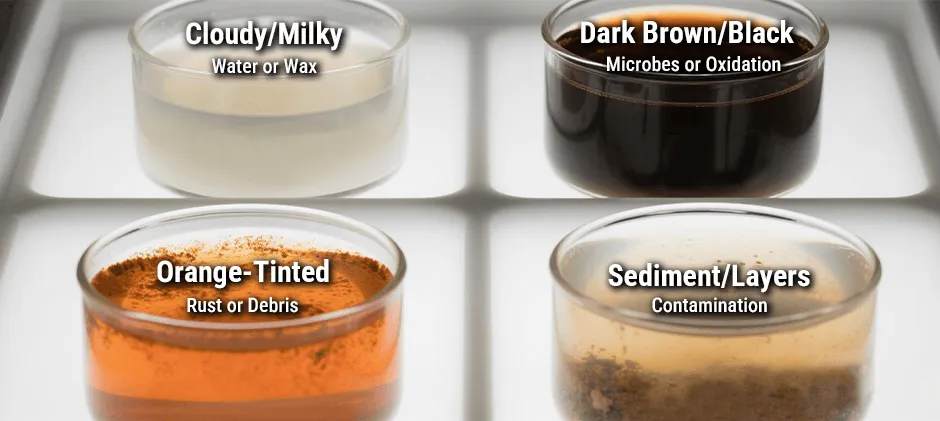
Water contamination can emulsify fuel into a milky look, and cold temperatures can turn #2 diesel hazy as wax crystals form.
Quote: “If it isn’t bright and clear, don’t pour it in.”
Microbial growth (“diesel bug”) often follows water intrusion and can create dark haze, sludge, and rapid filter plugging.
Rust can tint fuel and add abrasive particles that accelerate pump and injector wear.
Any separation line, bottom sludge, or floating debris is a strong reason to quarantine the fuel.
A simple jar check catches many problems early.
Pull a small sample into a clear container and inspect it in daylight or under a bright white light.
A clean glass jar makes the color of diesel fuel and haze easy to see.
Bright and clear beats “looks kind of okay.”
Let it sit for a few minutes and watch for a bottom layer or beads.
Tilt the jar and check for rust-colored particles or dark sludge.
Sharp, sour, or “old paint” smells can indicate aging/oxidation.
Clear statement: “If you can’t trust the sample, you can’t trust the tank.”
Choose fuel by legal use, temperature, and supplier reliability—not by price alone.
This keeps your fleet compliant and reduces filter plugging, hard starts, and injector wear.
Off-road machines can often use dyed fuel; road-registered trucks should not.
Cold climates may need winter-blend diesel, #1/#2 blends, or anti-gel additives to prevent waxing/gelling.
Cetane, lubricity, water handling, and cleanliness practices matter more than a slightly different shade.
Fresh fuel from busy distributors is less likely to be oxidized or water-contaminated.
Clean tanks, water control, filtration, and labeled containers reduce contamination that shows up first as “weird diesel fuel color.”
Stop and isolate the fuel before it reaches the machine.
Running questionable fuel can quickly turn a small issue into downtime plus repair bills.
Clear statement: “Testing is cheaper than injectors.”
Common next steps include water testing, microbial testing, tank inspection, fuel polishing, and filter changes—based on what you find.
In short, your diesel fuel should always be bright and clear, with a clear to pale yellow hue. Dyed colors are a sign of use restrictions for tax purposes, while any cloudiness, darkness, or milkiness points to contamination from water, microbes, wax, or aging. Ignoring these warning signs can lead to clogged filters, damaged injectors, and worn-out fuel pumps, causing expensive downtime for your heavy equipment.
To protect your investment and ensure your machinery’s engine runs smoothly, maintaining a clean fuel delivery system is essential. If you suspect contamination or are performing routine maintenance, explore the high-quality fuel system components at MechLink to keep your equipment reliable and productive.