2026-08-18
When heavy machinery is placed into operation under off-road environments characterized by violent weather or thick accumulations of dust, the windshield wiper motor is no longer merely a device of comfort, but rather an element of safety protection. A windshield that is kept in a state of clarity and freedom from obstruction enables the operator to perceive hidden dangers, to monitor on-site conditions, and to maintain mastery over the machine. Once the windshield wiper motor suffers a condition of failure, however, the operator’s field of vision may be lost within a very short moment. In this guide, an explanation shall be given regarding the working principle of the windshield wiper motor, the means by which its malfunctions may be recognized, the sequential procedure required for replacement, and the range of costs that may reasonably be expected.
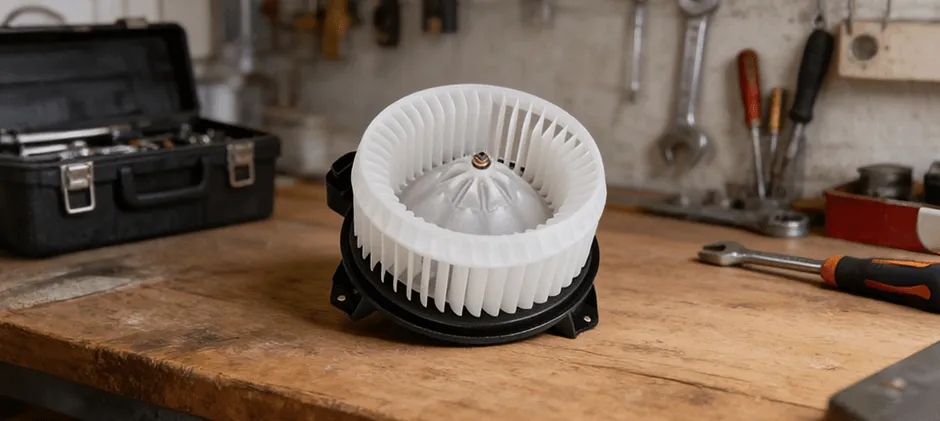
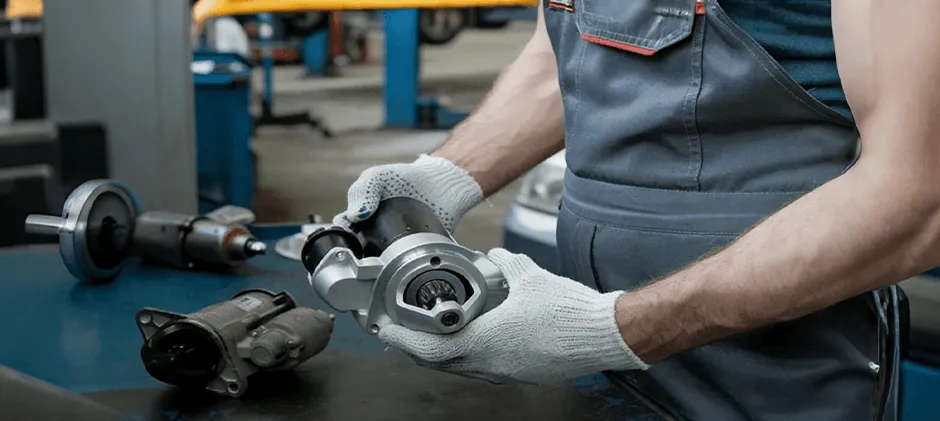
A windshield wiper motor is a compact, high-torque electric motor designed to power the wipers that sweep debris, rain, or mud from your machine’s windshield. In heavy-duty or off-road machinery—such as loaders, excavators, forklifts, and tractors—the windshield wiper motor must deliver stronger torque and endure heavy resistance, especially in muddy or sandy terrain.
The motor works in coordination with several components:
There are typically two motor types found in off-road machinery:
| Type | Description | Use Case |
| DC Motor | Simplified rotary motion for steady speed wiping | Most modern forklifts, mini-excavators |
| Gearbox Motor | Adjustable sweep speed and torque control | Older or heavy-duty off-road machines |
When off-road machinery operates in rain, snow, or mud, the motor’s reliability is constantly tested. Knowing the signs of failure helps you prevent accidents and unnecessary delays.
If the wipers cease to react altogether—even with switches and fuses remaining functional—it is probable that the electric motor has undergone burnout. Overheating, corrosion, or the deterioration of internal brushes within the motor frequently serve as the causative agents.
Dirt, debris, or rust buildup in the wiper linkages increases resistance. The motor strains or slows down, which is an early indicator that failure is coming soon.
Excessive electrical current suggests internal motor resistance or short-circuit damage. This symptom often arises after operating frozen or heavy, mud-coated wipers.
Wipers should always stop at the base of the windshield. If they halt mid-sweep or misalign, internal motor calibration or electrical synchronization may be off.
Strange sounds indicate gearbox or linkage damage. In off-road machines, vibration and dust intrusion are frequent causes.
Pro Tip: Never force wipers through heavy mud or ice. This adds torque beyond design limits and shortens the motor’s lifespan dramatically.
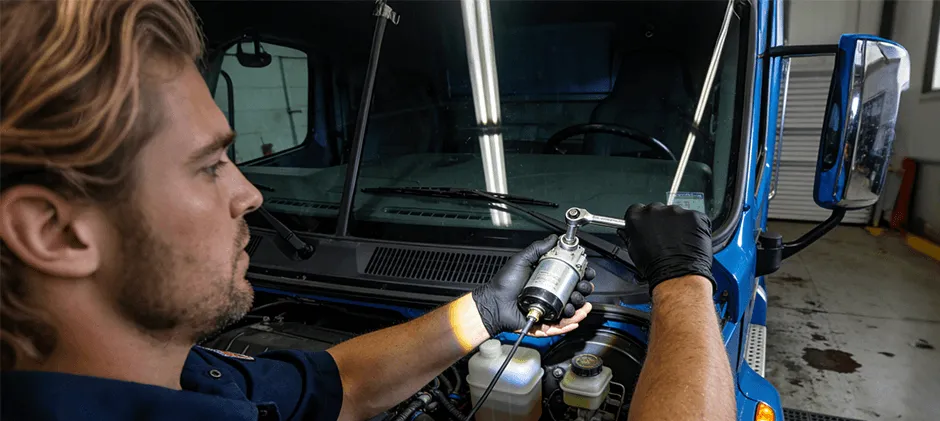
Replacing the windshield wiper motor on off-road machinery or forklifts is a relatively simple process if approached carefully. You only need basic hand tools and about 60 minutes.
Use a socket or wrench to remove the lock nuts holding the wiper arms. Gently rock the arms to loosen them from the splines. If they resist, use a wiper arm puller tool.
Most off-road equipment places the motor beneath the cowl or behind a panel near the windshield base. Remove screws, clips, or bolts securing this cover. Keep them organized for reinstallation.
Identify the wiring harness affixed to the motor. Disengage it and arrange the conductors securely aside. Subsequently, detach the mechanical linkage interfacing with the output shaft of the motor. Certain models employ a central nut, whereas others depend upon a coupling clip.
Unscrew the motor assembly—commonly fastened by three or four bolts—and elevate it with caution. Examine the mounting bracket and rubber bushings for deterioration; substitute them if found worn.
Before reattaching the linkage, actuate the new motor once, utilizing a test power source to confirm its resting (“parked”) disposition. Thereafter, fasten the linkage and reconnect the electrical harness. Reinstall the cowl and wiper arms, ensuring the blades correspond accurately to the parked orientation.
Reconnect the battery and test the system. Try all speed settings and verify that the wipers sweep smoothly and stop correctly.
| Step | Tool Required | Approx. Time |
| Remove wiper arms | Wrench or puller | 10 min |
| Access & unbolt motor | Screwdriver, socket set | 15 min |
| Connect the new motor | Socket wrench, pliers | 15 min |
| Testing & fine adjustment | – | 10–20 min |
To make your new motor last longer, add these steps to your routine maintenance checklist:
By doing these, you reduce electrical load and prevent premature motor wear in dusty, high-vibration environments.
High-performance wipers bear essential significance with respect to the safe and efficient operation of all forms of off-road machinery. Once visibility is diminished, both the level of productivity and the margin of operational safety are unavoidably influenced. If the wiper system begins to manifest conditions of malfunction—such as motion that is sluggish in nature, improper alignment, or a state of complete non-response—the act of replacing the wiper motor becomes a necessary and reasonable measure. Through the selection of MechLink, one acquires a dependable solution for the aftermarket category. We provide an extensive assortment of wiper motors, deliberately engineered for application on forklifts and various classes of heavy equipment.