
2026-05-30
If you look under the hood or behind the grille of a high-performance vehicle or heavy machinery, you might see two similar-looking components. Both are heat exchangers with fins and tubes and are crucial for engine health. Although a radiator and an intercooler look alike, they serve different functions. This guide will explain what an intercooler and radiator do, how they work, and highlight the key differences between them.
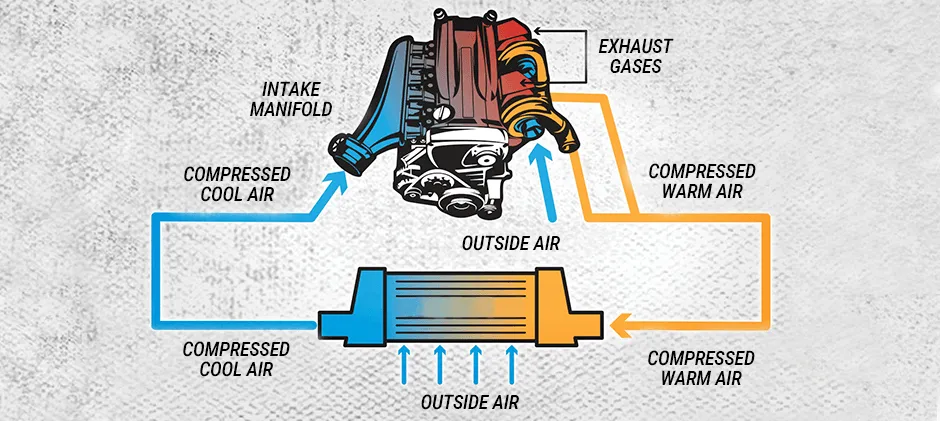
An intercooler is a heat exchanger designed for turbocharged or supercharged engines. It cools down the hot, compressed air from the turbo before it enters the engine. If you want to know more about the intercooler, you can read: What Is an Intercooler?
As a turbocharger compresses air, the air heats up significantly. The intercooler reduces the temperature of this “charge air.” There are two main types:
By cooling the air, the intercooler increases its density, packing more oxygen molecules into the same volume of air. This leads to more efficient and powerful combustion.
The intercooler is usually positioned near the front of the equipment, often behind the bumper or grille, to maximize airflow. Some equipment may also have a top-mounted intercooler, typically situated on the engine or near the intake manifold. Air-to-water intercoolers offer more flexible placement options and can be located anywhere within the engine bay, depending on the setup.
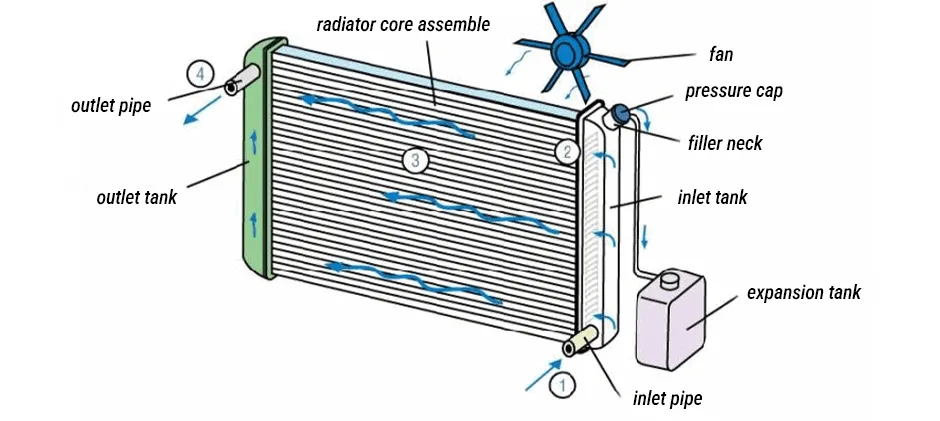
A radiator is the heart of your engine’s cooling system. It’s mainly used to dissipate the intense heat generated by the engine block during operation to prevent it from overheating.
The radiator is part of a closed loop. A liquid called coolant circulates through engine passages, absorbing heat. This hot liquid then flows to the radiator, but only when the engine is hot enough to open a valve called the thermostat. Airflow across the radiator’s fins cools the liquid down before it is pumped back into the engine to absorb more heat.
Radiators can be categorized in two main ways: by the direction the coolant flows through them, and by the number of cooling tubes they contain.
This describes the path the coolant takes to get from the inlet to the outlet.
A downflow radiator can be identified by its vertical fins. In this design, coolant enters a tank at the top, flows down through the core, and then exits from a tank at the bottom. This taller, narrower style had engine bays that could accommodate its vertical shape.
A crossflow radiator features horizontal fins. Here, coolant enters a tank on one side of the radiator and flows across the core to an exit tank on the opposite side. This short, wide design is the standard for virtually all modern equipment because it fits better in contemporary engine bays and is generally more efficient at cooling.
This refers to how many rows of tubes the radiator has to carry the coolant. The “rows” are the lines of tubes that carry coolant through the radiator core. As a general rule, adding more rows increases the surface area for heat to escape, so a 3-row radiator typically has more cooling capacity than a 2-row radiator.
But the number of rows doesn’t mean everything. A well-designed 2-row radiator with wide tubes can easily outperform a cheap 3-row radiator with very narrow tubes, as larger tubes allow for better coolant flow. Furthermore, a radiator with too many rows can become so thick that it restricts airflow, which hurts its cooling ability.
An equipment’s radiator is almost always placed at the front, directly behind the grille, ensuring it receives a steady flow of fresh air when the equipment is in motion.
While both are cooling system parts, they share different functions. The radiator mainly ensures the engine stays within safe temperature limits to prevent failure. The intercooler, on the other hand, specifically boosts performance by delivering cooler, denser air for more power and better fuel economy.
Here’s a step-by-step process for them.
An excavator can operate efficiently with only a radiator to meet its cooling needs. However, an engine with an intercooler can’t lack a radiator, since the intercooler’s function complements the engine’s core cooling system, which always relies on the radiator.
When budgeting for the replacement of cooling components in off-road machinery, the costs can fluctuate based on the equipment’s make, model, and size. While it is impossible to give the exact pricing, we can share price ranges for both radiators and intercoolers for consideration.
In summary, while the parts cost for a standard radiator and intercooler can be comparable, the price for specialized or high-performance intercoolers often exceeds that of radiators. Due to this wide variability, it is always best practice to get a quote specific to your machine to ensure an accurate budget for repairs.
The answer is determined entirely by the engine’s design.
They work in parallel to manage two different sources of heat. You cannot replace one with the other, and removing either from a system that requires it would lead to immediate power loss and eventual catastrophic engine failure.
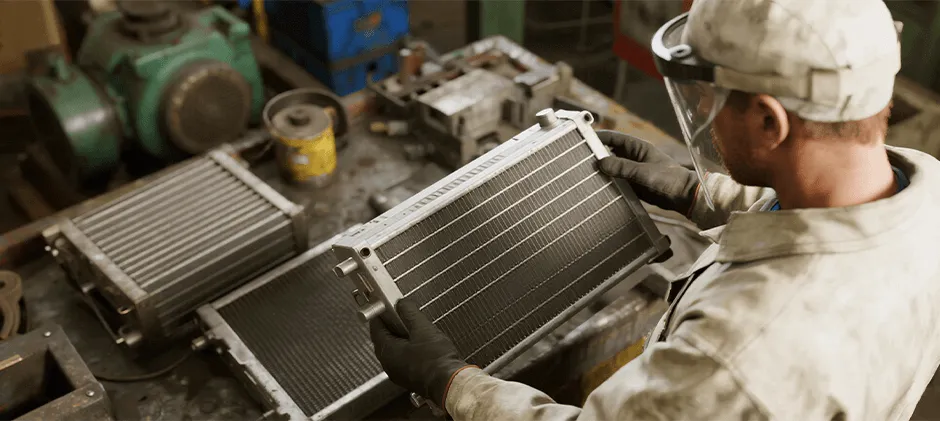
The real choice isn’t between a radiator and an intercooler, but in selecting the right type, size, and durability level for your specific machinery and its working environment. The cooling demands in the off-road world are far more intense than on the highway.
A compact utility tractor used for intermittent light tasks has very different cooling demands compared to a large excavator or mining haul truck working continuously under heavy load in high ambient temperatures. These heavy-duty applications require oversized, highly durable radiators and robust intercoolers to resist constant vibration and clogging from dust and debris.
In any case, when replacing a cooling component, don’t be afraid to speak with a parts expert. Reliable suppliers like MechLink offer such services. Feel free to contact us if you have any questions.
By understanding their distinct roles, you can better maintain, upgrade, and appreciate the brilliant engineering that keeps your heavy machinery running cool, strong, and reliably on the job site.
Both the radiator and the intercooler are essential cooling components, but they serve unique and separate functions. The radiator protects the engine from its heat, while the intercooler unlocks the full potential of a turbocharged system. To keep your engine running at its best, both systems must be in perfect working order.
Over time, the components connecting these systems—especially the intercooler hoses and radiator hoses—can crack, leak, or fail, leading to power loss or dangerous overheating. When it’s time for a replacement, choosing a durable, high-quality part is essential. It’s wise to choose reliable suppliers like MechLink. Visit MechLink.com and explore our large stock of high-quality radiators and intercoolers!
The 30 most popular kubota parts at mechlink
2026-09-21
How to choose the best water pump for your heavy equipment
2026-09-21

Ultimate guide to choosing the best engine oil filter for tractor
2026-09-20
How much does a ford f-150 weigh? 2026 complete guide
2026-09-20