2026-07-17
The Mass Air Flow (MAF) sensor measures how much air enters the engine. The control module (PCM) uses this to decide how much fuel to inject so the engine runs right. If the system sees a problem with the sensor or its wiring, it sets code P0100. This guide explains everything you need to know in a simple way—what causes it, the symptoms, how to check it, and how to fix it.
The P0100 code is a standard diagnostic trouble code defined as a Mass or Volume Air Flow “A” Circuit Malfunction. The Mass Air Flow (MAF) sensor acts as the primary set of “eyes” for the Engine Control Module (ECM). On most modern tractors and loaders equipped with a turbocharged engine, you will find the MAF sensor located in the intake duct, positioned securely between the air filter housing and the turbocharger‘s compressor inlet. Its job is to measure all air drawn in by the engine before it gets compressed
The sensor’s job is vital: it measures the mass—meaning the weight and density—of the air entering the engine. This is a critical distinction from simple volume. Because diesel engines are essentially massive air pumps, the ECM must know the exact number of oxygen molecules available for combustion. It uses this data to calculate the precise fuel injection quantity and timing required for efficient power delivery.
The P0100 code is triggered when the ECM detects that the signal coming from the MAF sensor is erratic, missing, shorted, or remains outside of the expected range for a specific duration of time. This sensor is often a “two-in-one” component, featuring an integrated Intake Air Temperature (IAT) sensor. This combination is vital for managing the complex physics of diesel performance in varying climates.
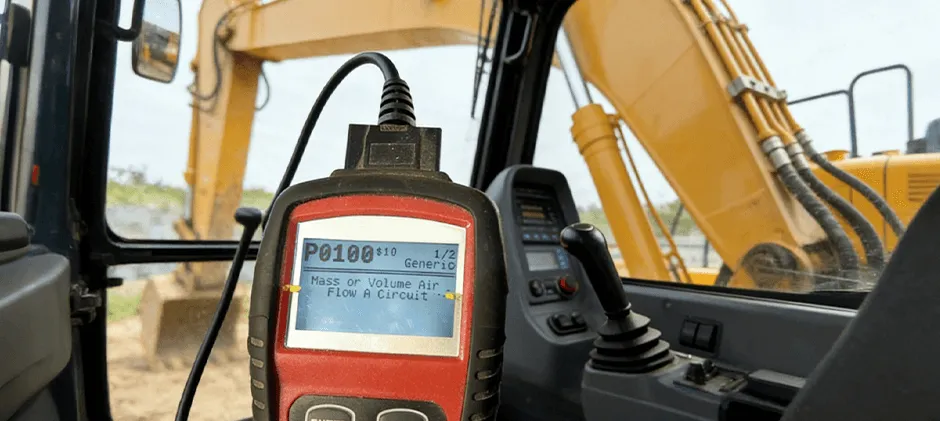
In our experience, off-road machinery faces environmental stressors that highway trucks never encounter. While the sensor itself can fail, we often find that the grit and grime of a construction site are the true catalysts for a P0100.
Pro Tip: We have found that while the sensor is often the first part people want to buy, wiring damage or a loose connector is frequently the actual culprit in heavy equipment. Always check the harness for signs of rubbing against the frame or heat damage from the exhaust manifold before you pull the trigger on new parts.
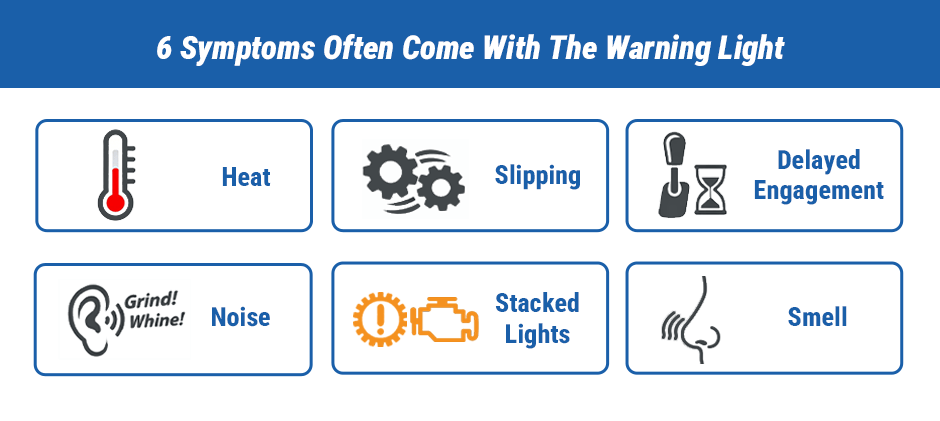
When a P0100 is present, your machine won’t just tell you with a light; it will show you in its performance. While some machines may show no immediate signs other than a warning lamp, we recommend immediate attention to prevent long-term engine damage or a 2:00 AM emergency call when the machine finally quits.
A proper diagnosis is the way to save time and money. We follow a specific technical workflow to isolate the problem before we start turning wrenches.
Connect a professional-grade scanner to the machine. Check for the P0100 code and pull the “freeze frame” data. This data shows us exactly what the engine was doing (RPM, load, throttle position) when the code was set. We look for a Mass Air Flow grams per second reading that is static or erratic while the engine is being revved.
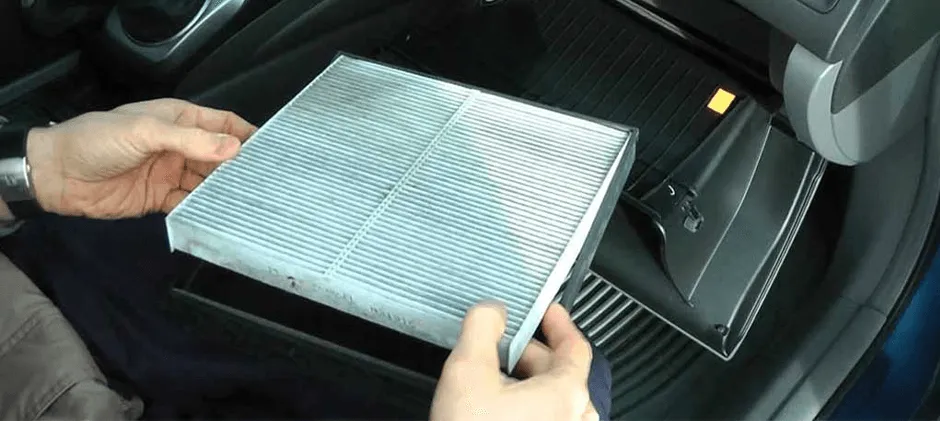
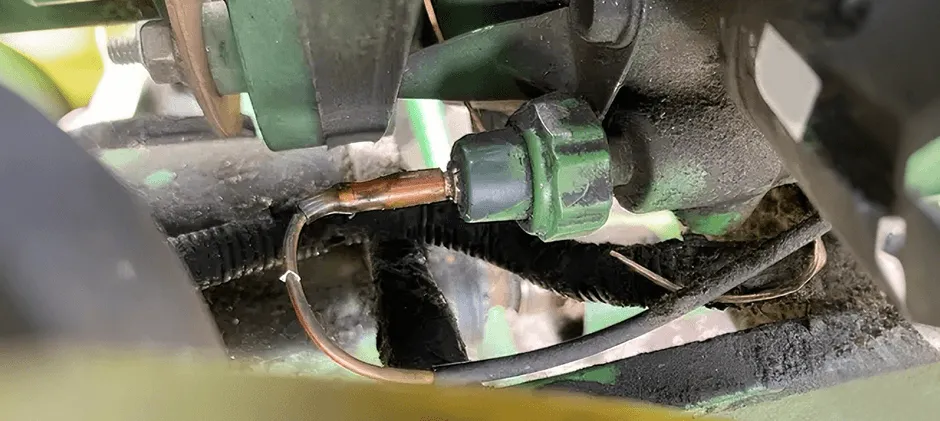
We start with the basics. Open the air filter housing. If the filter is clogged with a pound of dirt or the housing is full of oil residue, the sensor is likely contaminated. Next, we inspect the MAF sensor connector. Disconnect it, look for green corrosion on the pins, and reconnect it to ensure a strong electrical connection.
This is our most effective diagnostic theory for identifying a “lying” sensor. Start the engine, let it idle, and check the Barometric Pressure reading on your scan tool. The barometric pressure sensor is actually an internal part of the MAF sensor. If your tool reads 26.5 Hg but your machine is sitting at sea level, the sensor is defective. It is telling the ECM you are at 4,500 feet above sea level. This causes the ECM to use the wrong air density table and under-report the airflow, killing your power.
You can use a specialized MAF spray to remove carbon build-up. This is often necessary because carbon builds up when a machine idles for long periods. However, be warned: cleaning is usually a temporary fix. A microscopic view of a contaminated sensing wire shows that over 50% of debris remains embedded deep in the wire’s grooves and crevices. For a high-hour machine, replacement is the only way to ensure reliability.
These steps solve the vast majority of P0100 issues in the field.
As mentioned above, a faulty Mass Air Flow (MAF) sensor causes code P0100. To avoid more problems during operation, it’s important to replace the sensor as soon as possible. Luckily, you can find high-quality sensors at great prices on MechLink with just a few clicks.