MechLink Logo
Beranda  > Berita  > Troubleshooting truck fault code spn 171 fmi 3

Troubleshooting truck fault code spn 171 fmi 3

2026-08-13

FacebookLinkedinTwitterWhatsapp

When your off-road equipment throws a SPN 171 FMI 3 code, it’s telling you there’s a problem with the ambient air temperature sensor circuit that needs immediate attention. We’ve diagnosed hundreds of these cases across excavators, wheel loaders, bulldozers, and other heavy machinery, and we’ll walk you through exactly what this code means and how to fix it efficiently. This guide provides practical troubleshooting steps that can save you hours of downtime and prevent unnecessary parts replacement.

What is SPN 171 FMI 3 Code?

The SPN 171 FMI 3 code indicates an ambient air temperature sensor circuit issue where the voltage is reading above normal or shorted to a high source. In J1939, diagnostic language is used by off-road machinery:

  • SPN 171 = Ambient Air Temperature Sensor Signal
  • FMI 3 = Voltage Above Normal/Shorted to High Source

When you see this code on construction equipment or agricultural machinery, the ECM (Electronic Control Module) is detecting a signal voltage exceeding 5.13 VDC for more than one second. The ambient air temperature sensor, which normally operates as a variable resistor measuring intake air temperature at the turbocharger compressor inlet, is sending an abnormally high voltage signal back to the ECM.

This affects how your equipment manages fuel injection timing, emission controls, and cold-start enrichment strategies. While the machine typically continues operating using default temperature values, ignoring this fault can lead to reduced fuel efficiency, increased emissions, and potential issues with other temperature-dependent systems.
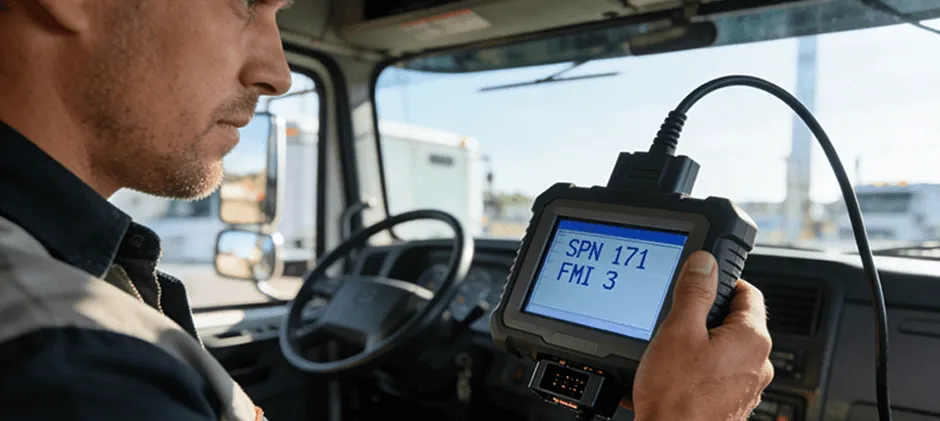
What is SPN 171 FMI 3 Code

The Reasons of SPN 171 FMI 3 Code Happen

Based on our field experience with mining equipment, agricultural tractors, and forestry machines, you’ve identified these primary causes:

Electrical Circuit Problems:

  • Corroded or damaged sensor connector pins (extremely common in dusty/wet environments)
  • Open circuit in the sensor signal wire
  • A short circuit between the signal wire and the power source
  • Damaged return/ground wire shared with other sensors

Sensor-Related Issues:

  • Internal sensor failure is causing an open circuit
  • Physical damage from impact or vibration
  • Contamination is blocking the sensor element
  • Age-related degradation of sensor components

Environmental Factors Specific to Off-Road Equipment:

Operating Condition Impact on Sensor Common Equipment Affected
Extreme dust exposure Connector contamination Mining trucks, quarry loaders
High-pressure washing Water intrusion Construction excavators
Severe vibration Wire fatigue/breakage Compactors, drilling rigs
Temperature extremes Sensor drift/failure Arctic dozers, desert graders

The harsh operating conditions of off-road machinery accelerate these failures compared to on-highway vehicles. You often find multiple contributing factors, especially in equipment operating in extreme environments.

Troubleshooting Truck Fault Code SPN 171 FMI 3

Step 1: Initial Visual Inspection

Start at the ambient air temperature sensor location, typically mounted in the air intake system before the turbocharger. Check for:

  1. Obvious physical damage to the sensor body
  2. Loose or backed-out connector
  3. Melted, chafed, or cut wiring
  4. Oil or coolant contamination on connectors

Step 2: Electrical Testing Procedure

With the keyswitch ON and engine OFF, you perform these checks:

1. Voltage Test at Sensor Connector (Unplugged):

  • Reference voltage wire: Should read 5.0V ± 0.2V
  • If no voltage present: trace back to ECM, checking for opens
  • If voltage exceeds 5.2V: potential ECM issue

2. Resistance Test on Sensor:

  • Measure resistance between the signal and return pins
  • Compare to manufacturer specifications (typically 2-20kΩ depending on temperature)
  • Infinite resistance indicates an open circuit internal to the sensor

3. Continuity Check on Wiring:

  • Test the signal wire continuity from the sensor connector to the ECM
  • Check return/ground wire integrity
  • Verify no shorts between the signal wire and the chassis ground

Step 3: Advanced Diagnostics

For persistent issues, you investigate deeper:

  • Wiggle test while monitoring live data to identify intermittent connections
  • Voltage drop test on ground circuits (should be <0.5V)
  • Scan for additional codes – multiple temperature sensor codes often indicate shared ground issues
  • ECM calibration verification – outdated calibrations can cause false positives

Common Mistakes to Avoid During Repair

You’ve seen costly errors when technicians rush through this diagnosis:

  • Replacing sensor without checking wiring first – 60% of cases involve harness issues
  • Using the wrong connectors that don’t seal properly against moisture
  • Failing to clear codes and verify repair under actual operating conditions
  • Ignoring other active codes that point to root cause issues

When to Replace Components?

After thorough testing, replacement becomes necessary when:

Sensor Replacement Indicators:

  • Internal resistance out of specification
  • Physical damage or heavy contamination
  • Intermittent readings during the wiggle test
  • Age exceeds 8,000 operating hours

For reliable operation in demanding off-road applications, we recommend quality aftermarket temperature sensors, wiring harnesses, and sealed connectors designed for heavy equipment use. Properly specified air intake components and turbocharger parts ensure your cooling and intake systems work together effectively. When addressing electrical issues, consider complete sensor kits that include new connectors and proper dielectric grease for long-term reliability.

Preventive Maintenance Tips

Implement these practices to prevent future SPN 171 FMI 3 codes:

  • Quarterly inspection of all temperature sensor connections
  • Annual resistance testing during scheduled maintenance
  • Dielectric grease application on all sensor connectors
  • Protective covering installation for sensors in high-exposure areas
  • Wiring harness securing to prevent vibration damage

Impact on Equipment Performance

While your machine continues operating with this fault active, you observe these effects:

  • Reduced cold-start performance in winter conditions
  • Incorrect load-based timing adjustments
  • Potential for increased fuel consumption (3-5% typical)
  • Emission system compensation issues
  • Possible derate conditions when combined with other faults

Conclusion

Successfully resolving SPN 171 FMI 3 code issues requires systematic diagnosis focusing on the complete circuit rather than just sensor replacement. As your aftermarket parts supplier, we provide high-quality temperature sensors, electrical components, and diagnostic tools at affordable prices with wide compatibility across major heavy equipment brands. Our vast inventory ensures you get the right parts quickly to minimize equipment downtime and maintain optimal performance in demanding off-road applications.

PELEPASAN TERBARU

Mechlink:White smoke from diesel engine? 5 causes & fixes
Product knowledge

White smoke from diesel engine? 5 causes & fixes

2026-08-26

Mechlink:Kubota z482 engine maintenance and lookup guide
Product knowledge

Kubota z482 engine maintenance and lookup guide

2026-08-26

Mechlink:Is hydraulic hose repair better than replacement?
Product knowledge

Is hydraulic hose repair better than replacement?

2026-08-26

Mechlink:Sae 30 vs 10w30: which engine oil is better?
Product knowledge

Sae 30 vs 10w30: which engine oil is better?

2026-08-26