The electrical system powers the entire equipment. Usually, the dashboard battery warning light indicates a malfunction in the electrical system. The problem often points to the battery or alternator. Although they both power machines, they play different roles. Knowing the different signs of a bad alternator vs a bad battery is malfunctioning, spot and fix the problem before it gets worse.
What’s the Function of an Alternator and a Battery?
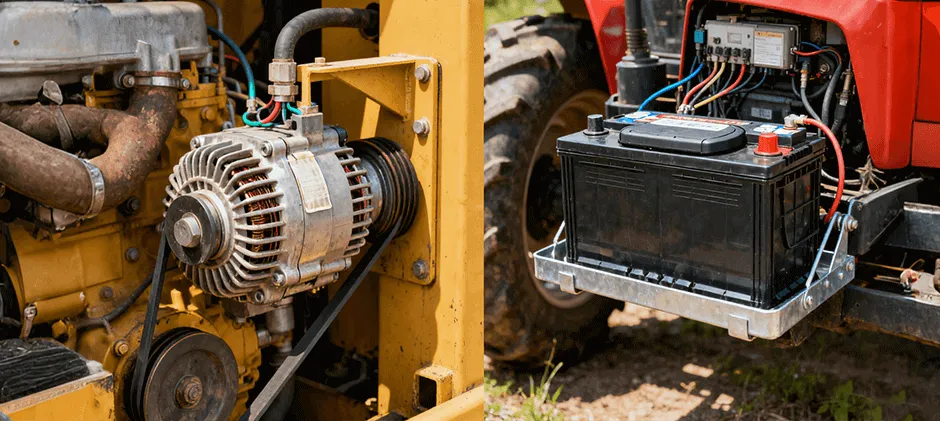
The alternator and battery both handle your equipment’s electrical power. But they have different jobs—yet they work together. Think of them as a two-part team. They’re built to meet the huge power needs of heavy machinery.
The battery is like a sprinter. Its main job? Shoot out a big, quick burst of electricity. Enough to fire up that big diesel engine. Turn the key, and the battery kicks in with massive power. We call it cranking amps. That’s what makes the starter motor work, getting the engine running. It also powers the machine’s electronics when the engine’s off. But batteries don’t hold enough juice. They can’t keep a working machine going for long on their own.
The alternator is more like a marathon runner. Once the engine’s running, the alternator takes over. It’s driven by a belt connected to the engine’s crankshaft. Turns mechanical energy into electricity. It has two key jobs:
- Power the machine: Supplies steady electricity for everything. Headlights, cab fan, those fancy electronic control modules (ECMs)—even the hydraulic systems.
- Recharge the battery: Put back the power the battery used to start the engine.
So it’s fully charged next time you need it. Bottom line, the battery gets started. The alternator keeps going.
Signs of a Bad Battery vs. Bad Alternator
The signs of a bad battery vs an alternator are very similar at first, and your machine won’t start. Makes it hard to tell. But if you look closely, some specific signs can tell them apart. Let’s analyze in detail what to pay attention to.
5 Signs of a Bad Battery
Heavy equipment batteries usually last 3 to 5 years. But job site conditions are tough. They can make that lifespan shorter. When a battery’s dying, it can’t hold a charge well. Here are the telltale signs:
- Super Slow or Strained Engine Crank: This is the most common one. Turn the key, and instead of a quick, strong start, you hear “chug… chug… chug”, slow and sluggish. The engine’s trying to fire up, but it doesn’t have enough electrical power.
- Clicking or a “Thunk” Sound When Starting: If the battery’s almost dead, you’ll hear a loud single click. Or a bunch of quick clicks from the starter solenoid. That means there’s just enough juice to trigger the solenoid. But not enough to turn that heavy engine over.
- The Lights Dim Only When Starting: Your dashboard and cab lights might look fine at first. But the second you try to crank the engine, they get really dim or go out completely. That shows the battery’s using every last bit of its weak power for the starter.
- Swollen or Bloated Battery Case: Extreme heat or overcharging can make the battery case puff up and deform. This is a clear sign of internal damage and a big safety risk. Check for this during your daily walk-around inspection.
- Rotten Egg Smell (Sulfur): If there’s a strong, stinky sulfur smell around the battery, it’s leaking acid. This usually happens from overcharging (could be an alternator problem) or a bad internal failure. The battery’s ruined. Replace it right away.
Signs of a Bad Alternator
Alternators last longer than batteries. But heavy equipment deals with constant shaking, dust, and big electrical demands. These things can make an alternator fail. When the alternator goes bad, the machine has to run only on the battery. And the battery will die fast. Here are the signs an alternator’s failing:
- Dimming or Flickering Lights While the Machine’s Running: This is the big clue that sets it apart from a bad battery. If your work lights, dash lights, or cab lights flicker, pulse, or get dimmer when the engine’s on, the alternator isn’t putting out steady power.
- “BAT” or Battery Icon on the Dash: Most new equipment has this warning light (it looks like a battery). Contrary to what many think, this light usually comes on because of the alternator. It means the charging system’s messed up, either the voltage is too low or too high.
- Battery Keeps Dying (Even If It’s New or Good): Have you had to jump-start your machine over and over? If a battery that’s new (or you know works) keeps going dead, that’s a classic sign. The alternator isn’t recharging it as it should.
- Whining or Grinding Noises: A failing alternator often makes a clear, high-pitched whine. The noise changes when the engine’s RPM goes up or down. That’s usually from worn-out bearings inside the alternator. A grinding noise? That means the internal damage is worse.
- Electronics Acting Up: The alternator powers all your machine’s accessories. If the radio cuts out, the HVAC fan slows down, or other electronic parts behave strangely, the alternator might not be supplying enough voltage.
Here’s a quick rule of thumb: A battery fails when you try to start the machine. An alternator fails while you’re working. If your machine starts strong after a jump, but dies soon after you disconnect the cables? Almost for sure, the alternator’s bad.
How to Tell if It’s Your Battery or the Alternator That Is Causing the Problem?
Visual clues help, but a quick multimeter (voltmeter) test gives you a sure answer. Most heavy machines use a 24-volt system (two 12-volt batteries in series), so know your machine’s voltage first.
Static Voltage Test (Engine Off)
Shut the engine off completely. Hook the multimeter’s red probe to the battery’s positive (+) terminal, black to negative (-).
- Fully charged 12V battery: ~12.6–12.8 volts.
- Fully charged 24V system: ~25.2–25.6 volts.
- Below 12.4V (or 24.8V for 24V): Battery is discharged or weak, and may require a battery charger to recover.
- Way lower than that: Battery is probably bad.
Charging Voltage Test (Engine Running)
Start the engine and let it idle high. Keep the multimeter connected to the battery. The alternator’s now charging the battery, voltage should jump up.
- 12V system: 13.7–14.7 volts.
- 24V system: 27.5–28.5 volts.
- Voltage same as the static test (or super low): The alternator isn’t charging.
- Voltage way too high (e.g., over 15V for 12V, 30V for 24V): Alternator’s voltage regulator is broken. It’s overcharging the battery—could damage it.
Load Test (Engine Running)
Keep the engine running. Turn on all high-power accessories: work lights, beacons, HVAC blower on max, etc. Watch the multimeter.
- Voltage should dip a little but stay well above the static reading (e.g., over 13.2V for 12V, 26.5V for 24V).
- Voltage drops a lot (or falls back to static level): The alternator is weak. Can’t handle the machine’s electrical load.
What Causes Your Battery or Alternator to Go Bad?
On heavy equipment, these parts have a way tougher life than in a regular car. Figuring out why they wear out helps you keep them working longer.
- Extreme Environments: Dust gets inside the alternator and grinds down parts like bearings and brushes. Mud and moisture make battery terminals and electrical connectors rust. That rust blocks electricity flow, so the battery can’t charge properly.
- Intense Vibration: This is a big issue that only heavy equipment deals with. Nonstop, strong shaking can loosen electrical wires, crack the plates inside the battery, and wear out the alternator’s bearings way faster.
- High Electrical Load: Modern heavy machines are loaded with electronics. Running bright work lights, GPS, radios, and hydraulic controls for hours on end puts a constant, heavy strain on the alternator. It has to work extra hard, gets hot, and wears out sooner.
- Operating Hours & Heat: Like any machine part, alternators and batteries only last so long—usually measured by how many hours they’re used. The engine compartment gets super hot, especially on long summer days. That heat breaks down the battery faster and can even “cook” an alternator that’s already working too hard.
- Parasitic Drains: Sometimes an electronic part breaks and doesn’t shut off all the way. It slowly drains the battery overnight—even when the machine is off. This cycle of draining and recharging over and over stresses out both the battery and the alternator.
Alternator vs Battery: Can They Mess Each Other Up?
The battery and alternator are interdependent; the other one will soon have problems. Two main types of alternator failure can damage the battery:
- Insufficient charging: The battery will never be fully charged, the internal plates will slowly “vulcanize”, the power storage capacity will become worse and worse, and finally, the engine will not start at all.
- Charging too much (mostly if the voltage regulator is broken): It will cause the electrolyte in the battery to boil, the outer shell to bulge, and the internal plates to be damaged.
After the battery is dead or broken, it cannot maintain normal power, which will keep the alternator under a lot of load. Such intense work can overheat the alternator, and internal parts break down much faster than normal.
The Right Parts Matter
Correctly diagnosing whether signs are of a bad alternator or vs bad battery can help you avoid replacing the wrong parts and save you a lot of unnecessary trouble. Based on these signs and test methods mentioned earlier, you can lock the fault point more accurately. Whether it’s a battery failure or the alternator needs replacing, MechLink has the parts and tools you need. Order online, get them delivered quickly, and repair them with less worry.