
2026-11-12

Two decades of near-continuous building have changed what it means to buy an excavator in the Gulf. The programme is no longer a single tower or a single highway. It is a rolling sequence of new cities, ports, rail corridors and utility networks spread across Saudi Arabia, the UAE, Qatar and Oman, with NEOM standing as the loudest example of the scale involved. In that environment, earthmoving capacity is a scheduling question before it is a purchasing one. A machine that is available and steady beats a machine that looks stronger on paper but spends its afternoons at reduced power.
Caterpillar keeps appearing on those schedules, and not because of one headline specification. The reason is closer to system behaviour: cooling packages sized for sustained ambient heat, filtration that expects airborne sand, hydraulics that hold their settings across long shifts, and a parts and technician base that reaches most of the region's active job sites. This guide works through the parts of the decision that actually move outcomes: the operating envelope, machine class, support economics, the second-hand market, and what to check before money changes hands. It closes with two units currently listed on MechLink, a 2020 Caterpillar 312F and a 2023 Caterpillar 350.
Middle East site conditions are usually summed up as "harsh", which is too vague to design against. It helps to separate the stressors, because each one attacks a different part of the machine and each one asks a different question at the buying stage.
Every excavator is sold with an ambient temperature ceiling, and almost every contractor in the Gulf discovers that the ceiling is not the constraint. The constraint is how long the machine can hold full hydraulic output while the radiator stack is hot, the hydraulic oil is thin and the operator is loading trucks without a break. Cooling capacity is consumed by dust as much as by air temperature, so a machine that ran comfortably in a temperate climate can start derating by mid-morning in July if the fins are packed and the fan drive is tired.
This is why the practical specification is not "rated for 50 °C" but "serviceable cooling". Does the radiator stack separate engine coolant, hydraulic oil and charge air into distinct cores that can be cleaned independently? Can a fitter reach the fins with a lance without removing the counterweight? Is the fan driven in a way that keeps pulling air when the machine is stationary and idling in a queue? Caterpillar's larger units are built around these questions, which is a large part of why they hold up in the region: the cooling system is designed to be maintained, not merely to exist.
Airborne fines in the Gulf are abrasive and, in the coastal belt, mildly saline. They load the primary air filter faster than most maintenance schedules assume, migrate past worn intake joints, and settle into hydraulic breathers. Two consequences follow. First, filter consumption becomes a real line in the operating budget, and a machine with awkward filter access will quietly stretch its service intervals until the engine pays for it. Second, seal life shortens on cylinders, swing joints and hose ends, so a used machine's hose history is often a better indicator of its treatment than its hour meter.
Pressurised cabs, well-sealed intake ducting and accessible breathers are therefore not comfort features. They are the difference between a machine that consumes consumables on schedule and one that consumes components off schedule.
The geological range inside a single country can be wider than the range across the region. Contractors meet hard limestone and basalt that has to be ripped or hammered, caliche layers that look like soil until the bucket touches them, loose dune sand that will not hold a trench profile, sabkha and coastal fill that needs careful bearing assessment, and urban ground full of old services, backfill and rubble. A machine chosen for one of these conditions is rarely ideal for all of them, which is why attachment strategy and hydraulic capability matter as much as digging force.
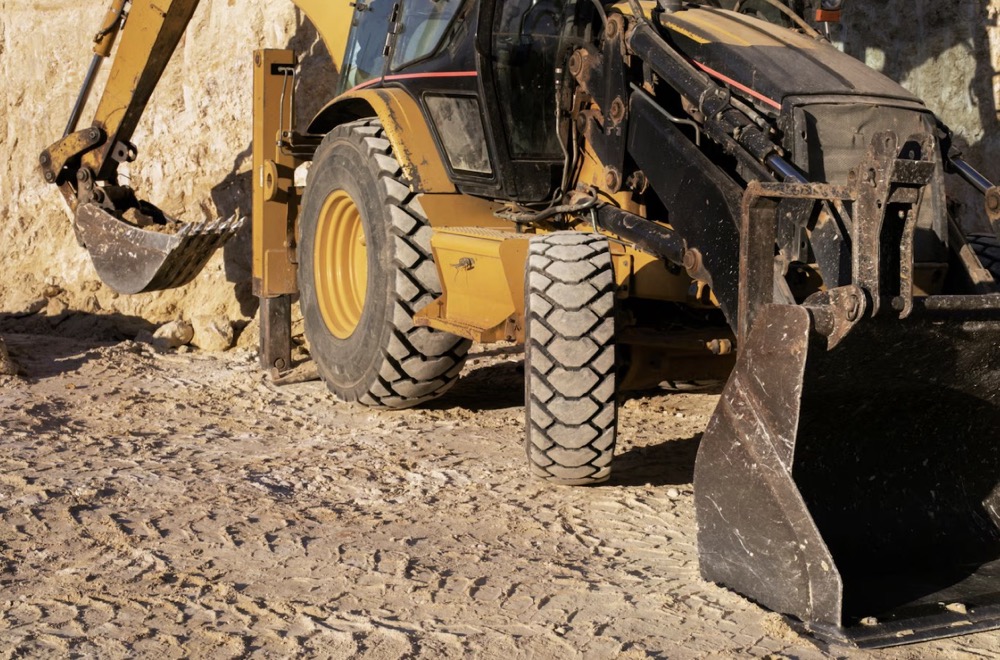
In practice, the region rewards machines that can be reconfigured rather than machines that are perfect for a single task. Quick couplers, a hammer circuit, a ripper and a couple of bucket sizes turn one carrier into a small fleet, and they protect the schedule when the ground changes between chainage points.
Class selection is where most avoidable cost sits. Oversizing a machine for urban trenching burns fuel and transport budget; undersizing for quarry loading produces a queue of trucks and a stressed hydraulic system. Four inputs usually settle the question: the dominant task, the tightest access point on site, the haul distance to the tip or stockpile, and the transport rules between sites.
Machines in this band carry the urban workload. They fit inside a lane closure, work close to a wall or a live facade, and travel on a standard flatbed, which removes a layer of logistics from short-duration jobs. Their value is not raw breakout force but control: proportional hydraulics, fine swing control, and a tail radius that does not intimidate the spotter.
The Caterpillar 312F is the reference point here, at roughly 13.6 tonnes. Its short-tail swing geometry lets it work in a narrow corridor without swinging the counterweight into traffic, and its load-sensing hydraulics deliver flow where the joystick asks for it rather than where the pump prefers. For utility work — fibre conduit, water mains, shallow drainage, footings on tight infill plots — that behaviour is worth more than a larger bucket.
Two project types dominate this class in the Gulf. The first is road and utility rehabilitation, where the machine has to open a trench, place bedding and backfill without closing an entire carriageway. The second is foundation and landscape work on plots that are already surrounded by buildings, where the excavator must dig footings or a small basement while a tower crane operates overhead and a neighbour's wall is two metres away.
Noise and emissions also enter the decision in Dubai, Doha and Riyadh, where construction zones sit against residential and commercial frontage. Engine management modes that cut idle time and hold low decibel output are not marketing extras in that context; they are the difference between a workable permit condition and a complaint.
Once the task becomes bulk — quarry faces, pipeline trench over long distances, port fill, deep foundations — the economics invert. Cycle time and bucket fill matter more than transport convenience, and the machine becomes a production asset measured in tonnes per shift.
The Caterpillar 350 sits in this group at 47.6 tonnes. Its value is the combination of breakout force, hydraulic flow and stability that lets it load large haul trucks continuously, and its boom and stick geometry gives the reach and depth needed on embankments, open-pit benches and pipeline profiles. Equally important is what it can carry: with a hydraulic hammer it breaks reinforced concrete and compacted rock; with a large bucket or a quick coupler it becomes a material-handling tool in an aggregate yard.
Where this class earns its keep in the region is in continuity. A quarry in Oman, a limestone operation in northern Saudi Arabia, or a pipeline spread crossing semi-arid and mountainous ground all need a machine that can run a full shift without a cooling-related pause. The undercarriage also takes a beating on abrasive ground, so component quality and rebuild economics matter as much as the initial purchase.
| Item | 2020 Caterpillar 312F | 2023 Caterpillar 350 |
|---|---|---|
| Operating weight | 13.6 t | 47.6 t |
| Attachments in listing | Bucket | Bucket and hammer |
| Working footprint | Short-tail swing, suited to tight corridors | Extended boom and stick for reach and depth |
| Where it fits | Urban utilities, trenching, footings, grading | Quarry loading, pipeline trench, bulk excavation, port fill |
| Transport profile | Moves on a standard flatbed | Requires heavy low-bed moves between sites |
A modern excavator is a carrier, and the attachment set is the actual production system. On the small machine, a trenching bucket, a grading bucket and an auger cover most municipal work. On the large machine, a hammer, a ripper and a quick coupler determine whether the unit can stay on a multi-phase site or has to be swapped out. The buying decision should therefore include the hydraulic circuit configuration: does the machine have a hammer circuit, is it plumbed for a coupler, and are the pressures set for the attachments that will actually be used?
Contractors new to the region sometimes treat the dealer network as a post-purchase detail. It is not. On a live site, an excavator that is waiting for a hose, a sensor or a technician is not an asset; it is a cost with tracks. Three support factors tend to separate brands in the Gulf.
The first is parts reach. Regional stock depth for high-turnover items — filters, hoses, pins, bucket teeth, seals — determines whether a repair takes a shift or a fortnight. The second is technician familiarity. A widely used model means the mechanic on the next site probably knows the hydraulic layout, which shortens diagnosis and reduces the temptation to guess. The third is the resale market. A brand with a deep regional buyer base holds value better when the fleet is rebalanced, and that residual is part of the true cost of ownership.
Caterpillar's position in the Middle East rests on all three. It is not that the machines never break; it is that when they do, the response is usually local, documented and predictable. For public and private projects working to liquidated damages clauses, predictability is worth a measurable premium.
Shorter project lifecycles and asset-light capital strategies have pushed a large share of regional buyers toward pre-owned equipment. The logic is straightforward: a used excavator enters service at a lower capital cost, can be deployed as soon as it arrives, and skips the lead time attached to a new build slot. For a contractor who needs capacity for a 24-month programme, that combination often beats the warranty and financing case for new.
The demand is strongest in Saudi Arabia, the UAE and Iraq, where the volume of infrastructure work outstrips the supply of late-model machines. It is also a market where quality varies enormously, so the discount has to be earned through inspection rather than assumed.
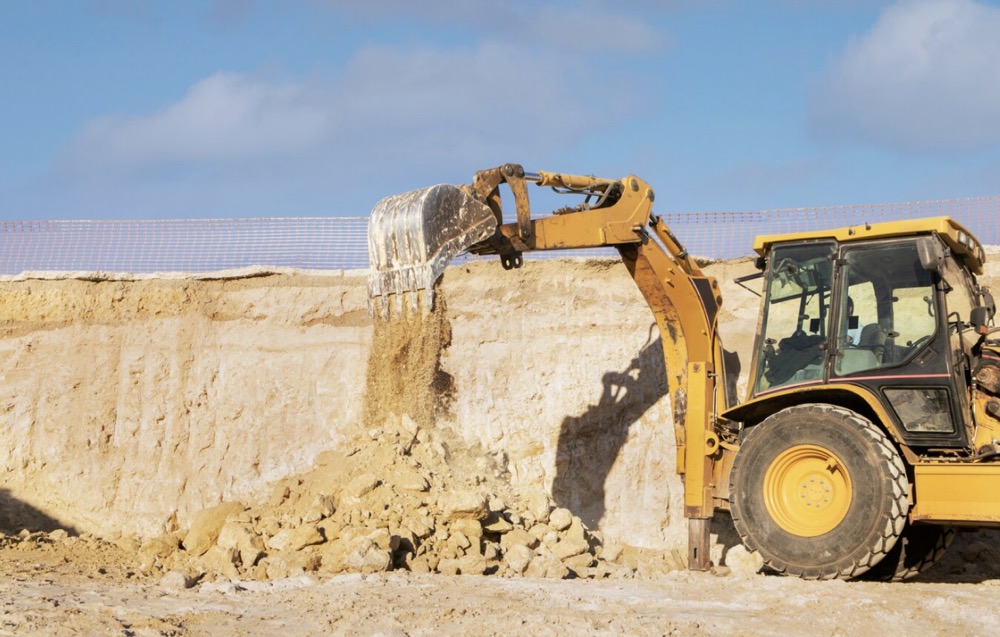
Three effects drive the arithmetic. A lower purchase price shortens the payback period, so the machine starts earning sooner and the cash cycle recovers faster. Depreciation is concentrated in the first years of a machine's life, so a buyer entering after that curve has flattened avoids the steepest part of the loss. And because used units are physically available, capacity can be added in weeks rather than quarters — which matters when a project award arrives before the fleet does.
There is a fourth, quieter effect: flexibility. A used machine bought for a specific package can be resold at the end of it without absorbing a large write-down, which makes it easier to bid work with an uncertain duration.
None of this is free. A used excavator carries inspection risk, unknown maintenance history and the possibility of deferred repairs. The disciplined approach is to price that risk explicitly: budget for a full fluid and filter service, an undercarriage assessment and a hydraulic pressure check before the machine goes to work, and treat the seller's records as evidence to be verified rather than facts to be accepted.
An hour of inspection is cheaper than a month of downtime. On a Gulf site, these are the areas that repay attention.
None of these checks requires specialist equipment beyond a wear gauge, a pressure gauge and a torch. What they require is daylight, a clean machine and a seller willing to let the machine work for twenty minutes.
MechLink is a global B2B marketplace for used heavy machinery. Its role is to put inspected listings, specification data and seller information in front of buyers, and to leave the commercial negotiation between the two parties: the platform does not intervene in transactions or impose payment conditions. For regional buyers comparing options across countries, that structure removes a layer of intermediation without removing the information.

This unit is the urban option. At 13.6 tonnes with a short-tail swing radius, it works where a larger machine cannot turn, and its Tier 4 engine and load-sensing hydraulics give the response that trenching and grading demand. For a utility contractor running multiple small packages across a city, or a developer finishing infrastructure inside a live neighbourhood, the combination of mobility and control is the point.
Its natural applications are municipal trenching for water, sewer and drainage; fibre and cable installation beneath pavements and narrow roads; and foundation, access-road and grading work on compact plots in expanding suburbs. As urban renewal and utility upgrade programmes continue across the region, machines in this class are what keep those works inside their traffic-management constraints.
See the full listing: Caterpillar 312F Excavator.

The 350 is the production machine. High breakout force, substantial hydraulic flow and lifting capacity make it a bulk-excavation and loading tool, and the hammer in the attachment package extends it into rock breaking and reinforced concrete removal. On a multi-phase site, that flexibility reduces the number of machines required to keep the sequence moving.
Its applications follow the region's heavy work: open-pit mining and aggregate loading, site preparation and mechanical trenching for oil and gas infrastructure, and long-span pipeline trenching where depth and profile consistency matter. For contractors bidding into mining, quarrying or pipeline packages, a 47.6 tonne carrier with a hammer circuit is a more useful asset than two smaller machines working in parallel.
See the full listing: Caterpillar 350 Excavator.
Both listings carry operating specifications, photographs and inspection details, so the comparison can start before a site visit.
Buying well is only the first decision. Contractors who get the most out of an excavator in this region tend to do three things consistently.
MechLink supports that kind of planning by letting buyers filter listings by brand, year, size and function, so a fleet can be assembled from comparable machines rather than from whatever happens to be nearby. For contractors working across borders, that visibility is often the difference between a fleet that fits the programme and one that fits the first project.
The Gulf does not reward the biggest excavator or the cheapest one. It rewards the machine whose cooling, filtration and hydraulics were designed for sustained heat and abrasive ground, whose parts are available within a day's drive, and whose resale value survives the project it was bought for. Caterpillar's range covers both ends of that requirement: the 312F for the tight, controlled work that keeps cities running, and the 350 for the bulk excavation that builds them.
For buyers comparing options, the useful next step is specific: shortlist by class, verify condition against the checklist above, confirm the attachment circuit matches the work, and price the support network into the number. MechLink exists to make that comparison practical, with listings that show specifications, photographs and seller details in one place.
Whether the requirement is a single carrier for a utility package or an additional 47-tonne unit for a quarry contract, the search can start now.
MechLink — the global route to earthmoving equipment you can plan around.
Piledriver, Piling Rig or Rotary Drill? Telling the Piling Machine Family Apart
2026-11-12

Loader Classes Explained: Matching Machine Type to Material, Space and Cycle
2026-11-12

What an Excavator Is Worth After Five Years - and How to Protect It
2026-11-11
How to Buy an Excavator: A Practical Guide
2026-11-11