2025-11-10

With fuel accounting for more than a third of heavy equipment maintenance costs, it’s no surprise fleet managers are constantly looking for ways to use less fuel. Not only is fuel expensive, but prices can be volatile and unpredictable. Diesel fuel, in particular, tends to fluctuate with demand — when construction booms, so do fuel prices. While there’s not much that can be done about fuel prices, many fleet managers are getting sophisticated about reducing their fleet’s fuel consumption.
Fuel efficiency is a measure of how much work a machine or heavy equipment fleet can perform per unit of fuel. Becoming fuel efficient requires operators and fleet managers to implement a deliberate strategy to maximize machine performance and avoid inefficient fuel consumption.
In addition to bolstering your company’s bottom line, working towards improved fuel efficiency is associated with other advantages such as reduced downtime, fewer workplace accidents and better compliance with environmental regulations.
Maximizing your fleet’s fuel efficiency requires a multi-faceted approach that involves optimizing business decisions, providing rigorous training to operators and improving your team’s heavy equipment maintenance practices.
Here are some of the best strategies for boosting your fleet’s fuel efficiency.
One of the simplest ways to improve your fleet’s fuel efficiency is by picking the right machine for your project. When going to purchase a machine for your fleet, think carefully about how that machine will be used.
As a rule of thumb, you should always aim to use the smallest machine that’s still powerful enough to handle the requirements of your project. Larger machines, while more powerful, consume more fuel. Choosing a machine that’s much larger than the project requires will result in unnecessary fuel consumption.
In addition to a machine’s size, you should also consider the type of machine you use on your projects. Using the wrong type of machine for a particular task may result in inefficient fuel consumption.
Improvements in heavy equipment monitoring technologies have made it possible to get real-time feedback on your machines’ fuel consumption. Telematics systems like T3 allow you to remotely determine which machines are consuming the most fuel and can alert you if operators let machines idle for too long during the day.
To make the most of your machine’s remote monitoring system, it’s important to create a daily monitoring plan. Your plan should indicate who is responsible for checking your fleet’s telematics dashboard, when it should be checked and what action should be taken if anomalies are spotted.
By monitoring your machines’ daily fuel consumption and keeping an eye on your operators’ fuel consumption habits, you can spot issues that need addressing before they become problematic.
When changing your machine’s fluids, such as its engine oil and hydraulic fluid, it’s important to stick to the OEM’s fluid recommendations provided in the machine’s operating manual. Using the incorrect fluids in your machine can lead to decreased performance and lowered fuel economy. In severe cases, the machine’s engine components may begin to degrade and the engine may lose power.
A key part of maximizing your fleet’s fuel efficiency is educating operators on best operating practices. Here are some simple ways your operators can help you reach your fuel efficiency goals.
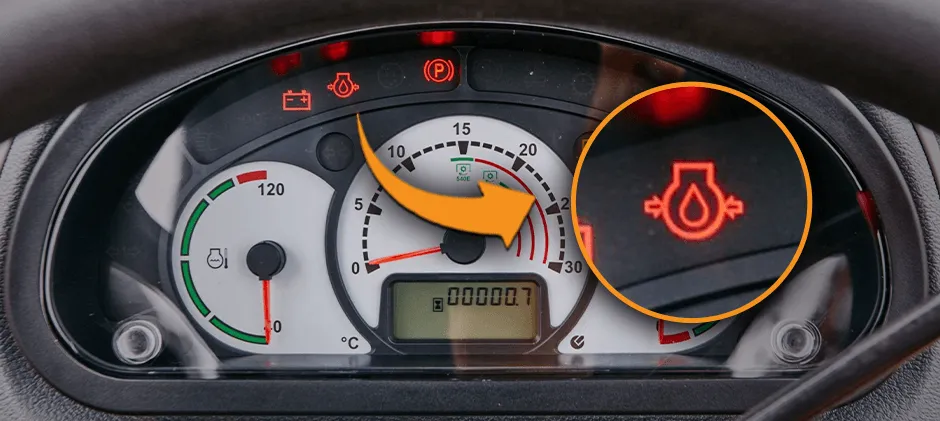
Check Service Lights and Warnings: Service lights and warnings are often the first indication that something isn’t working properly. Whether the hydraulic pressure gets low or the engine oil overheats, service lights and warnings should not be ignored. Train operators to keep an eye on their machine’s service lights and immediately address any issues before they become problematic.
Keeping your tires well-maintained is an essential part of optimizing your fleet’s fuel efficiency. Tires that are under-inflated will consume more fuel, while tires that are over-inflated may cause traction issues and lead to engine problems.
For the best results, maintain your tires’ inflation pressure at the level indicated in your machine’s service manual. If you are not using the original tires, the optimal inflation pressure can also be found imprinted on the tire’s sidewall.
Your machine’s filters are essential to keeping the engine oil clean and free of contaminants. But if you don’t change these filters on time, the filters may become clogged, leading to decreased power output and increased fuel consumption.
Every preventative maintenance plan should include a schedule for changing your machine’s filters. In addition, the filters should be visually inspected on a regular basis and replaced sooner if they become clogged. By changing your engine’s oil and air filters at the intervals specified in your machine’s service manual, you can keep your machine running smoothly and optimize its fuel economy.
The benefits of optimizing your fleet’s fuel efficiency extend beyond increased profitability. Striving for better fuel efficiency will lead to machines that are safer and better maintained, along with operators who are capable and well-trained.
In order to achieve optimal fuel efficiency for your fleet, you’ll need to implement a well-designed strategy that includes a preventative maintenance plan for the machines you manage.
The Equipment Share Online Parts Store is a one-stop-shop for heavy equipment parts of all kinds. Our online store makes it easy for you to shop for filters, replacement parts and other components from popular OEM’s like Takeuchi, Kubota, SANY and more. Still can’t find the part you need? Reach out to one of our parts experts for personalized assistance.