2026-07-03
When an off-road machine starts to hesitate, surge, idle roughly, or drop into limp mode, we often blame fuel or hydraulics first. But a drifting or out-of-sync throttle position sensor can cause the same headaches—because the controller can’t match “operator demand” to fuel delivery. In this guide, we’ll explain what a TPS does on heavy equipment, where it usually sits, and how we can reset (relearn) it safely—plus what to do when a reset isn’t enough.
A throttle position sensor (TPS) is a type of position sensor that tells the ECU/ECM how far the throttle is opened (or what the throttle actuator is doing). On off-road machinery, that signal helps the controller manage:
Modern heavy equipment depends on a network of sensor inputs so the controller can make fast, correct decisions. A position sensor is used anywhere the system must “know the position” of a part—throttle/pedal demand, gear selector, cam/crank timing signals, linkages, and more. When the controller doesn’t trust that position signal, it protects the machine—often by limiting power.
On many machines, throttle control is not just one sensor:
If these signals don’t agree (or one is noisy), the ECU may set a fault and reduce power. Resetting is basically telling the controller, “relearn what closed throttle and full throttle look like.”
A reset is most useful after service work or when readings drift. Symptoms you often see on off-road equipment include:
If symptoms are severe, repeat quickly, or appear with wiring faults, you should treat a reset as one step in diagnosis—not the final fix.
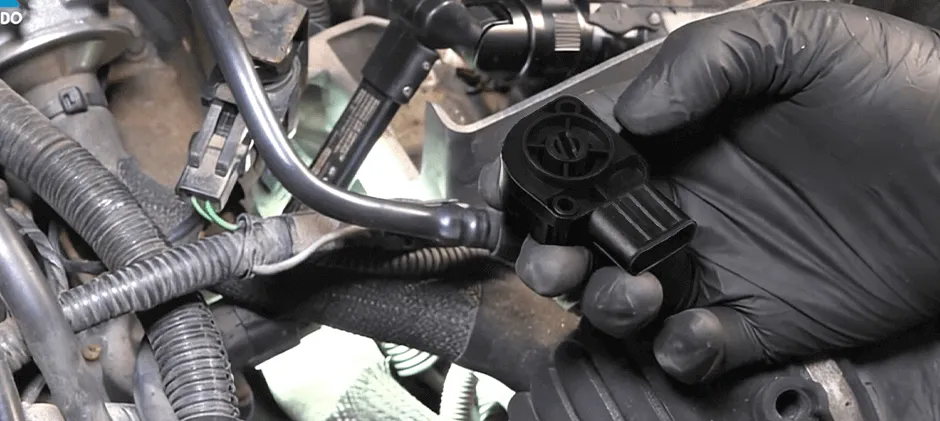
TPS location depends on whether the machine uses a cable throttle, a governor lever, or electronic throttle control. On off-road machinery, we commonly find the throttle position sensor in one of these places:
Many engines use a throttle body or an intake actuator. In these setups, the TPS is typically mounted on or integrated into the throttle body assembly so it can read the throttle plate/actuator angle.
How do you find it quickly?
Some machines use a lever/linkage arrangement where the ECU still needs position feedback. In these cases, a position sensor may be mounted to read lever movement.
If the machine is drive-by-wire, the pedal/hand throttle usually has an accelerator position sensor. People call it a TPS by habit, but it’s measuring demand, not throttle plate angle. It still may require a relearn after replacement.
Before you reset anything, you should confirm whether you’re dealing with:
The reset process can be similar, but diagnostics and failure modes differ.
This is the core section, and the most important point is that there is no universal reset procedure across all off-road machinery. Some machines need a scan tool “calibration,” others support a key-on/pedal sequence, and some require an idle relearn after battery power is removed.
Below is a safe, equipment-friendly process we can use as a framework, plus options depending on what tools we have.
If you skip these, a reset may “work” for one cycle and fail again due to low voltage or an intermittent connection.
For many off-road machines, the correct reset is a commanded calibration through diagnostics (often labeled as TPS calibration, ETC relearn, or idle/throttle learn).
General steps:
Why do you prefer this method:
If you suspect the machine relies heavily on electronic throttle control, we should start here.
Some machines allow a basic relearn without a scan tool. The idea is to let the ECU see the full range from closed to wide open.
Generic sequence:
What “success” looks like:
Important: If the machine has a safety interlock (seat switch, neutral switch, hydraulic lockout), follow the proper conditions, or the ECU may ignore the learn routine.
Disconnecting battery power can clear learned values on some systems, but it’s not always the right move on modern equipment. Still, when we’ve replaced a sensor and the controller seems “stuck,” it can help—if the OEM procedure allows it.
Generic, cautious approach:
When you should NOT do this:
To reduce repeat downtime, you should confirm the system is behaving normally:
If the reset “takes” but the problem returns under vibration/heat, that points to wiring, connector tension, or internal sensor failure.
| Situation you see | Reset likely to help? | What you should do |
| TPS/APS was replaced | Yes | Perform calibration/relearn (prefer scan tool) |
| Throttle body/inlet actuator was cleaned/removed | Yes | Reset + idle learn; confirm smooth % sweep |
| Intermittent limp mode + “signal high/low” codes | Sometimes | Inspect wiring/connector first; reset after repairs |
| Surging + noisy live signal (jumps) | Unlikely | Replace the sensor or repair the harness; reset afterward |
| No start / hard start tied to crank/cam codes | No | Diagnose the crank/cam position sensor circuit instead |
If our diagnosis shows the throttle position sensor is failing (dead spots, unstable signal, repeat codes), replacement is usually more cost-effective than repeated resets. When shopping, matching the correct part number matters because position sensors are used for throttle/accelerator, gear, and cam/crank signals across many machines. A good starting point is the position sensor category, where listings are organized by part number and application.
Resetting helps only when the sensor is healthy, and the ECU just needs a clean reference. To cut repeat issues, you should maintain the throttle input system like any other high-impact control circuit.
A lot of “TPS failures” are actually connector problems:
What you can do:
Off-road machines see constant vibration and movement. You should watch for:
If you wait until limp mode becomes frequent, you often create secondary issues (rough operation, extra soot, poor productivity). When you notice:
If the system uses a throttle body/actuator:
Position sensors are not interchangeable just because the plugs look similar. Off-road machinery uses many types—oil pressure, speed pickup, fuel level, temperature, throttle/accelerator, and more. If we’re sourcing replacements across a fleet, browsing a broad sensor catalog can help us match by function and equipment type while keeping compatibility in mind.
A throttle position sensor reset is a practical step after sensor replacement, throttle service, or when the ECU loses its learned reference. The safest path is a scan-tool calibration, followed by a simple verification test. If symptoms return—especially with “signal high/low” codes or jumpy readings—resetting won’t fix a worn sensor or damaged wiring. As an aftermarket parts supplier, MechLink offers high-quality products at affordable prices, a vast inventory, and wide compatibility for many heavy equipment brands.