2026-08-15
When your off-road machinery—such as a skid steer, scissor lift, tractor, or generator—stops starting on-site, the problem often traces back to one simple issue: a faulty battery connection. Many operators still struggle with recognizing the positive and negative terminals correctly, especially when terminals are rusted, covered, or faded. In this guide, we’ll explain how to distinguish battery polarity safely and precisely, how color codes and size cues help, and how to avoid expensive electrical failures in field conditions.
For most off-road equipment, including tractors, generators, and telehandlers, the identification principles are consistent.
Here’s what you should look for step by step:
Most heavy-duty or agricultural batteries have the symbols “+” (positive) and “–” (negative) stamped near the posts. These are the most reliable visual cues, even when cables are color-faded.
Red cables usually lead to solenoids, starters, or charging controllers; black ones connect directly to chassis ground.
The positive post is slightly larger than the negative. This design prevents misconnection of the clamps or lugs when replacing or charging the battery in the field.
Set the multimeter to DC voltage. Connect the red probe to one post and the black to another:
Pro Tip: In older off-road equipment, faded paint or rewired terminals can mislead you—always confirm polarity with a multimeter before jump-starting.
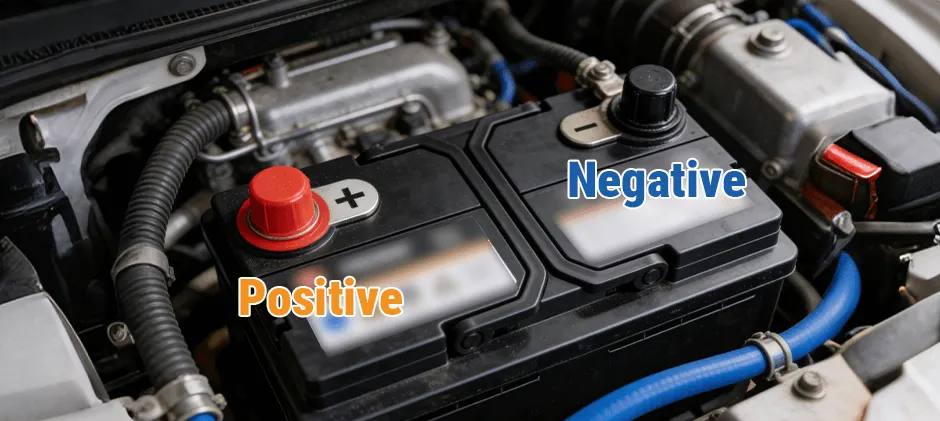
The universal standard for off-road and industrial batteries is black for negative and red for positive. However, harsh environments can make color unreliable:
If color coding is unclear:
Correct polarity isn’t just about knowing “red from black.” It’s about maintaining the electrical safety and longevity of your off-road battery systems.
Use a compatible voltage-rated charger. For example:
Always cross-verify your machine’s specifications before connecting a heavy-duty charger.
For safe and efficient battery charge operations, consider using robust and weatherproof equipment. Explore trusted solutions here: battery charge.
Field rewiring or modifications may lead to mismatched cable colors. Never rely solely on paint or tape indicators.
Always confirm which cable connects to the metal body—this is your reliable ground reference.
In 24V lift systems, connecting two 12V batteries backward can instantly short-circuit chargers or controllers.
Corrosion and dirt buildup obscure markings—clean terminals routinely to prolong battery life.
Identifying battery polarity correctly isn’t a trivial skill—it’s essential maintenance knowledge for any off-road machinery operator. From tractors to aerial lifts, correct polarity ensures safe operation, efficient charging, and longer component life.
At MechLink, you’ll find an extensive inventory of affordable aftermarket components, including battery chargers built for rugged conditions. With our competitive pricing, fast delivery, and quality-tested compatibility, your equipment runs smoother and safer—every shift, on every site.